

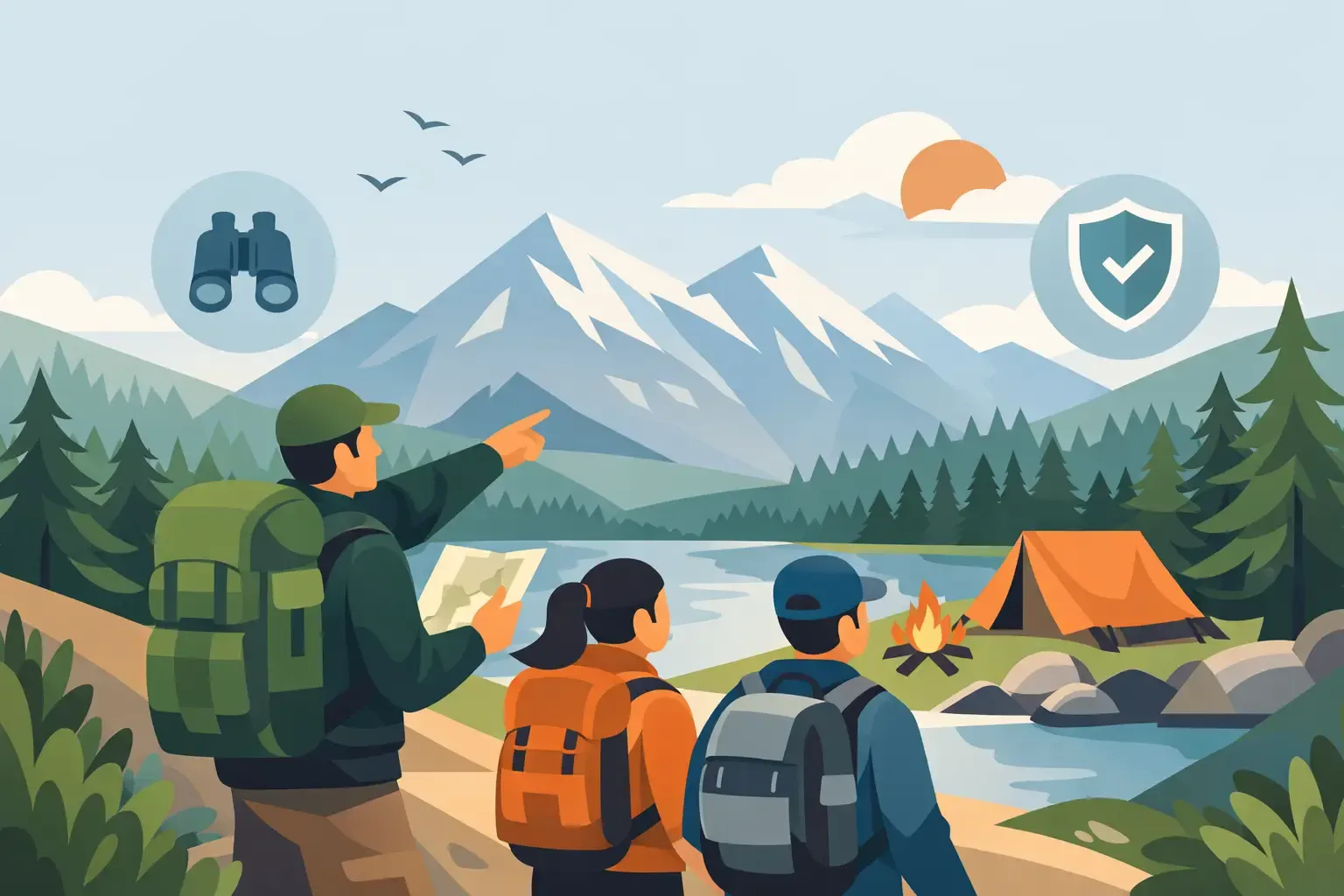
How Safe Are Guided Wilderness Trips?
You feel it before you even leave home – the pull of wild water, open moorland, deep snow or a far northern forest. Then the practical question lands: how safe are guided wilderness trips? It is the right question to ask, and the honest answer is this: they are never risk-free, but a well-run guided trip is usually far safer than trying to tackle the same environment alone or with mates who are learning as they go.
That is not because guides can control nature. They cannot. Rivers rise, weather turns, cold bites harder than expected and fatigue changes judgement. Guided wilderness travel is safer because experienced leaders stack the odds in your favour before the trip begins, while it is happening, and when conditions shift.
How safe are guided wilderness trips in real terms?
The word safe can mean different things depending on who is asking. For one person, it means avoiding serious injury. For another, it means feeling supported enough to try something new without being out of their depth. In wilderness travel, safety is not about removing challenge. It is about managing risk properly so the challenge stays meaningful rather than reckless.
A guided canoe expedition, winter journey or remote camping trip still carries genuine hazards. Cold exposure, slips, blisters, changing water levels, poor visibility, wildlife encounters and simple human error all come with the territory. But on a professionally led trip, those hazards are anticipated rather than ignored. Routes are selected with the group in mind. Equipment is checked. The pace is managed. Leaders watch for small problems before they become big ones.
That matters even more in places that look forgiving at first glance. A calm loch can become difficult in strong wind. A snowy trail can turn serious when temperatures drop and visibility narrows. Safety in the outdoors often depends less on the headline activity and more on timing, preparation and decision-making.
What actually makes a guided trip safer?
The biggest safety factor is not the brochure, the destination or the kit list. It is leadership. A good guide does far more than show the way. They read terrain, monitor the group, adjust plans early and make calm decisions when conditions change.
That starts long before boots hit the ground or paddles touch water. Strong operators screen trips properly. They give you clear information about fitness, experience and what the days will actually involve. That is not about putting people off. It is about getting the right people onto the right trip, which is one of the clearest markers of a safe operation.
Once the trip is underway, good guides create structure without sucking the life out of the adventure. They brief the group well. They explain why a route is changing. They build confidence through skills, not false reassurance. They also know when to slow the day down, turn back or choose the less dramatic option. In the wilderness, sound judgement is often the difference between a memorable challenge and an avoidable incident.
There is also a practical layer people often overlook. Group safety systems matter. Communication plans matter. Emergency procedures matter. So does the simple discipline of keeping people fed, hydrated, warm and moving at the right pace. Most outdoor mishaps are not heroic disasters. They are small issues that snowball because nobody noticed them soon enough.
Risk management is not the same as risk avoidance
Some first-time travellers worry that a guided trip will feel overly controlled if safety is taken seriously. In reality, the best trips strike a better balance than most people manage on their own. You still get the wild camp, the long paddle, the frozen mornings and the weather that keeps things real. What changes is the quality of the decisions around those moments.
A strong leader will not remove every hard edge from the experience. They will decide which hard edges are worth keeping. That is a big difference.
The risks depend on the type of wilderness trip
Not all guided trips carry the same level or type of risk. A two-day canoe journey in the UK is not the same as an Arctic expedition or a high-altitude trek. That sounds obvious, but it is where many people misjudge what “safe” should mean.
Water-based trips bring different concerns from snow-based ones. On a canoe adventure, capsize risk, water temperature, river features and wind exposure are key. On a winter trip, cold injuries, footing, terrain and visibility rise up the list. On a remote expedition abroad, altitude, logistics and delayed access to outside help may become far more significant than the activity itself.
The right question is not whether guided wilderness trips are safe in the abstract. It is whether this specific trip, in this season, with this level of remoteness, is being run by people who understand the hazards and know how to manage them.
Beginner-friendly does not mean low-standard
Many people assume beginner trips are safer simply because they are labelled as accessible. Often they are, but not because the standards are looser. Usually it is the opposite. Well-designed beginner trips are safe because the itinerary is carefully built, the instruction is clearer and the progression is more deliberate.
That is one reason guided adventure opens the door for so many people. You do not need years of wilderness experience to start. You need the right trip, honest information and leaders who know how to teach as well as lead.
What to look for before you book
If you want a realistic sense of how safe a guided wilderness trip is, pay attention to how the operator talks about the experience. Vague claims about safety are less useful than practical detail. You want to see clear trip grading, honest fitness guidance, transparent kit advice and signs that the company takes planning seriously.
A good operator will tell you what support is included and what is expected from you. They will not pretend the trip suits everyone. They will not sell remote adventure as effortless. That kind of honesty is reassuring because it usually reflects competent planning behind the scenes.
It is also worth looking at the wider trust picture. Financial protection, sensible pre-trip communication and a strong record of guided delivery all matter. They do not replace outdoor leadership, but they tell you whether the business treats responsibility seriously. For many travellers, especially those booking a bigger trip or travelling solo, that extra layer of confidence matters.
Snow and Paddles, for example, builds much of its offer around expertly led adventure that remains accessible to a broad mix of participants. That balance between challenge and support is exactly what many people are looking for.
Your choices affect safety too
Even the best guide cannot make poor personal decisions disappear. One of the least glamorous truths about wilderness travel is that safety is shared. Turn up underprepared, hide an injury, ignore kit advice or overstate your fitness and the margin for error gets smaller very quickly.
The best clients are not the toughest or loudest. They are the ones who are honest. If you are nervous about cold water, say so. If you have never carried a pack for several hours, mention it. If you are unsure whether a trip suits your fitness, ask. Good operators would far rather have that conversation early than deal with a preventable problem in the field.
This is especially true on group trips. Your experience is shaped by the group’s collective pace and attitude. A strong team that listens, communicates and looks after one another creates a safer environment for everyone. That is part of the value of guided travel that rarely gets enough attention.
So, should safety concerns put you off?
Usually, no. They should sharpen your judgement, not shrink your ambition.
The point of a guided wilderness trip is not to wrap you in cotton wool. It is to take you somewhere real, with experienced people beside you, so you can step further than you might on your own. For many travellers, that is where the magic sits. You get the exhilaration of remote places and demanding conditions, but with the planning, leadership and structure that make the experience feel possible.
If you choose carefully, listen well and book a trip that matches your current level, guided wilderness travel is one of the smartest ways to experience serious outdoor adventure. It gives you room to learn, room to stretch and, often, room to surprise yourself.
Ask hard questions before you book. Expect honest answers. Then, if the fit is right, go. The wild will never come with guarantees, but that is part of why it changes people.