

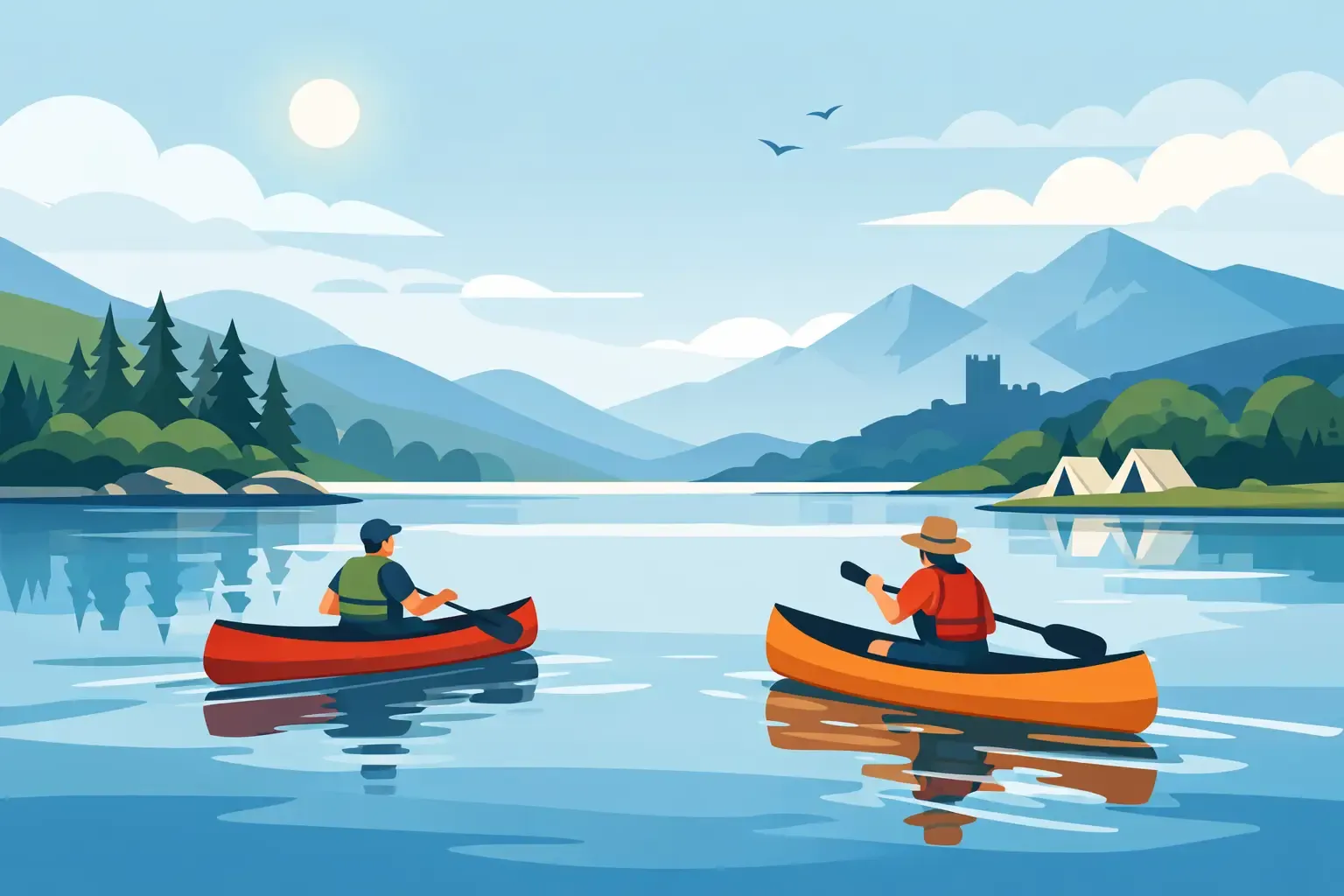
Best Weekend Canoe Challenges UK
A good canoe weekend should leave you tired in the right way. Not just sore shoulders and damp kit, but that deeper kind of satisfaction that comes from covering ground under your own power, cooking outside, sleeping well, and waking up with a job to do. That is why weekend canoe challenges UK paddlers look for are rarely about speed alone. They are about committing to a short, meaningful journey and seeing what shifts by the time you reach the finish.
For some people, that means a first night under canvas after years of saying they should do more outdoors. For others, it means testing decision-making, endurance and teamwork on a route that asks more of them than a casual day paddle ever could. The beauty of a weekend challenge is that it fits real life. You do not need three weeks off or expedition-level logistics to get a genuine sense of adventure.
What makes a canoe weekend feel like a challenge?
Distance matters, but it is not the whole story. A flat ten miles with a warm tailwind and easy access is a very different prospect from ten miles with headwind, moving water, portages and a loaded canoe. In the UK, challenge often comes from the mix rather than one dramatic factor. Weather can turn a straightforward route into a serious test of attitude. A simple camp setup becomes harder when everything is wet. Even paddlers with good fitness can find their comfort zone shrinking once they are carrying barrels, setting camp in fading light and getting back on the water the next morning.
That is part of the appeal. A weekend challenge strips things back. You paddle, you eat, you rest, and then you do it again. It can be deeply calming, but it is not always easy. The best routes are the ones that feel achievable with the right support while still giving you a reason to dig in.
Choosing the right weekend canoe challenges in the UK
The smartest choice is not always the hardest route on the map. It is the route that matches your current experience, the season and the kind of challenge you actually want.
If you are new to canoe journeys, a sheltered river or loch with manageable daily distances is usually the right place to start. That gives you room to learn pacing, paddle efficiency, camp routine and simple watercraft skills without being overwhelmed. If you already paddle regularly, your version of challenge may be a longer crossing, a more committing environment, or a route where the weather and remoteness play a bigger role.
There is also a difference between technical challenge and expedition challenge. Technical challenge is about moving water, precise boat handling and reading the water well. Expedition challenge is more about endurance, self-sufficiency, carrying kit, adapting to conditions and staying switched on over two full days. Many paddlers are surprised to find that the second type is what really stays with them.
Routes that suit a weekend challenge
The UK offers plenty of strong options, but not all of them suit all paddlers.
A journey on the River Wye often works well for newer paddlers who want that classic canoe-camping experience. It gives you distance, steady progression and a real sense of travelling through the landscape. In good conditions it is accessible, but that does not mean effortless. River levels, cold water and camp logistics still require sound judgement.
Scottish lochs can provide a very different challenge. Open water introduces exposure, wind planning and route choice in a bigger way. A weekend on linked lochs or a longer point-to-point journey can feel far more remote than the mileage suggests. You may paddle fewer miles than you expected, but every one of them feels earned.
Northern rivers and lake systems can also hit the sweet spot. They combine journeying with manageable commitment and often give you that feeling of getting away properly without travelling to the far edge of the country. The right route depends on access, water conditions and what level of support you want around you.
Why guided canoe weekends make sense
There is a certain pride in doing everything yourself, but there is no prize for badly judged adventure. On a short trip, poor planning can eat into the experience quickly. Start too late, pack too much, choose the wrong route for the conditions, and half the weekend gets spent recovering from decisions made in the car park.
That is where a guided challenge comes into its own. You still do the paddling. You still carry the load and manage the effort. But the structure is already built by people who know the route, understand the conditions and can adjust the plan without drama. That matters for beginners, and it matters just as much for capable paddlers who want to push themselves without wasting energy on avoidable logistics.
A strong guide does more than keep you safe. They raise the quality of the experience. They help with technique, pacing, campcraft and reading the day ahead. They know when to press on and when to change tack. If you are stepping into your first overnight canoe challenge, that guidance can turn nerves into confidence very quickly.
Skills that matter more than brute strength
People often assume canoe challenges are mainly about fitness. Fitness helps, of course, but clean technique and calm decision-making usually make the bigger difference over a weekend.
Efficient forward paddling saves energy hour after hour. Good trim keeps the canoe handling properly in wind and chop. Knowing how to load kit, launch cleanly, land safely and keep essentials dry all adds up. Then there is the mental side. When conditions become awkward, the strongest paddler is not always the one who copes best. The paddler who stays steady, listens, adapts and keeps doing the basics well often has the better weekend.
That is encouraging news if you are not arriving in peak race condition. Many people are more ready than they think. If you can stay active for a full day, follow instruction and keep a positive head when things get wet or windy, you already have a strong foundation.
What to expect from your first challenge weekend
Expect a mix of excitement and uncertainty. The first hour often feels unfamiliar. The boat may seem lively. Your paddle strokes may feel clumsy. Packing and unpacking takes longer than it should. Then something clicks. You settle into rhythm, the miles start to pass, and camp begins to feel less like an obstacle and more like part of the point.
You should also expect moments that feel tougher than they looked on paper. A headwind on open water can be humbling. A short carry around an obstruction can feel longer with a loaded barrel in hand. Rain at camp can test morale. None of that means the trip is going wrong. Usually it means the trip has become real.
This is one reason guided adventure works so well for busy adults. You get a proper challenge without needing to spend months organising every detail. Companies such as Snow and Paddles build those weekends so the effort goes into the journey itself, not into wrestling with route notes, transport plans and safety decisions after a full week at work.
How to prepare without overthinking it
Start with the simple things. Turn up with clothing that works when wet, not just when the forecast looks kind. Bring fewer extras than your instincts suggest, because heavy kit turns every launch and landing into harder work. Focus on comfort at camp, dependable waterproofing and the ability to regulate your temperature on the water.
It also helps to arrive with realistic expectations. A challenge weekend is not a luxury break with a canoe attached. It is a short expedition. That means early starts sometimes, tired arms, basic camp routines and a bit of unpredictability. Strangely, that is exactly what makes it refreshing. The normal noise drops away.
If you can do a little preparation beforehand, work on general stamina and time outdoors rather than trying to become a paddling machine overnight. A few walks with a pack, some basic mobility work and a decent night’s sleep before departure are often more useful than one frantic training session.
Weekend canoe challenges UK paddlers keep coming back for
The best ones are the trips that feel bigger than the calendar suggests. You leave on a Saturday morning and by Sunday afternoon it feels as if you have been away far longer. That shift happens when a route gives you progression, a touch of uncertainty, and enough wildness to pull you fully into the moment.
For beginners, the right challenge builds confidence fast. You learn that you can handle more than you thought, especially with experienced leadership around you. For seasoned paddlers, a well-chosen weekend is a sharp reminder that adventure does not need to be elaborate to be worthwhile. Two days is enough to reconnect with effort, weather, water and the simple satisfaction of moving through a landscape properly.
If you are choosing your next trip, aim for a challenge that stretches you without tipping into survival mode. There is plenty of value in being tested, but the sweet spot is where the route asks for commitment and gives something back. That is where confidence grows, skills sharpen and the weekend stays with you long after your kit has dried.