

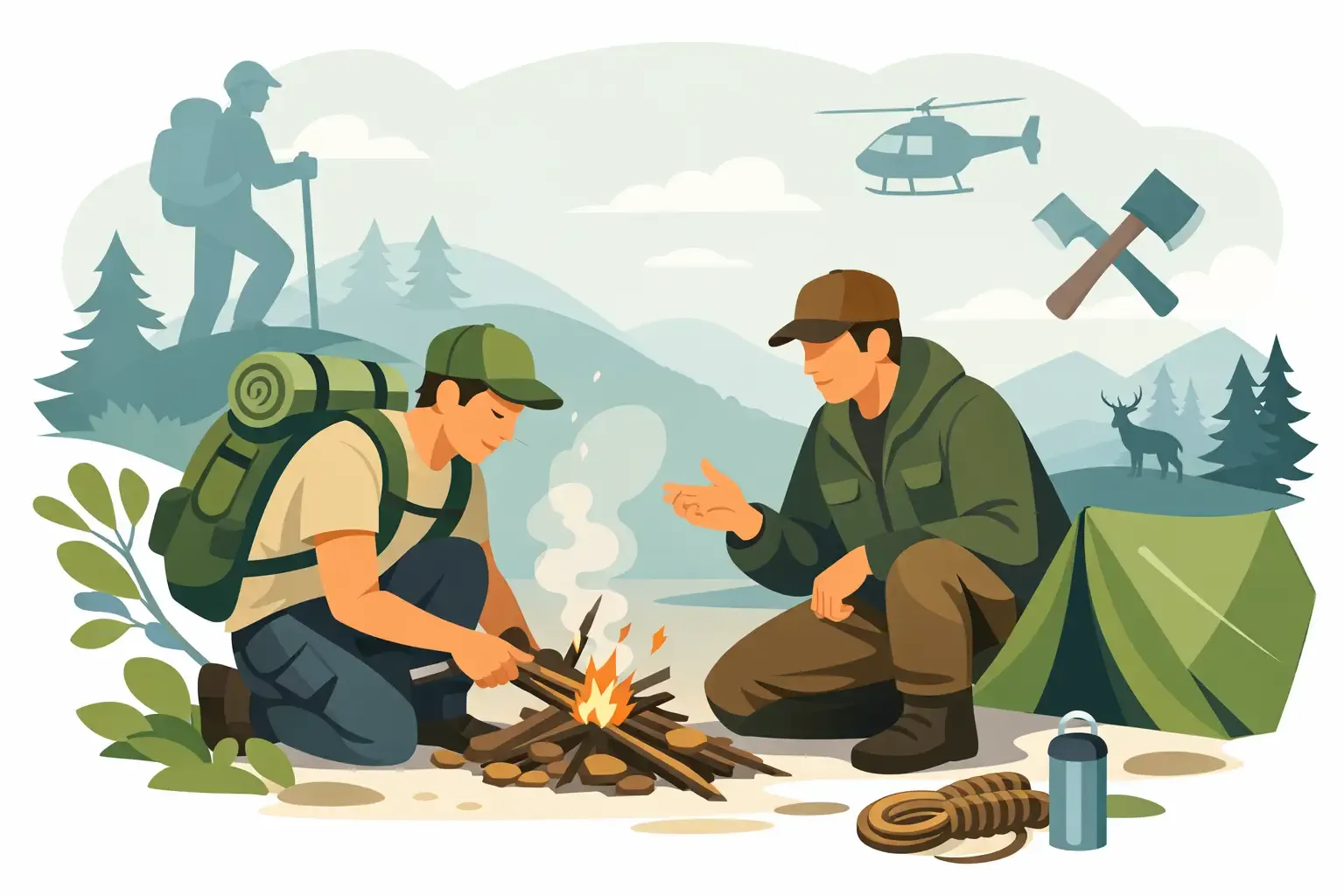
Can Beginners Do Survival Training?
Most people do not arrive at a survival course looking like they have walked out of a mountain expedition. They turn up in a decent waterproof, slightly unsure if they have packed the right gloves, and quietly wonder whether everyone else will know more than they do. If you are asking can beginners do survival training, the short answer is yes. In fact, many of the best survival experiences are built with beginners in mind.
The better question is not whether beginners can do it, but what kind of training helps them learn well, stay safe and come away wanting more.
Can beginners do survival training without outdoor experience?
Yes, provided the course is designed properly. Survival training is not reserved for ex-military types, seasoned mountaineers or people who spend every weekend sleeping under a tarp. A well-led beginner course assumes you are starting from scratch and gives you the structure, kit guidance and supervision to build confidence step by step.
That matters because survival skills are practical. You do not need years of outdoor background to learn how to light a fire responsibly, build a shelter, manage your body temperature or think clearly when conditions change. You need clear instruction, a sensible environment to practise in and leaders who know when to push and when to coach.
There is also a big difference between learning survival skills and being dropped into a high-risk situation. Good training does not glorify hardship for the sake of it. It teaches judgement. That is why beginners often do well. They arrive ready to listen, learn and follow a process.
What survival training is really like for a first-timer
People often imagine survival training as a test of suffering. The reality is usually far more grounded. A beginner-friendly course tends to focus on a handful of core principles: shelter, fire, water, food awareness, navigation basics and decision-making in the outdoors.
You might spend part of the day understanding how to choose a safe camp spot, why staying dry matters more than looking adventurous, and how a simple shelter can protect you from wind and rain. You may learn to use tools safely, prepare tinder, or work as a group to solve practical outdoor problems.
That mix is exactly what makes it accessible. You are not expected to know everything on arrival. You are expected to take part, stay engaged and be open to learning by doing.
For many beginners, the biggest surprise is that survival training feels less like a performance and more like a reset. You slow down. You pay attention. You notice weather, ground conditions and small details that most people miss in daily life. That is where confidence starts to grow.
Why beginners often get more from it than expected
There is a reason people come away from these experiences feeling sharper and more capable. Survival training strips things back to essentials. Warmth matters. Water matters. Clear thinking matters. Suddenly, the noise falls away and what you do has a direct result.
For beginners, that can be hugely rewarding. You do not need to compare yourself with someone who has spent years outdoors. You only need to see your own progress. The moment you help get a fire going in poor weather, or build a shelter that actually works, the shift is real. You stop thinking of yourself as someone who is not outdoorsy enough and start recognising that these are learnable skills.
That change in mindset carries well beyond the course itself. People often leave with more than a few new techniques. They leave with a steadier relationship to challenge. They trust themselves more. They are more likely to try the next trip, the next paddle journey, the next cold morning start.
What makes a survival course suitable for beginners?
Not every course suits every person, and this is where a bit of honesty helps. Some survival training is intentionally hard-edged and aimed at people with more experience. That is not a problem, but it does mean beginners should choose carefully.
A good beginner course is clear about the pace, the environment and what support is included. It explains the level of fitness needed without trying to sound heroic. It tells you what to bring and what will be provided. Most importantly, it is led by people who know how to teach, not just how to do.
Strong instruction makes all the difference. Outdoor expertise on its own is not enough. Beginners need calm communication, safe progression and leaders who can turn complex ideas into practical actions. They also need room to ask basic questions without feeling silly.
This is where guided adventure companies earn trust. At Snow and Paddles, the point is not to throw people in at the deep end and hope they harden up. The point is to create real wilderness experiences that stretch people in the right way, with the support to enjoy the challenge and grow from it.
The biggest worries beginners have
Most first-timers are not worried about learning too little. They are worried about getting it wrong. They wonder if they will be too slow, too cold, not fit enough or the only complete novice in the group.
Those worries are normal, and they usually fade quickly once the day begins. Survival training is hands-on, and practical tasks give people something to focus on. That matters because confidence is easier to build through action than through reassurance alone.
Fitness is worth mentioning, though. You do not need elite endurance for a beginner survival experience, but you do need to be honest about the physical side. Standing outdoors for long periods, moving over uneven ground, carrying some kit and coping with weather all take energy. If a provider describes a course as beginner-friendly, that should mean accessible, not effortless.
Weather is another factor. A crisp woodland day in autumn feels very different from winter wind and driving rain. Neither is automatically better or worse, but conditions shape the challenge. For beginners, there is often value in starting with a course that teaches plenty without turning the weather into the main event.
What you do not need before you start
You do not need expensive kit, a bushcraft identity or a social feed full of wild camps. You do not need to know knot systems by heart or arrive carrying an axe like you were born with it.
What you do need is a willingness to be outdoors, pay attention and take instruction seriously. The best beginners are not the loudest or the toughest. They are the ones who stay curious and keep going when a task takes a couple of attempts.
It also helps to let go of the idea that survival training is about proving yourself. In good hands, it is about learning systems that keep you safer and more self-reliant outdoors. That is a far stronger foundation than bravado.
Can beginners do survival training and actually enjoy it?
Absolutely, but enjoyment depends on expectations. If you book a survival experience expecting a spa break in the woods, you will have a difficult time. If you turn up ready for challenge, weather, practical learning and a few moments of discomfort, it becomes far more rewarding.
The enjoyment comes from immersion and achievement. It comes from warming your hands by a fire you helped build, from understanding your environment more clearly, and from realising that the outdoors feels less intimidating when you know what to do.
There is also a social side that people often underestimate. Shared effort builds quick camaraderie. Whether you arrive solo, with a partner or as part of a group, learning outdoor skills together tends to break down barriers fast. That sense of shared purpose is part of what makes these trips memorable.
How to choose your first survival training experience
Start with the provider, not the fantasy. Look for clear information, realistic descriptions and evidence that beginners are genuinely welcome. If the messaging is all hardship and ego, it may not be the right starting point.
Then think about what you want from the experience. Some people want a gentle introduction to wilderness skills. Others want a stronger physical challenge alongside the learning. Neither is wrong, but they are different trips. The right course is the one that matches your current experience while still stretching you.
Ask practical questions before you book. How much time is spent on the move? What are the sleeping arrangements? What kit is essential? What happens in poor weather? A good operator will answer clearly because they want you properly prepared, not sold a dream.
If you choose well, your first course does more than teach a few techniques. It opens a door. Survival training can be the start of a much bigger relationship with the outdoors – one built on skill, confidence and the kind of challenge that leaves a mark for the right reasons.
If you have been hesitating because you feel too new, that is often the clearest sign to begin. Everyone starts somewhere, and the outdoors has a way of rewarding those who show up willing to learn.