

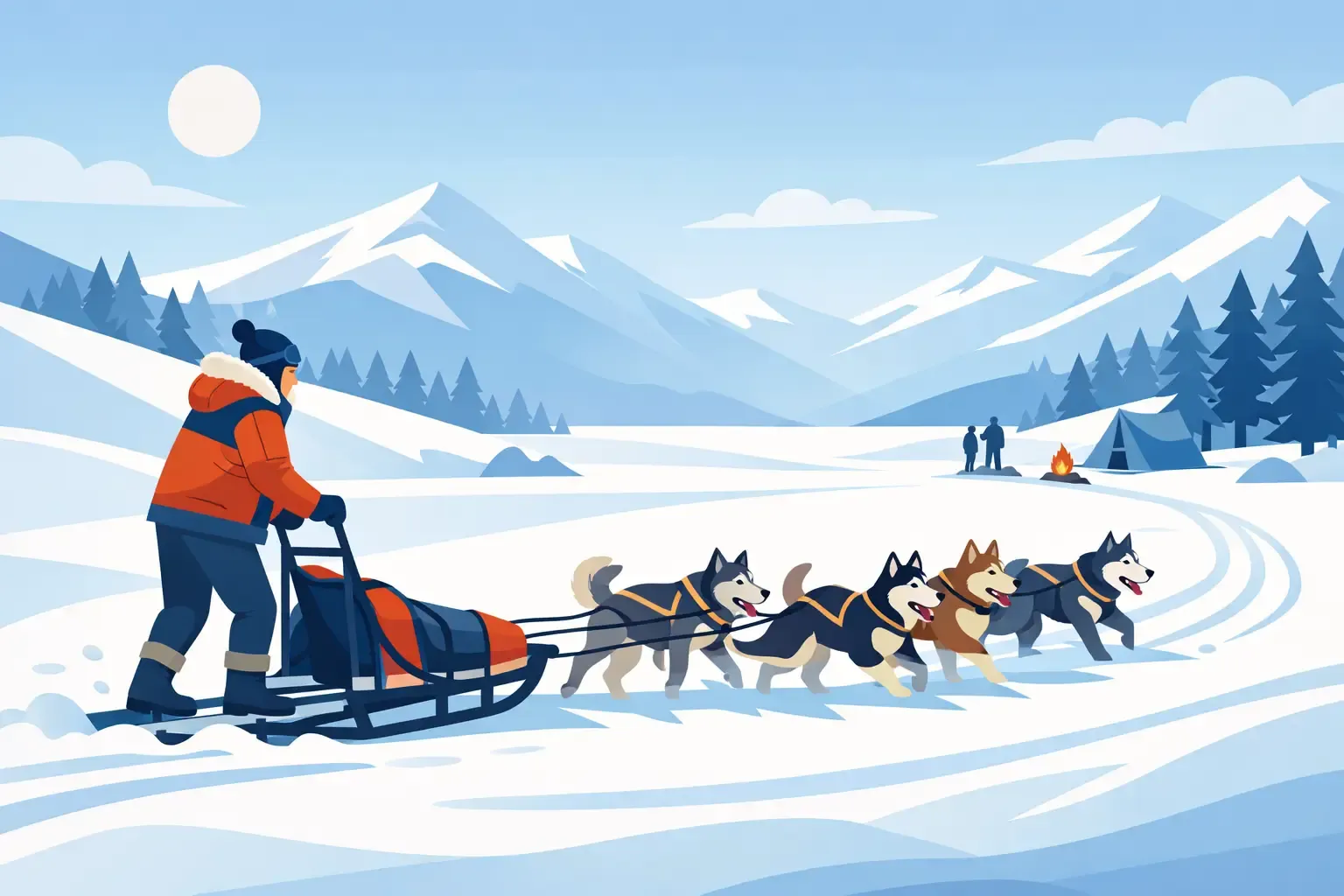
What Happens on a Dog Sledding Trip?
You hear the dogs before you see them. Not a threatening noise, not chaos – more a rising wall of excitement as the team knows it is nearly time to run. If you are wondering what happens on a dog sledding trip, that first moment tells you a lot. This is not a theme-park ride and it is not passive sightseeing. It is a hands-on winter journey powered by highly trained dogs, guided by experienced people, and shaped by weather, trail conditions and your own willingness to get involved.
For many people, dog sledding sits in that rare category of adventure that feels both wild and accessible. You do not need to be an elite athlete, but you do need to arrive ready for cold air, active participation and a new kind of teamwork. The reward is huge – a proper Arctic experience with movement, purpose and a strong sense that you are part of something older than modern travel.
What happens on a dog sledding trip from the start
A guided dog sledding trip usually begins well before the sled moves. You arrive at base, meet your guides and get kitted out if specialist winter clothing is included. That often means an insulated suit, winter boots and sometimes extra gloves or over-mitts depending on the conditions. Even if you are travelling in proper cold-weather kit already, guides will usually check that what you have is suitable. In deep winter, comfort is not a luxury. It is part of staying safe and enjoying the day.
Then comes the briefing. This matters more than first-timers often expect. You will learn how to stand on the sled runners, how to use the brake, how to help on inclines, what to do on descents and how to respond if the sled tips. Good guiding makes this feel straightforward rather than intimidating. The aim is not to turn you into an expert in ten minutes. It is to give you enough confidence to handle the basics properly and understand how the team works.
You will also be introduced to the dogs. That is usually one of the best parts of the day. Huskies and other sled dogs are working animals, bred and trained for endurance and enthusiasm. They tend to be energetic, vocal and very clear about wanting to go. Meeting them up close helps replace the vague idea of dog sledding with the reality of it – this is a partnership between animal power, human judgement and a trail through real winter country.
Meeting the dogs and learning the system
People often expect a simple line of dogs pulling a sled. In practice, there is more structure than that. Dogs have positions within the team, and experienced handlers know which animals work best together. Lead dogs help respond to commands and set direction. Others provide strength, pace and stability through the line. You may not need to memorise every role, but understanding that there is a system behind the excitement gives you immediate respect for the skill involved.
This is also where expectations need to be realistic. A quality trip is not about racing flat out from the first second. Before departure there is harnessing, clipping into the gangline, checking the sled and making sure everyone is ready. The dogs get louder during this phase because they know what is coming. It can feel gloriously intense. Then, the moment the brake comes off and the team moves, the noise often drops away with surprising speed.
That sudden quiet is one of the things people remember most.
Driving the sled is more active than it looks
If your trip includes self-driving, you will not simply stand still while the dogs do all the work. On many guided excursions, guests take turns driving and riding, especially on longer routes. Driving requires balance, attention and some physical effort. You stand on the runners behind the sled, knees slightly bent, eyes forward, always reading the trail.
When the route climbs, you may be asked to step off and help by running or pushing along with the sled. On flatter sections, you settle into rhythm. On descents and tighter corners, you stay alert and control speed with the brake when needed. It is not technically complicated, but it is active. That is part of the appeal. You are not just being taken somewhere. You are participating in the journey.
If you are worried about whether you are fit enough, the honest answer is that it depends on the trip. A short taster is very manageable for most reasonably active adults. Longer expeditions demand more stamina and resilience in the cold. The advantage of going with an experienced operator is that the level of challenge is clear before you book, and support is there throughout the day.
The trail is where the experience changes gear
Once you are moving through forest, across open snow or along frozen tracks, dog sledding stops feeling like an activity and starts feeling like travel in its purest form. You notice the sound of the runners on snow, the pace of the dogs, the cold on your face and the way winter light changes across the landscape. It feels purposeful. Every bend in the trail has momentum to it.
This is also the point where people usually settle into trust – trust in the dogs, in the guide, and in their own ability to do more than they expected. For first-timers, there is often a shift from nerves to focus within the first few kilometres. You stop overthinking and start responding naturally. That is one reason these trips stay with people. They strip things back.
Conditions shape the day. Fresh snow rides differently from compact trails. Wind changes how cold it feels. Visibility can open up a huge sense of space or close down into something more intimate and atmospheric. None of that is a flaw in the experience. It is the experience. Winter is not controlled, and a good trip works with that reality rather than pretending otherwise.
Breaks, camp moments and the human side of the trip
Most dog sledding trips include a stop at some stage, whether that is a short trail break or a longer pause around a fire, in a wilderness shelter or back at base. This is where the pace softens and the day gains a different texture. You may help settle the dogs, take photographs, drink something hot and feel the warmth return to your fingers.
These pauses matter. They give you time to absorb where you are and what you are doing. They also bring out one of the less obvious strengths of a guided winter trip – shared experience. Couples, solo travellers and groups all tend to have the same look at this point: a mix of cold cheeks, bright eyes and quiet satisfaction. Adventure does that when it is real enough to demand something from you but well led enough to feel safe.
For many travellers, this is where dog sledding becomes more than a bucket-list activity. It starts to feel personal. You are not ticking a box. You are out in a landscape that would be hard to access or fully appreciate on your own, with a team that knows how to move through it.
What surprises most first-time travellers
The biggest surprise is often how much dog welfare and professionalism sit behind a good trip. People arrive expecting thrill and scenery. They leave talking about the dogs, the handler knowledge and the care taken at every stage. A responsible operator builds the experience around the animals rather than squeezing performance out of them for show.
Another surprise is the physical side. Even a relatively short run can leave you feeling pleasantly worked. Balancing on the sled, helping on hills and staying warm in the cold all take energy. You do not need to fear that, but it is worth knowing before you arrive.
And then there is the emotional side. Dog sledding has a way of feeling bigger than the number of hours involved. Perhaps it is the setting. Perhaps it is the directness of travelling under dog power. Perhaps it is the fact that very little about it feels artificial. Whatever the reason, people tend to remember it in detail.
Is dog sledding right for you?
If you want polished comfort at every moment, probably not. There will be cold, effort and a bit of unpredictability. If you want a guided adventure that is accessible, memorable and properly rooted in place, it is hard to beat.
That is why dog sledding fits so well within the kind of journeys we believe in at Snow and Paddles – experiences that ask you to step out of the ordinary and reward you with something far more lasting than a standard winter break. You do not need to know everything before you go. You just need to arrive ready to listen, learn and lean into the day.
A dog sledding trip starts with noise, energy and anticipation. It often ends with tired legs, a clear head and the strong feeling that you have done something worth remembering. That is usually the sign of a very good adventure.