

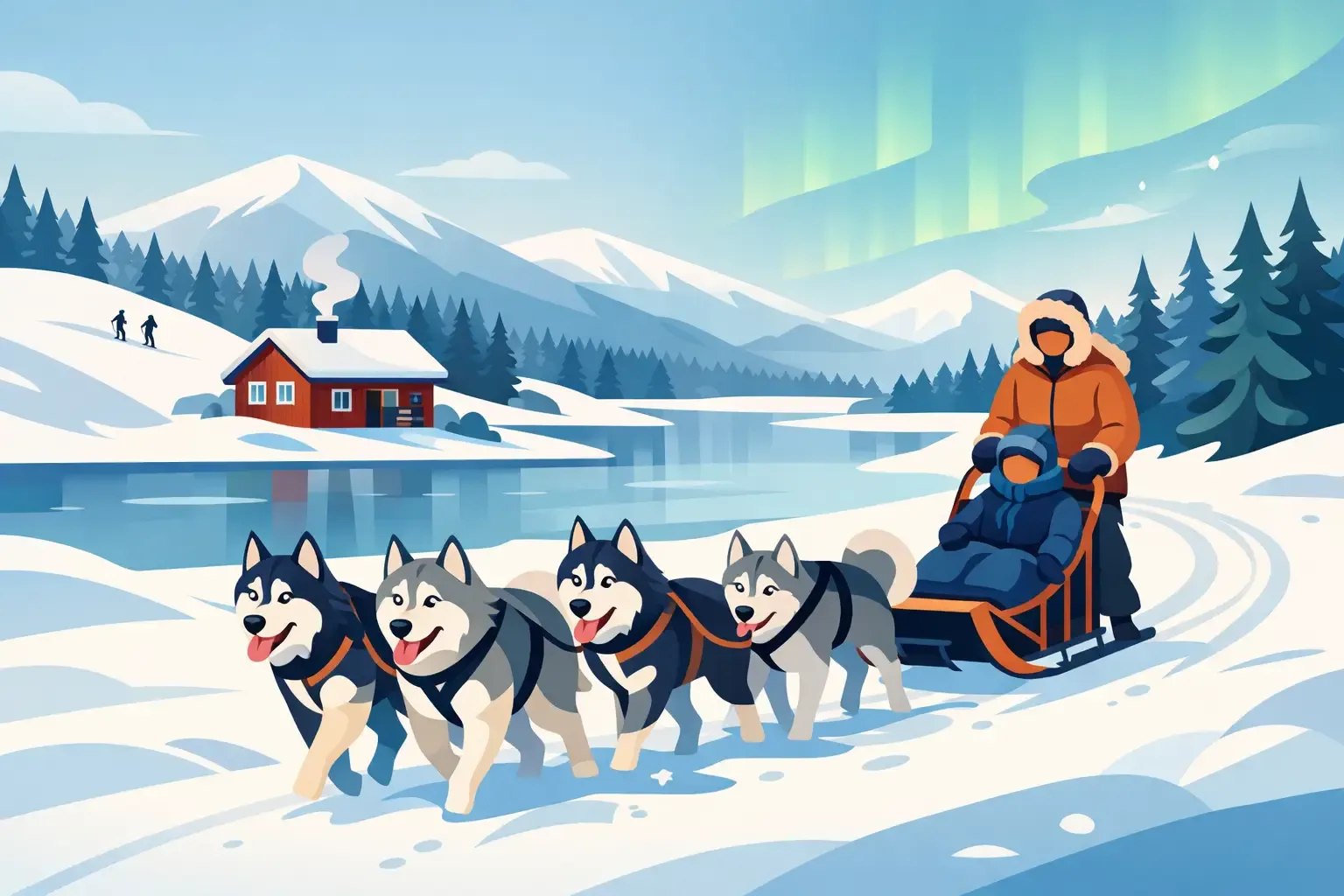
Guided Husky Adventure Weekends in Sweden
The first sound is not the runners on snow. It is the huskies: impatient, focused and ready to run. Guided husky adventure weekends put you in the middle of that energy, then take you beyond it – out onto frozen trails, through quiet forest and into the kind of winter landscape that makes everyday life feel very far away.
A short break can still be a proper adventure. With the right guide, equipment and local knowledge in place, a weekend offers more than a quick ride behind a dog team. It is a chance to learn how a sled works, understand the rhythm of the dogs and experience the Arctic with purpose rather than simply looking at it through a coach window.
What a guided husky adventure weekend feels like
Dog sledding is active travel. You are not sitting back while somebody else does all the work. After an introduction to the team and the equipment, you will usually help prepare the sleds, listen carefully to handling instructions and take responsibility for your own team on the trail. Your guide leads the route, sets the pace and is there when conditions or confidence call for support.
The feeling changes quickly once the noise of the kennel falls behind. The dogs settle into their work, the sled begins to glide and the landscape opens up. There may be long stretches of forest, broad frozen lakes and low winter light filtering through the trees. There may also be wind, snow on your eyelashes and muscles you did not expect to use. That is part of the point.
For many people, the strongest memory is the quiet. Between calls from the guide and the soft movement of runners across snow, there is space to notice the scale of the place. It is not a staged wilderness experience. It is a working journey through a winter environment, shared with dogs bred and trained to thrive in it.
Why choose guided husky adventure weekends?
A husky weekend works particularly well for people who want a meaningful break without committing to a full week away. You can leave the familiar behind on Friday, spend real time outdoors, then return with stories that feel far bigger than the length of the trip.
Guiding matters because Arctic travel has details that are easy to underestimate. Temperature, snow conditions, trail choice, clothing systems and dog handling all shape the experience. An experienced leader reads the conditions, keeps the group moving safely and gives beginners the confidence to get involved. You do not need to arrive as an expert. You do need to arrive ready to listen, learn and take part.
There is also the practical side. A guided trip removes the complicated organising: sourcing suitable kit, arranging transfers, understanding local terrain and finding a reputable dog operation. That leaves you free to focus on the adventure itself. Snow and Paddles builds experiences around that balance – real challenge, properly supported.
The dogs come first
A good husky adventure should never treat dogs as props. They are athletes, working as a team, and their welfare should be central to how the experience is run. Before booking, ask how the dogs are cared for, how teams are selected, whether guests are briefed on handling them and how the operator responds if weather or trail conditions are unsuitable.
You may meet dogs with very different characters. Some will bark with excitement before departure; others watch quietly, conserving energy for the trail. The relationship between musher, guide and dog team is one of the most compelling parts of the trip. You begin to see that the pace is not forced. It is built on training, trust and an obvious enthusiasm for running.
Responsible operators also work within sensible limits. Routes, distances and activities should reflect the dogs’ fitness, the snow conditions and the weather. A smaller or slower outing can be the right call on a difficult day. That is not a diluted adventure. It is good judgement in a demanding environment.
A weekend is short, but it should not feel rushed
The best itineraries give the journey room to breathe. Arrival, settling into winter conditions and meeting the dogs should not be squeezed into a frantic first hour. You need time to understand the equipment, learn how to brake and steer, and ask the questions that turn nerves into anticipation.
A typical weekend may include an introductory briefing, time with the dog teams, guided mushing on snow-covered trails and evenings spent warming up, eating well and sharing the day’s stories. Depending on the location and conditions, there may also be opportunities to look for the northern lights, try other snow activities or simply stand outside beneath a sky far darker than anything at home.
Do not judge a trip only by the number of kilometres covered. Longer trails can be brilliant for confident, active travellers, but quality comes from the whole experience: time with the dogs, capable leadership, a route suited to the group and enough stillness to absorb where you are.
Who will enjoy a husky weekend?
This is a strong choice for couples looking for a winter break with more purpose than a spa hotel, friends who want a shared challenge and solo travellers who enjoy being part of a small group. It also suits first-time adventurers who want to step into a serious landscape with professional support already in place.
You do not need elite fitness, but you should be comfortable being active outdoors for several hours. Mushing involves standing on runners, using the brake, shifting your weight and helping manage the sled when terrain changes. Cold weather adds another layer. If you can approach it with a positive attitude and a willingness to get involved, you are likely to get far more from the weekend.
Experienced outdoor people will find a different kind of reward. Arctic conditions demand attention, even when the route is guided. The skills may be new, but the satisfaction is familiar: reading the environment, working with a team and earning the warmth of a meal at the end of the day.
What to pack for the cold
Warmth is not about one enormous jacket. It is about layers that let you regulate your temperature while moving and while standing still. Base layers should move moisture away from the skin; insulating layers trap warmth; outer layers protect you from wind and snow. Avoid cotton where possible, as it holds moisture and can leave you cold.
Bring warm socks, insulated boots if these are not supplied, a hat that covers your ears, gloves or mitts, and a neck tube or buff. Mitts are often warmer than gloves, though gloves can be useful for fiddlier tasks. Sunglasses or goggles can make a major difference when the snow is bright or the wind picks up.
Your trip information should make clear what is provided and what you need to bring. Arctic clothing can be specialised, so do not guess. Ask early, then test any personal kit before you travel. Comfort is not a luxury here. Staying warm helps you stay alert, enjoy the dogs and make better decisions on the trail.
The conditions shape the adventure
No two weekends will be identical. Snow can be soft and quiet one day, firm and fast the next. Temperatures may sit comfortably below freezing, or drop sharply after sunset. The northern lights are never guaranteed, and wildlife does not appear on demand. That uncertainty is part of travelling in a real winter environment.
A well-run guided trip does not pretend otherwise. It sets clear expectations and adapts where needed. A route may change because of weather, a session may be adjusted for the group, or a planned evening outside may become a chance to learn more about local life and winter travel from indoors. Flexibility protects both the experience and the people – and dogs – making it possible.
Make the most of your time on the runners
Arrive rested if you can, and do not treat the briefing as a formality. Ask how to use the brake, what to do if your sled stops, how to keep safe around the dogs and how to communicate on the trail. The more you understand before setting off, the more present you can be once the team starts running.
Put your phone away for sections of the journey. Take photographs when it is safe and appropriate, but do not let the need to capture every moment pull you out of it. The scent of woodsmoke on your clothing, the steam rising from the dogs’ coats, the sudden rush of a downhill section – these are the details that tend to stay with you.
Choose guided husky adventure weekends when you want more than a winter escape. Go ready to work with the conditions, listen to the dogs and give a few days to a place that asks you to slow down, look up and keep moving forward.