

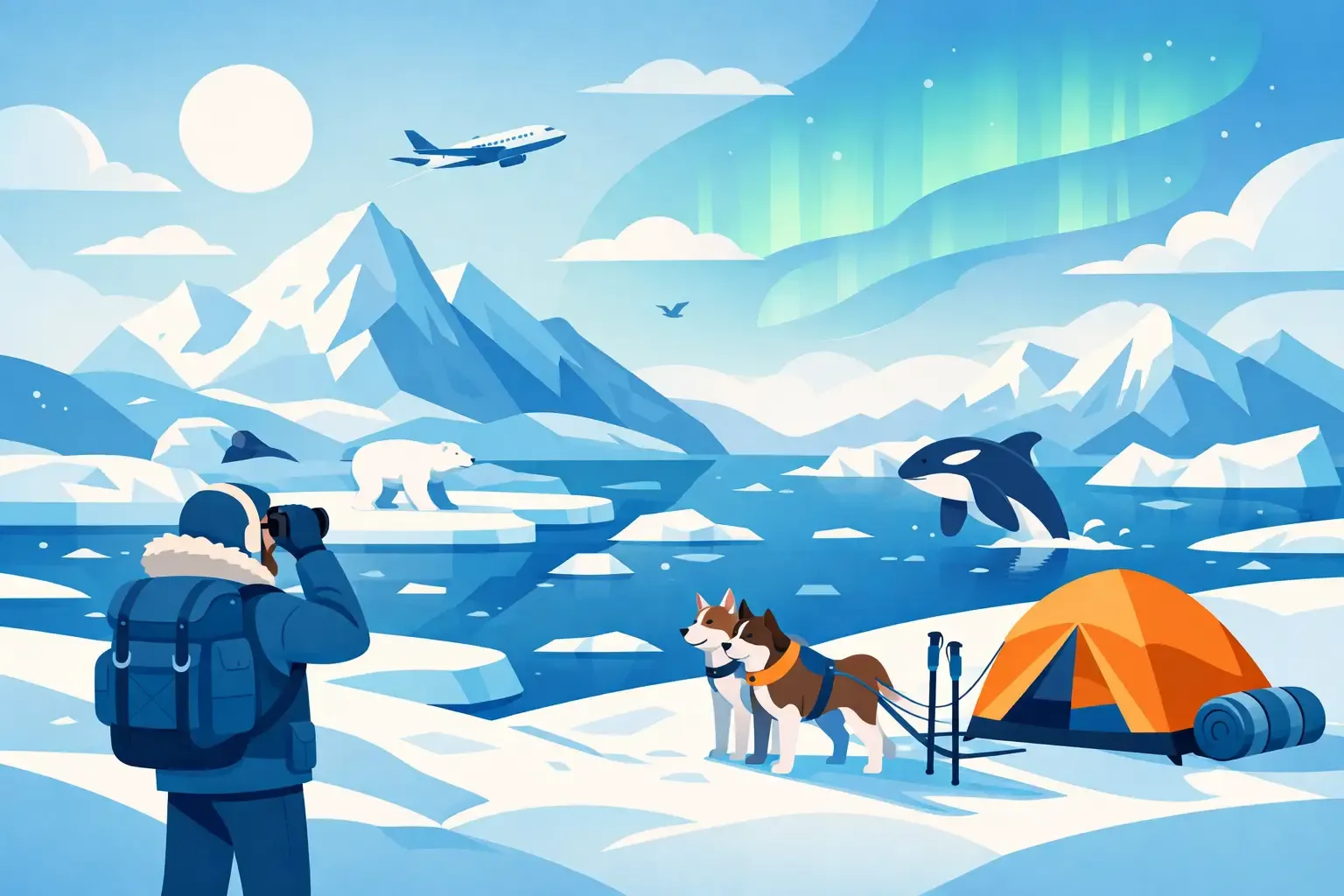
Beginner Guide to Arctic Travel
The Arctic has a way of stripping life back to the essentials. Cold air, wide horizons, quiet forests, frozen lakes, and the kind of light that makes you stop talking for a minute. If you are looking for a beginner guide to Arctic travel, the good news is that this world is far more accessible than most people think. You do not need to be an elite mountaineer, an extreme cold specialist, or someone who already owns a garage full of expedition kit. You do need the right expectations, the right support, and a willingness to step into a place that feels bigger, cleaner and wilder than daily life.
For many first-time travellers, the Arctic sounds daunting because people tend to imagine the harshest version of it. Blizzards, survival dramas, and total isolation. Those conditions can exist, of course, but a guided Arctic trip for beginners is not about proving how much discomfort you can endure. It is about entering a winter environment safely, learning how it works, and discovering just how rewarding cold-weather travel can be when it is properly led.
Why a beginner guide to Arctic travel starts with mindset
The first shift is simple. Stop thinking of the Arctic as something reserved for hardened adventurers. Start thinking of it as a place where preparation matters more than bravado. The people who enjoy it most are often not the loudest or the toughest. They are the ones who listen, layer up properly, stay curious, and trust the pace of the environment.
There is also a mental adjustment around comfort. Arctic travel is not a spa break with snow outside the window. Even on well-run trips, you may feel the cold on your face, need to put on boots in the dark, or discover that simple tasks take longer in sub-zero temperatures. That is part of the point. The reward is not polished convenience. It is the sharp satisfaction of moving well through a winter landscape and realising you are capable of more than you thought.
When to go and what the season changes
Timing shapes your experience more than many beginners expect. Early winter often brings fresh snow, shorter days and a strong sense of seasonal transition. Midwinter can feel deep, quiet and intense, with long nights and real cold. Late winter usually offers more daylight, often more stable conditions for activity, and a little more margin for those new to snow travel.
If your priority is seeing the Northern Lights, darker periods give you a better chance, though sightings are never guaranteed. If you want longer days for snowshoeing, dog sledding or travelling across frozen terrain, later in the season may suit you better. Families, active couples and solo travellers all tend to enjoy different parts of the season for different reasons, so this is one of those areas where it depends on what you want the trip to feel like.
What Arctic travel actually feels like
Cold in the Arctic is different from damp winter weather in Britain. In many northern regions, a dry cold can feel surprisingly manageable if you are dressed properly. Minus 15 in still, dry air can be more comfortable than a raw, windy day back home. Wind changes that fast, and so does inactivity. Standing still in poor kit is where many people start to struggle.
The sensory side catches people off guard in a good way. Snow absorbs sound. Forests feel hushed. Your breath hangs in the air. Meals taste better after time outside. Small achievements, like lighting a fire, driving a snowmobile for the first time, or mushing a dog team across a frozen track, feel enormous because the surroundings amplify everything.
Clothing and kit for first-time Arctic travellers
The best beginner guide to Arctic travel is not a shopping list full of expensive mistakes. You do not need to buy the most extreme gear on the market. You need a layering system that works.
Start with a good base layer that moves moisture away from your skin. Add an insulating mid-layer such as fleece or wool. Finish with a protective outer layer that blocks wind and handles snow. Warm gloves or mitts, insulated boots, thick socks, and a hat that covers your ears matter just as much as your jacket. Neck gaiters and spare glove liners are small things that make a big difference.
The biggest beginner error is assuming one giant coat solves everything. It rarely does. Layers give you control. You can cool down when active and warm up when static. That flexibility matters when your day includes movement, stops, transport and changing weather.
On many guided trips, some specialist outer kit is provided or advised in advance. That can save money and remove guesswork. It is one reason travelling with an experienced operator makes so much sense when you are starting out.
Fitness, ability and the truth about being a beginner
Most people asking about Arctic travel are less worried about the cold than they are about whether they are fit enough. The honest answer is that it depends on the trip. Some Arctic adventures are active but accessible, built for people with a decent general level of fitness rather than specialist endurance. Others are more demanding and are better suited to those with strong outdoor experience.
As a beginner, look for trips that are clear about pace, support and required ability. Guided experiences can open the door to activities that would feel hard to organise alone, from husky sledding and snowshoeing to winter camping, ice fishing or snowmobiling. You do not need to know everything before you arrive. You do need to be honest about your current fitness and comfortable following guidance.
That honesty helps everyone. A good trip should challenge you, but not in a way that turns the whole experience into a grind.
Safety and why guided support matters
Remote winter environments are not the place for guesswork. Temperatures can drop quickly. Weather can change. Daylight can be limited. Terrain can be unfamiliar. None of this means beginners should stay away. It means the quality of leadership matters.
A well-led Arctic trip gives you structure. Routes are planned. Activity choices suit conditions. Safety procedures are clear. Equipment is appropriate. You are free to focus on the experience rather than trying to manage every moving part yourself.
This is where a company such as Snow and Paddles speaks directly to what many first-time Arctic travellers need: proper leadership, accessible entry points, and the reassurance that serious adventure can still be organised, protected and beginner-friendly. That combination matters. It allows you to stretch your comfort zone without stepping outside sensible boundaries.
Activities worth considering on a first Arctic trip
For a first visit, it is usually better to choose depth over sheer variety. Trying to cram every Arctic activity into one itinerary can leave you tired and rushed. A strong beginner trip often combines two or three core experiences with time to settle into the environment.
Dog sledding gives you a close connection to the landscape and often becomes the standout memory. Snowshoeing is brilliant for learning how winter travel feels at human pace. Snowmobiling covers more ground and suits those who want a bigger sense of range. Winter wildlife watching, ice fishing, and simple campcraft add quieter moments that help round out the trip.
The right balance depends on you. If you want physical involvement, choose trips where you are doing rather than just watching. If you want a softer landing, pick something with warm accommodation and day-based activities before considering winter camping or longer expedition formats later on.
Common mistakes first-timers make
One is overpacking the wrong things and underpacking the useful ones. Fashionable winter wear is rarely the answer. Practical layers win. Another is underestimating hydration and nutrition. Cold can blunt thirst, but your body is still working hard. Drink regularly and eat properly.
A third mistake is chasing a social media version of the Arctic. Not every sky glows green every night. Not every day brings perfect powder snow. The real value of the Arctic is not constant spectacle. It is the atmosphere, the effort, the scale, and the feeling of being fully present in a place that demands attention.
Finally, some beginners try to be too stoic. If your feet are cold, say so. If your layers are wrong, ask. Good guides would always rather solve a small issue early than watch it become a bigger one later.
How to choose your first Arctic experience
Start with the kind of challenge you actually want. Do you want a confidence-building first taste of winter adventure, or do you want to be tested? Do you want comfortable accommodation with full days outside, or are you specifically drawn to expedition-style travel? Neither is more valid. They simply lead to different choices.
Read itineraries closely. Ask what a normal day looks like. Find out what is included, what kit support is available, and what previous beginners have said. The best first trip is not the one that sounds most extreme. It is the one that leaves you wanting to go back north again.
That is often how Arctic travel begins. You book one trip out of curiosity, maybe with a healthy bit of nerves, and come home with a completely different sense of what you can do. Cold becomes something you can work with. Challenge becomes something you can enjoy. The landscape gets under your skin. Start well, go with the right people, and your first Arctic journey can become the one that changes how you travel altogether.