

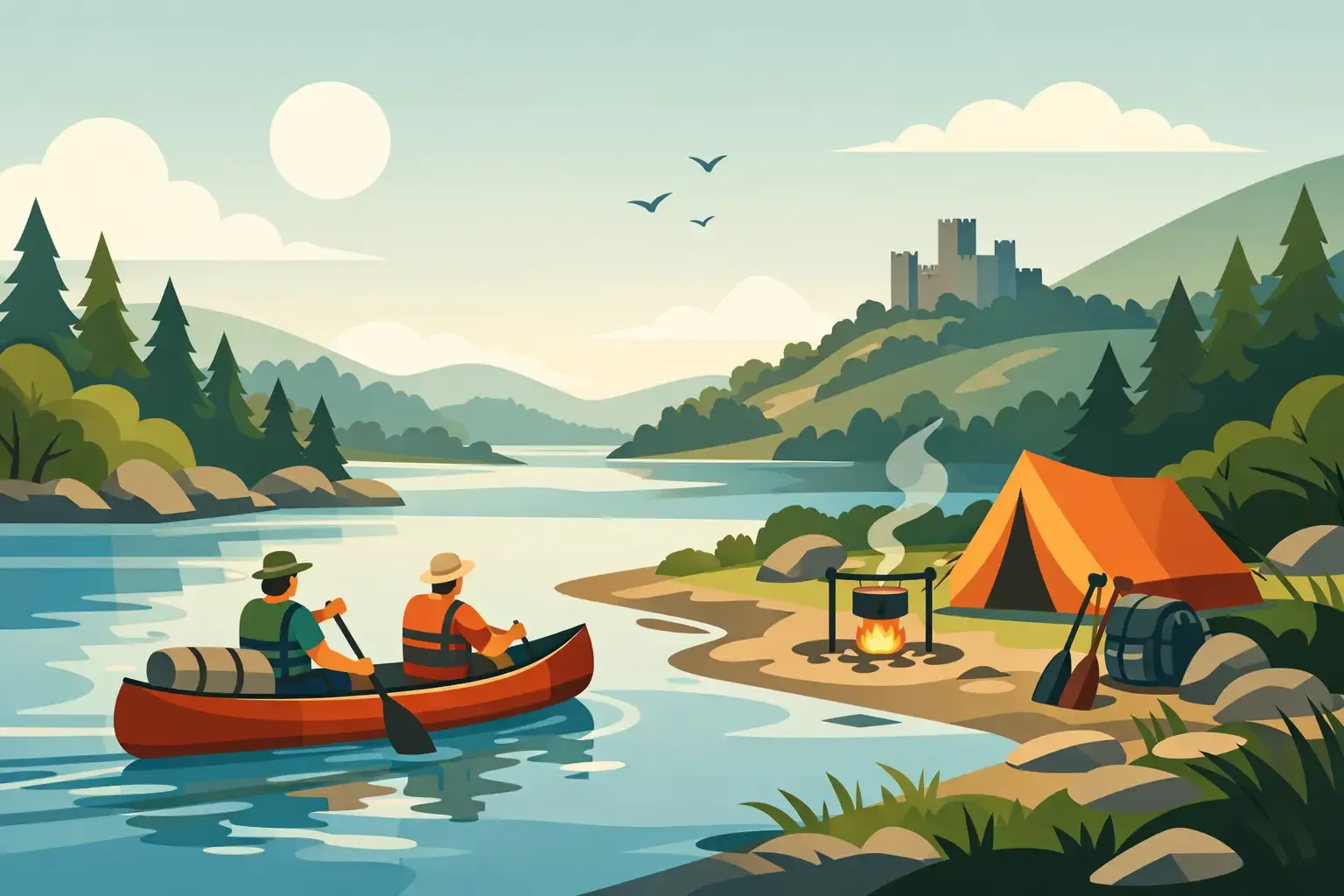
Canoe Camping Holidays UK: What to Expect
A good canoe trip changes pace fast. One hour you are loading dry bags at the water’s edge, still thinking about emails and deadlines. A few strokes later, the bank slips by, the noise drops away, and canoe camping holidays in the UK start to feel less like a break and more like a proper reset.
That is the real pull of this kind of adventure. You are travelling under your own power, carrying what you need, and reaching camps that feel earned rather than booked. For some people, that means a first taste of wilderness without leaving Britain. For others, it is the closest thing to expedition travel you can fit into a long weekend.
Why canoe camping holidays in the UK appeal to so many people
Canoe travel has a rare balance to it. It is active, but not frantic. It gives you challenge, but also long stretches of calm water, wildlife, and time to think. Unlike a walking holiday, you can carry more kit without feeling every kilogram on your back. Unlike a standard campsite break, you are moving through a landscape rather than staying still in it.
That makes it a strong fit for active couples, solo travellers, friendship groups and busy professionals who want something more meaningful than a hotel and a meal out. The days feel full. The evenings feel deserved. Even a short trip can leave you with that satisfying mix of tired arms, clear head and total switch-off.
It also works across experience levels. If you are new to paddling, guided canoe camping can open the door without the stress of planning routes, sorting safety cover or second-guessing what conditions will be like. If you already spend time outdoors, canoe camping adds a new layer of self-reliance and freedom.
What a canoe camping holiday in the UK is really like
Forget the polished version of adventure where everything goes perfectly and every sunset arrives on cue. Real canoe camping is better than that because it feels real. Boots get muddy. Hands get cold on the first morning. Tents go up in a breeze. Then dinner is on, the stove is hissing, and you realise you have not looked at your mobile phone for hours.
Most trips follow a simple rhythm. You pack camp, load canoes, paddle for a section of river or lake, stop for brews and lunch, then continue to the next overnight spot. Some routes are gentle and ideal for beginners. Others involve longer paddling days, more exposed water, or portages where you carry kit and boats around obstacles.
That variation matters. Not every canoe camping trip is hard, and not every trip is easy. Weather, water levels, group ability and route choice all shape the experience. A calm lake in good conditions can feel peaceful and accessible. The same stretch in strong wind becomes far more serious. That is one reason guided trips make sense for many people. Good leaders read conditions properly, make sound decisions and keep the whole experience moving forward with confidence.
Who canoe camping holidays in the UK suit best
The short answer is more people than you might think. You do not need to be an elite paddler or a hardened survival specialist. What helps most is the right attitude – willing to learn, comfortable outdoors, and ready to swap convenience for experience.
Beginners often do well on guided canoe journeys because they can focus on paddling, camp life and the landscape rather than worrying about every detail. You learn quickly when you are actually doing it. How to trim a canoe. How to paddle efficiently with a partner. How to keep your kit dry. How to settle into camp in a way that feels practical rather than chaotic.
More experienced outdoor travellers often come to canoe camping because they want something that feels bigger than a standard weekend away. It has the progression many people are looking for. Once you have walked, camped and scrambled, moving by canoe opens up new routes and a stronger expedition feel.
It is also worth saying who may not enjoy it. If your ideal holiday depends on predictability, private bathrooms and packing light for dinner, this is probably not your lane. Canoe camping rewards people who can laugh when the weather turns, adapt when plans shift and find comfort in the fact that adventure is not meant to be polished.
Choosing the right route and duration
One of the biggest mistakes people make is assuming longer means better. It depends what you want from the trip.
A two-day or weekend canoe camping journey is often enough to give you the feeling of escape without overwhelming you. It is a strong choice for first-timers, busy professionals or anyone testing whether this style of travel suits them. You still get the core ingredients – paddling, camp craft, evenings outdoors and that sense of journey – but with a manageable time commitment.
A three to five-day trip gives you more depth. You settle into a rhythm, travel further, and start to feel properly removed from normal life. This is often the sweet spot for people wanting genuine immersion without stepping into full expedition territory.
Longer trips can be brilliant, but they raise the stakes. Fatigue builds, weather has more time to play a role, and small kit issues become bigger annoyances if you have packed badly. For the right person, that is part of the attraction. For others, a shorter, well-led trip offers more enjoyment and less grind.
Guided or self-organised?
There is no single correct answer here. Self-organised canoe camping has obvious appeal if you already have paddling skills, route knowledge and the right equipment. It offers freedom and privacy, and for experienced paddlers that independence is part of the reward.
But guided canoe camping holidays in the UK remove a lot of friction. You do not need to piece together logistics, assess the route alone, source specialist kit or carry the pressure of making every decision in changing conditions. You gain local knowledge, coaching, structure and a safer framework for the whole experience.
That is especially valuable if you are short on time. Many people want the adventure, not the admin. They want to arrive, be looked after properly, learn from professionals and leave with the memory of the trip rather than the stress of organising it. That is where an experienced operator such as Snow and Paddles comes into its own.
What to pack without overthinking it
The best canoe camping kit list is practical, not glamorous. Dry bags matter more than fancy extras. Warm layers matter more than having loads of options. In the UK, conditions can shift quickly, so packing for mild discomfort is simply sensible.
Clothing should be quick-drying and suitable for layering. Cotton is rarely your friend once it gets wet. Footwear needs grip and should cope with getting soaked or muddy. A warm layer for camp, a waterproof outer, a sleeping bag suited to the season, and a reliable sleeping mat all make a real difference once the temperature drops.
Then there is the question of how much comfort to bring. Canoes let you carry more than you could on foot, but that does not mean you should bring half your house. Every extra item still needs loading, unloading and keeping dry. The sweet spot is enough kit to stay warm, fed and comfortable, without turning each portage into a punishment.
The weather, the challenge and the reward
British adventure always comes with a weather clause. That is not a flaw. It is part of what makes these trips memorable.
A bright, still evening by the water is hard to beat. So is the first brew after landing in drizzle and getting camp sorted properly. The challenge sharpens the experience. You are not consuming a holiday. You are taking part in it.
Still, there is a clear difference between healthy challenge and unnecessary suffering. Good trip design matters. So does honest communication about ability, fitness and expectations. The right trip should stretch you, not flatten you. If you are pushing into a new level of adventure, support and pacing make all the difference.
More than a break from routine
The strongest reason people come back from canoe camping changed is not that they paddled a certain distance or slept under canvas. It is that they proved something to themselves. They handled uncertain weather, learnt new skills, worked as a team and found they needed less than they thought.
That stays with you after the trip. You return home cleaner in the head, if not always cleaner in your boots. You remember how good simple things felt – moving well, eating outside, earning rest, waking up close to the water. For many people, that is the real value of canoe camping. It strips life back to something solid.
If you are weighing up your next adventure, choose the one that asks a little more of you and gives much more back. Canoe camping in the UK does exactly that.