

How to Choose an Arctic Expedition
The Arctic is not the place to book on a nice-looking photo and hope for the best. One trip might mean dog sledding between remote cabins. Another could be a ship-based voyage with daily landings. Both count as Arctic travel, but they deliver very different experiences. If you are wondering how to choose an Arctic expedition, start by being honest about what you want the trip to feel like, not just where you want to go.
That matters because the right expedition can be life-shaping. The wrong one can leave you cold, tired and wondering why you spent so much money to stand on sea ice in boots that do not fit. The Arctic rewards good decisions. It also exposes bad ones quickly.
How to choose an Arctic expedition starts with your goal
Before you compare destinations, boats or price tags, pin down your reason for going. Some people want wildlife and photography. Some want to test themselves in a harsh environment. Others want the stillness, the snow, the northern lights and the feeling of being a very long way from everyday life.
These goals lead to different kinds of trips. If your priority is wildlife, you may lean towards a voyage with experienced naturalist guides and a route known for sightings. If you want active travel, you are more likely to enjoy a land-based expedition built around skiing, snowshoeing, husky journeys or winter camping. If comfort matters, that does not make you less adventurous. It simply means your ideal trip may include warm accommodation, structured support and a pace that lets you absorb the place rather than endure it.
There is no prize for choosing the toughest option if it is not the right fit. The Arctic is challenge enough when the trip matches your level. When it does not, it can become hard work for the wrong reasons.
Pick the right Arctic style for you
The biggest decision is often not the destination but the format. Arctic expeditions generally fall into a few broad styles, and each creates a different relationship with the environment.
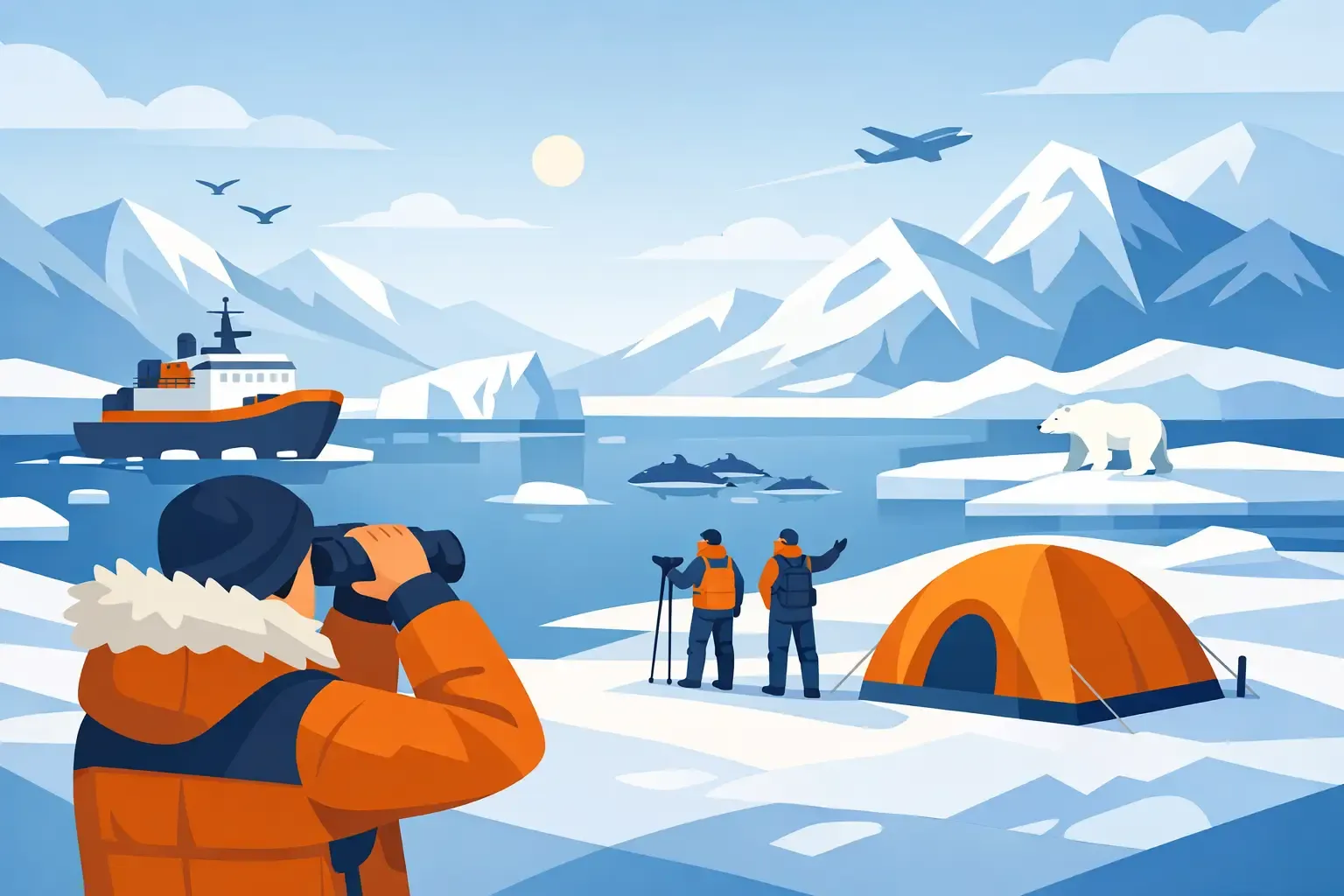
Ship-based expeditions suit travellers who want reach, variety and relative comfort. You can cover more ground, access remote coastlines and often combine wildlife watching with shore landings. The trade-off is that you are sharing the experience with a wider group, and your connection to the landscape can feel less physical than on a self-propelled or land-based trip.
Land-based Arctic trips are usually more immersive. You stay in one region and experience its weather, rhythm and terrain at ground level. That might mean moving by snowmobile, dog sled, skis or on foot. These trips often appeal to people who want a stronger sense of participation and skill-building. The trade-off is that the weather affects you more directly, and comfort levels can vary hugely.
Then there are expedition-style journeys where the travel itself is the challenge. You may carry kit, help with camp routine or cover distance in demanding conditions. These can be exceptional experiences, but they ask more of you physically and mentally. If that is what you want, excellent. If not, there is no shame in choosing a trip with more support.
Be realistic about your experience and fitness
Adventure should stretch you, not break you. A good operator will explain the demands clearly, but it is still on you to assess your own readiness.
Fitness matters in the Arctic because cold makes everything harder. Walking through snow, climbing in and out of sleds, dealing with wind, staying warm and carrying even a small pack all take more energy than people expect. If a trip says moderate, ask what moderate actually means in hours, terrain and daily routine. A four-hour winter activity is very different from four hours on a summer hill in the UK.
Experience matters too, though not always in the way people think. You do not need to be a hardened polar traveller to go north. Many excellent Arctic trips are suitable for beginners. What helps most is a calm attitude, willingness to listen and a realistic understanding that remote travel rarely runs exactly to plan. If you already enjoy camping, winter walking or multi-day adventures, that will help. If you are new to it all, choose a trip designed to support first-timers rather than pretending you will just get on with it.
Destination matters, but season matters more than most people realise
People often start with place names, but season can shape the experience just as much. The Arctic in deep winter is not the same as the Arctic in spring, and spring is not the same as summer.
If you want northern lights, darkness and that full winter atmosphere, you need the colder months and the patience that comes with them. If you want longer daylight, easier movement and more active travel, late winter or spring may be a better fit. If wildlife is your focus, timing becomes even more specific depending on species and location.
This is where expectations need tightening up. You may not get lights every night. You may not see a polar bear. You may have perfect snow but flat light for photography. The best Arctic trips are built around the place itself, not around guaranteed spectacle. Choose a season that gives you the best chance of the experience you value most, then leave room for the Arctic to be itself.
The guide and safety standards should carry real weight
A strong guide can turn difficult weather into a brilliant day. A weak one can make an easy day feel uncertain. In remote cold environments, leadership is not a nice extra. It is central to the whole experience.
Look closely at who is leading the trip, how experienced they are in Arctic conditions and what support sits behind the itinerary. You want more than a cheerful host. You want people who understand the environment, manage group pace well, brief clearly and can adapt when conditions change.
Safety should be visible in the way the trip is described. That includes sensible kit guidance, clear group ratios, emergency planning and realistic language about conditions. Financial protection matters too. If you are booking a significant expedition, you want the reassurance that comes from proper travel protections and a professionally run operation.
That reassurance does not kill the spirit of adventure. It protects it. The best trips feel bold because the groundwork is solid.
Budget is not just the headline price
Arctic travel is expensive, but the cheapest option can become costly once you add the extras. Flights, specialist clothing hire, meals, transfers, luggage charges, activity add-ons and insurance can all move the number quickly.
A better question than What does it cost? is What does this price actually include? One operator may look more expensive at first glance but provide much better value through guiding, equipment, accommodation quality and smoother logistics. Another may advertise a lower rate and leave you to sort key pieces yourself.
This is also where comfort comes back into the picture. Warm, well-run accommodation, decent food and reliable transport are not luxuries when you are in a cold environment. They affect your energy, mood and ability to enjoy the trip. Spend where it counts.
Ask what a normal day really looks like
Brochures are good at the highlights. They are less good at the in-between bits, which often define the experience.
Ask what time days start, how long you are outside, how much downtime there is, what happens in poor weather and how involved you are expected to be. On some trips, you are very much a participant. On others, the logistics happen around you while you focus on the experience. Neither is better. They are just different.
The same applies to group dynamics. A small group can feel more personal and flexible. A larger one may bring more social energy and lower costs. Solo travellers often care about this more than couples or friends do, but it matters to everyone. The right group size can shape how supported, challenged and connected you feel.
How to choose an Arctic expedition without overcomplicating it
At a certain point, research stops being helpful. If you have compared six itineraries and they all sound impressive, come back to a few simple filters. What is your main goal? How much challenge do you genuinely want? What level of comfort helps you thrive? How much trust do you have in the operator and guide team?
That usually narrows the field quickly. A good expedition is not the one with the most dramatic wording. It is the one that fits your aim, your experience and your appetite for challenge. For some, that means a first Arctic winter journey with expert support and proper warmth at the end of the day. For others, it means a more demanding trip where the effort is part of the point. At Snow and Paddles, that balance matters – serious adventure, led well, with room for people to grow into it.
The Arctic has a way of showing you exactly where you are – physically, mentally and emotionally. Choose a trip that gives you the chance to meet that honestly, and you are far more likely to come home with the kind of experience that stays with you.