

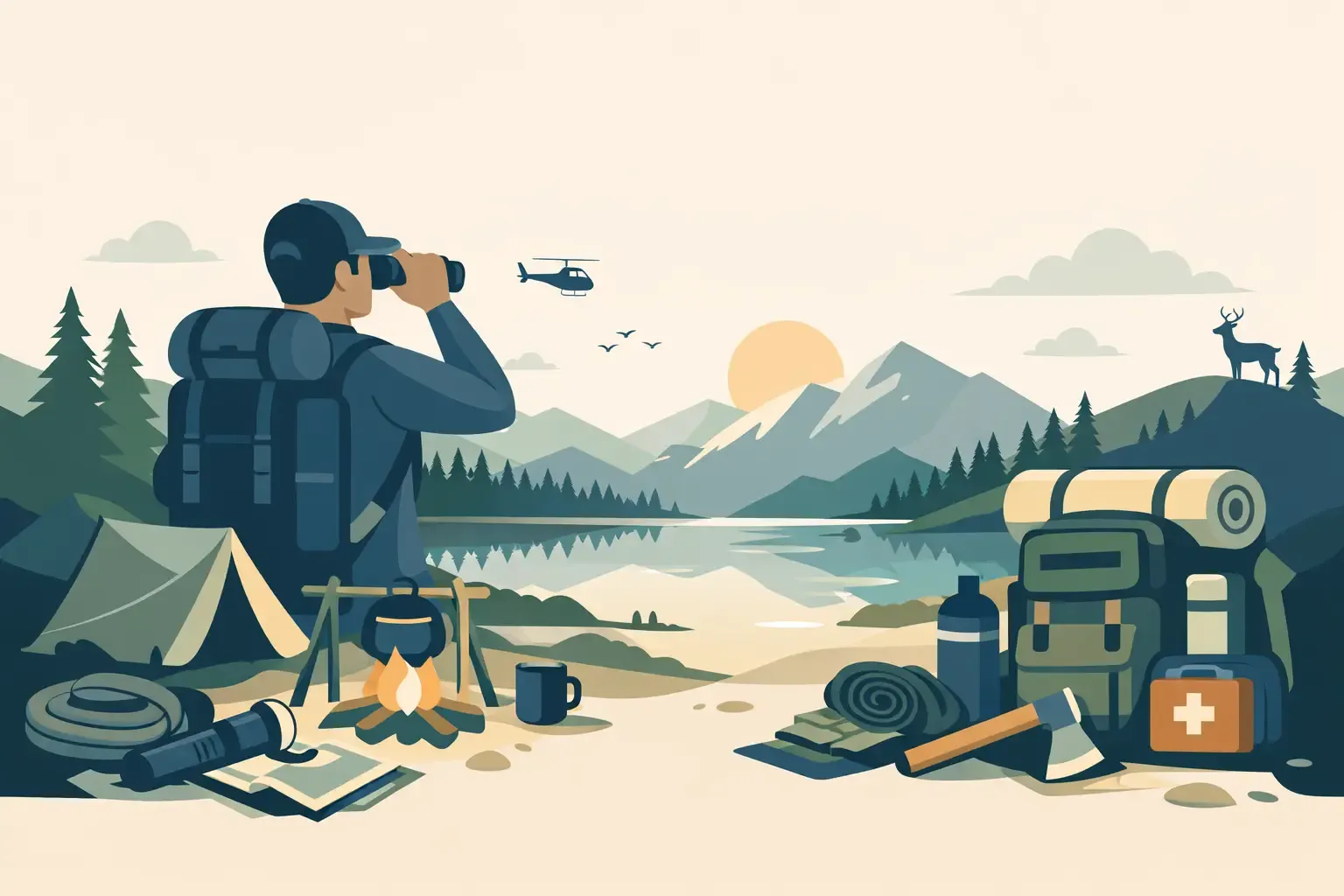
How to Prepare for Survival Challenges
Cold fingers. Wet boots. A fire that will not catch. Most survival challenges do not begin with drama. They begin with small failures that stack up fast. That is why learning how to prepare for survival challenges matters long before you step into the woods, onto the water or into winter conditions. Good preparation does not make the experience easier in a soft way. It makes it sharper, safer and far more rewarding.
For some people, a survival challenge means a guided weekend learning shelter building, fire lighting and campcraft. For others, it means moving through remote country in difficult weather, carrying what they need and making sound decisions when tired. The preparation changes with the setting, but the principle stays the same. You are not trying to look the part. You are building the skills, judgement and resilience to cope when conditions stop being comfortable.
What survival challenges really demand
People often picture survival as a test of toughness. In reality, it is a test of priorities. Can you stay warm before you get hungry? Can you stay hydrated before you get weak? Can you read the weather, pace yourself and avoid turning a minor problem into a serious one?
That is why preparation needs to go beyond buying kit. Expensive gear helps if it is appropriate, fits properly and you know how to use it. If not, it becomes dead weight. A simpler setup in skilled hands will usually outperform a premium setup in inexperienced hands.
There is also a difference between a controlled survival course and an unplanned emergency. On a guided experience, challenge is part of the point, but the risk is managed by leaders, route planning and support systems. In a real emergency, the margins are thinner. Preparing well means respecting both situations without confusing one for the other.
How to prepare for survival challenges before you train
Start by being honest about your current level. If you have never spent a cold night outdoors, there is no value in pretending you are ready for a winter bivvy in remote country. Equally, being a keen hiker does not automatically mean you can manage fire, shelter and water under pressure.
The smartest approach is progressive. Begin with the basics in manageable conditions. Learn to keep yourself warm and dry. Learn how your clothing system behaves when wet. Learn how long it takes you to pitch shelter in wind, not just in a calm back garden. Learn what your hands can still do when they are cold.
That progression matters because confidence built too early can be fragile. Real confidence comes from repetition. You want your key actions to feel familiar when the weather turns or your energy dips.
Build skills before you chase discomfort
A lot of people think survival preparation means making things harder on purpose. Sometimes that helps, but only after the fundamentals are in place. There is little point sleeping out in poor conditions to prove grit if you have not first learned how to select a safe camp, insulate yourself from the ground or manage damp clothing.
Focus first on a few core skills. Shelter is high on the list because exposure strips away strength and clear thinking quickly. Fire lighting comes next, but not as a party trick. You need to understand tinder, fuel, airflow and the reality that rain changes everything. Water matters just as much. In the UK and Scandinavia alike, people often assume cold places mean easy access to safe water. They do not. You still need to know how to collect, carry and treat it.
Navigation is another skill people underestimate. On a marked route in good visibility, it can feel simple. In poor weather or wooded terrain, small navigational errors become big energy drains. The same goes for campcraft, knife safety, stove use and layering systems. None of it is glamorous. All of it matters.
Fitness helps, but efficiency matters more
You do not need to be an elite athlete to take on survival challenges. You do need enough fitness to carry yourself, your kit and your decisions without falling apart. That means a base level of walking fitness, leg strength and stamina, especially if your challenge includes rough ground, snow, canoes or extended days outside.
Still, fitness alone is not enough. A very fit person who moves too fast, sweats heavily and ignores fuelling can unravel faster than someone moderately fit who manages effort well. Survival situations reward efficiency. That means steady pacing, eating before you are empty, drinking before you are dehydrated and stopping small issues early.
If you are preparing for a guided expedition or training weekend, match your training to the actual demands. Walk with a loaded pack. Practise in bad weather instead of always waiting for a sunny day. If paddling is involved, spend time learning how your body handles long periods on the water. If cold environments are involved, get used to layering, gloves and movement in winter clothing.
Choose kit that suits the challenge
The best kit is not the most technical. It is the kit that works for your environment, your skill level and the duration of the challenge. That sounds obvious, but people still overpack, underpack or bring equipment they have never tested.
Clothing should be built around moisture and temperature control. In British conditions, wet is often the real enemy. You need layers that help you regulate effort, shed rain and keep warmth when the temperature drops. Spare dry items are not luxuries when conditions are poor. They are a reset button.
Footwear is another area where ambition can outstrip common sense. If your boots cause blisters on a short walk, they will become a serious problem on a longer challenge. Break everything in properly. Test socks, waterproofs, gloves and sleeping systems before you rely on them.
Keep your core kit simple and proven. Shelter, sleep system, fire lighting, water treatment, food, first aid, navigation and means of communication all need thought. The exact setup depends on season and terrain. A summer woodland overnighter in southern England is not the same as a winter trip in Sweden. Preparation improves when you stop looking for one perfect packing list and start matching gear to conditions.
Mindset is the difference-maker
If you want to know how to prepare for survival challenges in a way that genuinely changes outcomes, work on mindset as deliberately as you work on fitness and kit. The people who cope best are rarely the ones chasing misery. They are the ones who stay calm, observe clearly and act early.
That means getting comfortable with controlled discomfort. Cold rain, numb hands and disrupted sleep do not need to become panic. They are signals to respond to. When you train, notice how you behave when frustrated or tired. Do you rush? Do you stop eating? Do you become careless with routine tasks? Those habits matter outdoors.
It also helps to separate challenge from ego. There is no prize for refusing extra layers, skipping rest or pretending you are fine when you are not. Good judgement is not weakness. It is fieldcraft. The strongest outdoor people are usually the least theatrical.
Learn with others, especially early on
You can practise plenty on your own, but guided learning compresses experience. A good instructor will spot mistakes you cannot yet see, show you what matters most and help you understand why one method works better than another in a given environment. That is especially valuable if you are moving beyond fair-weather camping into colder, wetter or more remote conditions.
There is another benefit too. Group-based challenge teaches communication, shared decision-making and pace management. Those are easy to overlook when you imagine survival as a solo test. In real outdoor settings, people often succeed or struggle together.
This is where structured experiences come into their own. Done well, they give you genuine challenge with the right safety framework around it. Snow and Paddles builds that balance into its approach, which is one reason guided adventure can be such a strong stepping stone from curiosity to real capability.
Respect the environment you are entering
Every landscape has its own rules. Woodland can hide navigation errors. Open mountain ground can expose you to wind and weather with almost no shelter. Rivers add movement, cold shock and changing conditions. Snow changes travel speed, energy use and risk entirely.
So prepare specifically. Read up on the terrain. Understand the likely weather patterns. Know the daylight hours. Think about extraction points, communication limits and what local conditions do to your plan. The more remote or seasonal the challenge, the less room there is for vague preparation.
There is also the human side of environmental respect. Tell people where you are going. Understand emergency procedures. Carry what you need to look after yourself properly. Outdoor challenge should build freedom, not carelessness.
The aim is not to become fearless. It is to become capable enough that the wild feels demanding in the right way. Prepare well, and survival challenges stop being a scramble to cope. They become what they should be – a chance to test yourself, learn fast and come back stronger than when you left.