

Husky Sledding Holiday Sweden: What to Expect
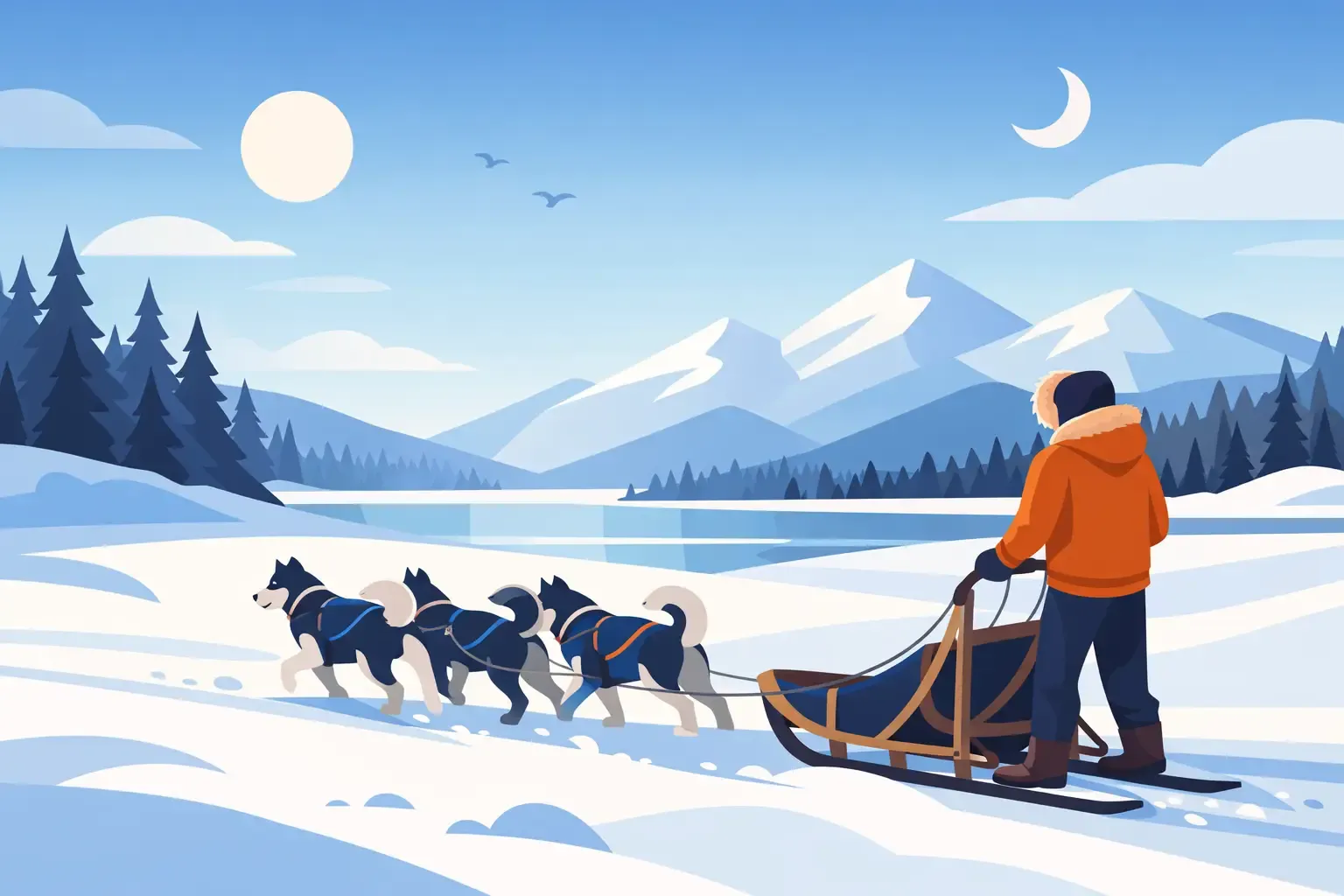
A cold blue dawn, a line of eager dogs throwing excited glances over their shoulders, and snow stretching silent through the trees – that is where a husky sledding holiday Sweden starts to make sense. Not as a novelty ride, but as a proper winter journey. For many people, it becomes the trip that shifts their idea of what a holiday can be.
Sweden suits this kind of adventure because the landscape does half the work for you. Big forests, frozen lakes, reliable winter conditions and long distances between settlements create the feeling that you have genuinely left everyday life behind. Add a well-run guided trip, experienced handlers and dogs that were born to run, and you get something far more memorable than a standard snow break.
Why choose a husky sledding holiday in Sweden?
There are a few places in the world where dog sledding feels authentic rather than staged. Sweden is one of them. The country has the space, climate and winter culture to make sled travel feel natural. You are not circling a short track for ten minutes before heading back to a hotel spa. You are moving through a real landscape in a way that belongs there.
That matters. A good husky trip is not only about speed or scenery. It is about rhythm. You learn to work with the dogs, read the trail, steady the sled on corners and trust the guide’s judgement when conditions change. Even as a beginner, you are taking part rather than watching from the sidelines.
For UK travellers, Sweden also strikes a useful balance. It feels properly Arctic without being impossibly remote to reach. You can step into a very different environment without taking on the complexity of a major expedition. That makes it ideal for active couples, solo travellers and groups who want challenge with structure around it.
What a husky sledding holiday Sweden trip actually feels like
The biggest surprise for first-timers is that dog sledding is not passive. Yes, you stand on the runners and let the team pull, but that is only part of the job. You will help on climbs, brace through descents and stay switched on the whole time. It is physical, but not in a gym-session way. It is practical effort in cold air, with a clear purpose.
Then there are the dogs themselves. They are not pets being coaxed into work. Well-cared-for huskies are driven, focused and impatient to get moving. The noise before departure can be enormous – barking, yelping, harnesses rattling, guides calling instructions. Then the moment the brake comes off, everything changes. The team settles, the sled glides and the silence of the forest returns.
That contrast is part of the magic. One minute it is chaos and energy, the next it is just snow, breath, runners on the trail and the movement of the dogs ahead of you. It feels wild, but in the right hands it also feels controlled.
When to go for the best conditions
Most people looking at a husky sledding holiday in Sweden are aiming for the heart of winter, and with good reason. From roughly December to April, conditions are usually right for sledding, but the experience changes across the season.
Early winter brings shorter days, deep cold and a stronger sense of the Arctic night. If you want twilight landscapes, crisp snow and a chance of seeing the northern lights, this can be a brilliant time to travel. The trade-off is that temperatures can be severe, and daylight hours are limited.
Later in the season, particularly from February into April, you often get longer daylight, slightly easier temperatures and more time on the trail with clear views across the landscape. For many first-time travellers, this is the sweet spot. You still get winter in full force, but with a little more comfort and flexibility.
The right month depends on what you want most. If your priority is atmosphere and deep winter character, go earlier. If you want longer trail days and a gentler introduction, late winter often works better.
Who it suits – and who should think twice
A husky trip in Sweden is more accessible than many people assume. You do not need previous sledding experience, and you certainly do not need to be an elite athlete. On a properly guided trip, beginners can learn quickly and enjoy it from day one.
What helps is a decent level of general fitness, a willingness to listen and an appetite for being outdoors in proper winter conditions. If you like active travel and do not mind being cold, tired and occasionally outside your comfort zone, you are likely to love it.
It may be less suitable if what you really want is a soft, low-effort winter break. Dog sledding has moments of stillness and beauty, but it is not a luxury product at its best. It is an experience built on movement, weather, teamwork and the realities of the trail. That is exactly why it stays with people.
How to choose the right trip
Not all husky experiences are equal. Some are short tasters designed to give you a quick ride. Others are multi-day journeys where you help care for the dogs, travel longer distances and spend nights in simple lodges or wilderness accommodation. Neither is automatically better – it depends what you want from the holiday.
If this is a bucket-list first, a shorter guided trip may be enough to give you the thrill of the trail without pushing too far into expedition territory. If you want immersion, look for a longer itinerary with time to build skills, travel deeper into the landscape and understand the working partnership between musher and dogs.
Pay attention to group size, guide experience and how clearly the operator explains the level of challenge. Good adventure travel companies do not oversell comfort or underplay conditions. They tell you what is involved, what kit you need and how support works if the weather turns or plans need to adapt. That honesty is worth a lot.
What to pack without overthinking it
Cold catches people out when they focus too much on style and not enough on systems. For a husky trip, your best approach is simple: layers, insulation and dry kit. Start with a good base layer, add warm mid-layers and finish with a windproof, weatherproof outer layer. Your extremities matter just as much as your core, so proper gloves, warm socks, insulated boots and a hat that actually covers your ears are essential.
The small details make a difference. Spare gloves can rescue a day. A neck tube helps more than many people expect. Hand warmers can be useful, though they should not replace decent clothing. Sunglasses or goggles may also be needed on bright snow days.
If you book with a specialist operator such as Snow and Paddles, you should expect clear guidance on what to bring and what can be provided. That removes a lot of uncertainty, especially for first-time Arctic travellers.
The value of going guided
Could you piece together a winter trip to Sweden on your own? Possibly. But dog sledding is one of those experiences where good leadership changes everything. A guided holiday takes care of the difficult parts – logistics, safety, local knowledge, route choices and realistic planning – so you can focus on the experience itself.
That support is not just about convenience. It builds confidence. For beginners, that means a smoother learning curve and a safer introduction to Arctic conditions. For experienced travellers, it means better access to the right trails, stronger decision-making and a more joined-up trip overall.
It also gives you something increasingly rare in travel – the chance to be fully present. When transport, accommodation, kit expectations and on-the-ground decision-making are handled properly, you stop managing and start experiencing.
More than a winter holiday
The best reason to book a husky sledding holiday Sweden trip is not that it looks good in photos, though it certainly does. It is that the experience gets under your skin. You come back remembering the dogs’ energy before the start, the bite of cold on your face, the strange calm of moving through snow-covered forest and the satisfaction of doing something that asked more of you than a standard break ever could.
That is the real draw. Not escape for the sake of it, but a few days that feel clear, purposeful and alive. If you have been craving a holiday with more edge, more meaning and a proper sense of journey, Sweden in winter is a very good place to begin.