

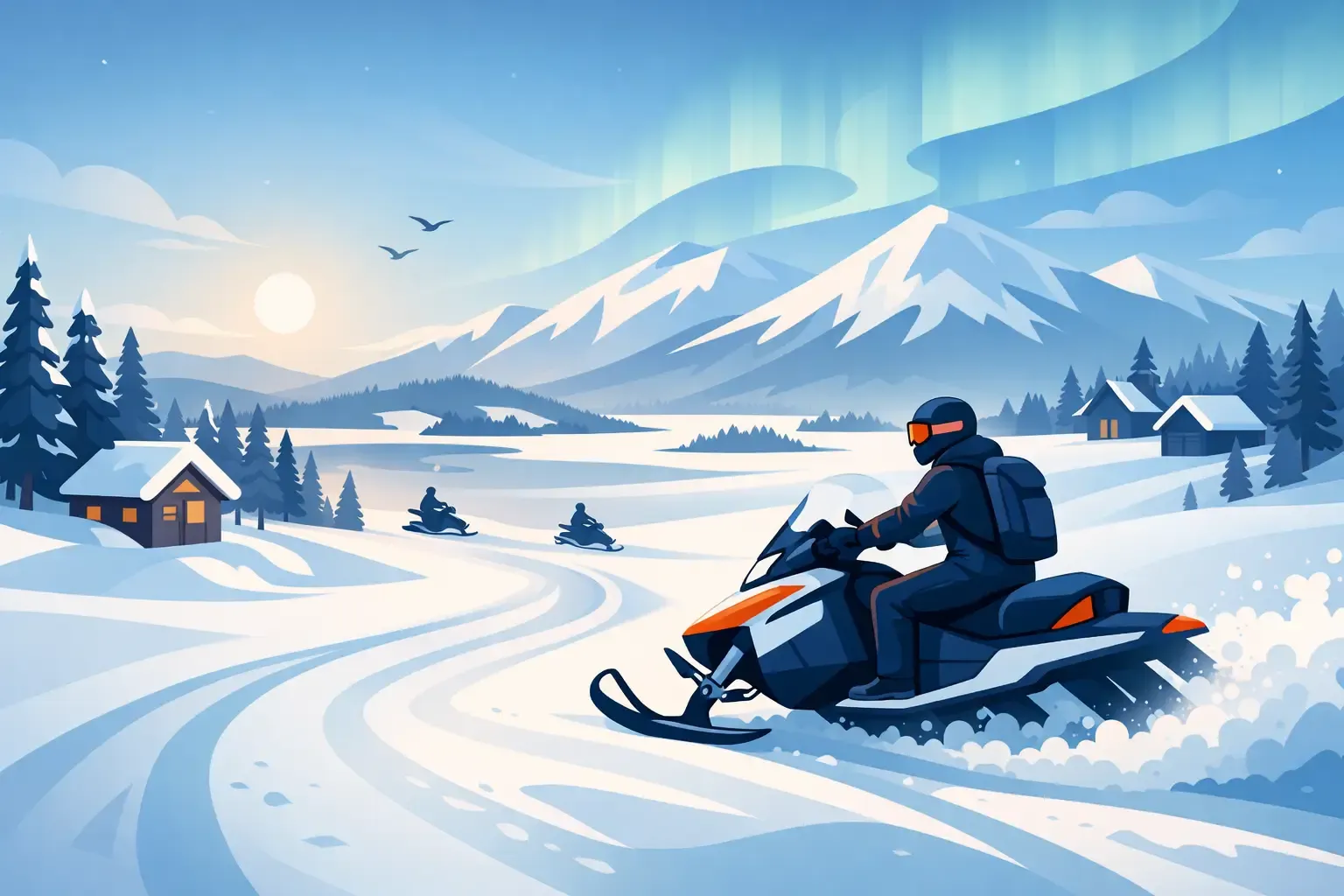
Snowmobiling Trips Sweden: What to Expect
The first time you open the throttle on a snowmobile in Swedish Lapland, the landscape changes shape. Forest tracks stretch ahead in clean white lines, frozen lakes open up like roads into nowhere, and the cold stops feeling like something to endure and starts feeling like part of the point. That is the draw of snowmobiling trips Sweden offers so well – big country, proper winter, and the kind of travel that wakes you up fast.
For many UK travellers, Sweden hits a rare balance. It feels remote enough to be wild, yet organised enough to be comfortable. You can reach the Arctic, ride through genuine wilderness, and still know your trip is being led by people who understand the terrain, the weather and the practical details that make the difference between a good adventure and a stressful one.
Why snowmobiling trips in Sweden stand out
Sweden is built for winter travel. The snow stays, the trail networks are extensive, and the terrain gives variety without forcing every trip into extreme territory. You can spend one day winding through birch forest and the next crossing open ground under a pale Arctic sky. That variety matters, especially if you want more than a quick thrill ride.
The best snowmobiling trips Sweden delivers are not just about speed. They are about distance, silence and access. A snowmobile lets you move through places that would otherwise take serious effort to reach in winter. That means more time in the landscape and less time thinking about logistics.
It also suits a wide range of travellers. If you are fit, curious and ready for cold conditions, you do not need to arrive as an expert rider. Guided trips are designed to build confidence quickly. For more experienced outdoor travellers, Sweden also has the scale to offer longer, deeper journeys with a stronger expedition feel.
Who these trips suit best
Snowmobiling in Sweden works particularly well for people who want an active holiday with structure. If you like the idea of challenge but do not want to spend weeks planning routes, transfers, cold-weather kit and local regulations, a guided trip makes sense.
It is a strong fit for couples who want something more memorable than a city break, for friends who want shared stories rather than just shared photos, and for solo travellers who enjoy joining a small group with a clear purpose. It also appeals to people who may be new to Arctic travel but want to do it properly, with experienced leadership and realistic support.
That said, it helps to be honest about your expectations. If you are looking for luxury first and adventure second, a snowmobiling trip may not be your best match. Even well-run trips involve cold hands, changing weather and long hours outdoors. That is part of their value. You come back feeling you have done something, not merely watched it happen.
What a typical day looks like
A good day on snow starts with preparation. You kit up properly, check the plan, listen to the guide, and get familiar with the machine before setting off. Early on, most people are focused on the mechanics – throttle control, braking, body position, following the trail. Then something shifts. You stop overthinking and begin to travel through the landscape rather than simply ride over it.
The pace depends on conditions, the group and the route. Some sections are about smooth progress through forest trails. Others are slower, more technical, or simply demand care because of weather or visibility. Frozen lakes can offer a sense of space and momentum, while narrower wooded tracks bring concentration back into play.
Stops matter as much as riding time. A hot drink in the cold feels earned. A trail lunch outdoors lands differently when you have spent the morning crossing winter terrain under your own control. On some trips, snowmobiling is part of a broader Arctic experience that may also include husky sledding, wildlife watching or time around camp. That mix can work especially well for first-timers who want a fuller sense of the north.
When to go for snowmobiling trips Sweden
Timing shapes the experience more than many travellers expect. Early winter can bring beautiful fresh snow, darker days and a stronger sense of Arctic atmosphere. Mid-winter often means the deepest cold and the most established snow cover. Late winter and early spring usually bring longer daylight hours, slightly softer conditions and a different rhythm to the trip.
There is no single perfect month. It depends on what you value most. If you want dramatic winter light and the possibility of seeing the northern lights after riding, the darker part of the season may appeal. If you want more daylight and easier visibility on the trails, later in the season can be a better fit.
Temperature is not a small detail here. Sweden in winter can be seriously cold. Guided operators help by advising on clothing and supplying key kit where needed, but your comfort still depends on taking that guidance seriously.
What to wear and what to prepare for
Cold-weather travel rewards simplicity. You need good layers, warm hands, solid boots and a willingness to adapt. Cotton is usually a poor choice. Moisture-wicking base layers, insulating mid-layers and dependable outer protection are far more useful than piling on random bulk.
The key is not just staying warm while standing still. It is staying comfortable while riding, stopping, eating outside and spending full days in sub-zero conditions. If your gloves are wrong or your boots are inadequate, you will notice quickly.
Preparation is also mental. Snowmobiling looks straightforward from a distance, but Arctic travel always has edges. Weather can change plans. Trail conditions can slow progress. Some days feel easy; others feel properly committing. The right mindset is not perfection. It is readiness, flexibility and trust in the guide team.
Guided versus independent riding
For most visitors from the UK, guided snowmobiling is the better choice. Not because independent travel lacks appeal, but because Sweden’s winter environment is best enjoyed when someone else is carrying the route knowledge, local judgement and operational responsibility.
A guided trip strips away a surprising amount of friction. You are not trying to interpret trail systems, assess conditions alone, organise safety cover or wonder whether your day plan still makes sense after a weather shift. You can focus on the experience, build your skills steadily and move with more confidence.
That does not make it passive. A good guide does not turn adventure into a conveyor belt. They create the conditions for it to happen well. That means clear briefings, sensible pacing, proper decision-making and enough support that beginners can step up without feeling out of their depth.
This is where a specialist adventure company matters. Snow and Paddles, for example, builds trips around guided leadership, real-world safety and the kind of structure that gives people room to stretch themselves without needing to shoulder every logistical burden alone.
The trade-offs that are worth knowing
Snowmobiling in Sweden is not a one-size-fits-all trip. Some itineraries are short and accessible, ideal if you want a first taste of Arctic riding. Others lean more towards expedition travel and suit people who actively want longer days and a bigger challenge. Neither is better. They simply ask different things of you.
There is also a balance between comfort and immersion. Staying in a cosy lodge each night gives you warmth, rest and an easier recovery. More remote journeys may offer stronger wilderness exposure, but they can feel more physically demanding. Think carefully about what kind of memory you want to build.
Cost is another factor. Proper winter travel, machines, guiding, safety systems and remote logistics all add up. The cheapest option is rarely the best option in an Arctic setting. Value comes from sound leadership, clear inclusions, reliable equipment and the confidence that your trip is protected and professionally run.
What you take home from the experience
People often book snowmobiling for the excitement, and that part is real. But what tends to stay with them is broader than that. It is the feeling of covering real ground in winter, the confidence that comes from learning quickly in a new environment, and the reset that happens when your day is reduced to simple priorities – stay warm, ride well, pay attention, keep moving.
That is why these trips appeal far beyond motorsport enthusiasts. They are not really about machines alone. They are about access to a landscape that still feels powerful and spacious, and about meeting it actively rather than from behind a window.
If Sweden is on your list, make it count. Choose a trip that matches your appetite for challenge, go with people who know the ground, and give yourself the chance to experience winter as something bigger than weather. The right Arctic journey has a way of staying with you long after the snow has gone.