

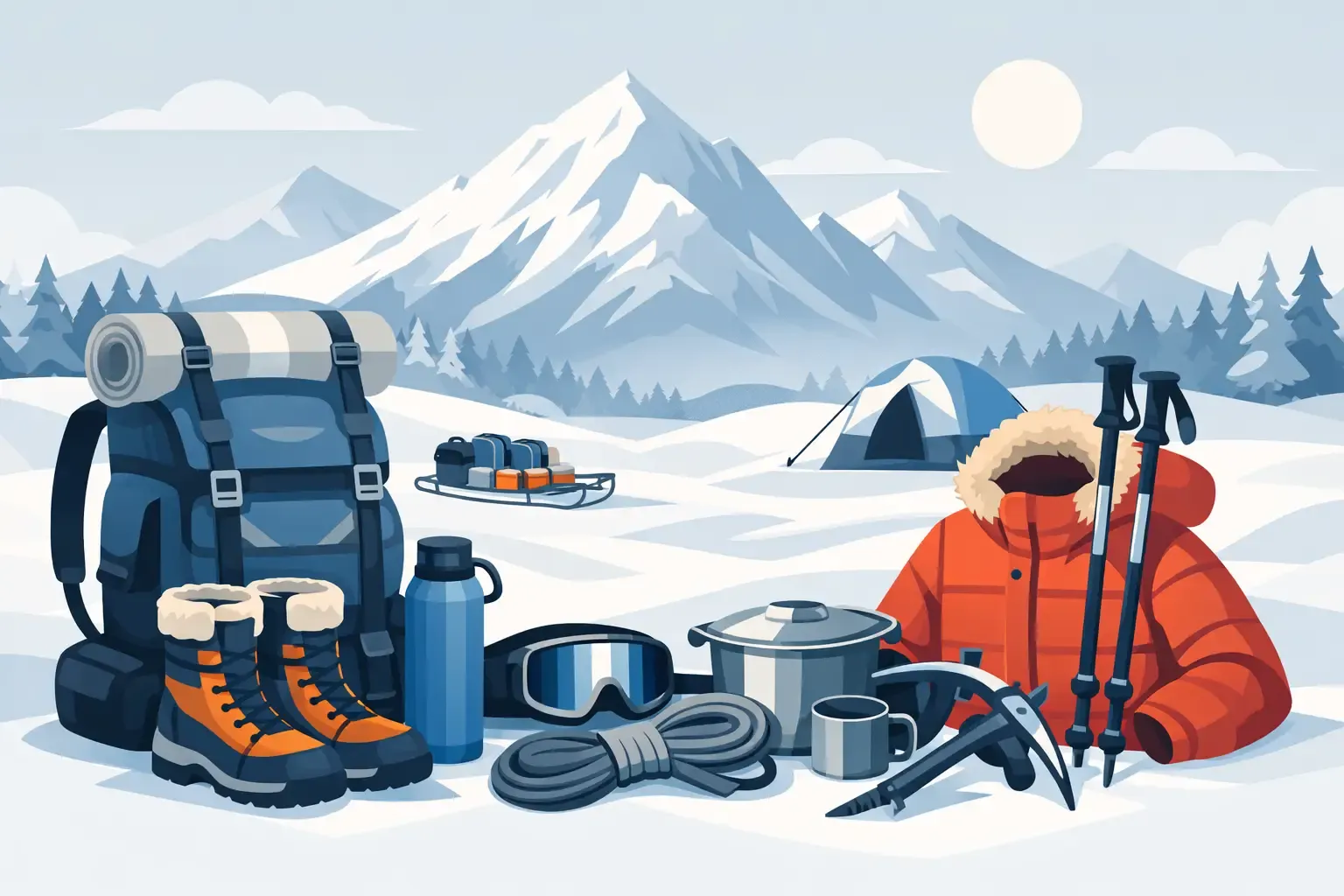
How to Pack for Winter Expeditions
The moment you stop moving in sub-zero temperatures, your packing decisions become very real. Gloves that looked fine at home feel useless in wind. A badly packed bag turns a simple kit change into a freezing faff. If you want to know how to pack for winter expeditions, start with this truth: winter rewards preparation and punishes guesswork.
A good winter pack is not about taking everything you own. It is about taking the right kit, protecting it from cold and moisture, and making sure you can reach it fast when the weather turns or the light drops. Whether you are heading into the Swedish Arctic, joining a guided snow trip, or stepping up from UK hill days into harsher winter ground, the principle is the same. Pack for safety first, comfort second, and convenience a very close third.
How to pack for winter expeditions without overpacking
The biggest mistake most people make is packing from fear. They imagine every possible problem and throw in a spare for every spare. The result is a bag that is too heavy, too chaotic and far harder to manage with cold hands.
The better approach is to pack by system. Think in layers, shelter, hydration, food, emergency kit and camp or overnight essentials if your trip includes them. That keeps your choices focused. It also makes it easier to spot overlap. For example, one insulated jacket that works for rest stops and camp is better than two bulky mid-layers trying to do the same job.
Weight still matters in winter, but not in the same simplistic way it does in summer. Cutting critical insulation to save a few hundred grams is a poor trade. On the other hand, carrying duplicate clothing “just in case” usually gives you more bulk than benefit. The sweet spot is reliable, proven kit with a clear role.
Start with clothing, not gadgets
Winter clothing should be packed in a way that reflects how your body actually heats and cools. When you move, you generate warmth. When you stop, you lose it quickly. That is why your spare insulation needs to be accessible, not buried at the bottom of your bag under tonight’s socks.
Your base layers should keep moisture off your skin. Your mid-layers should trap warmth. Your outer layers should block wind, precipitation and spindrift. That part is straightforward. The more useful question is how many of each to bring.
For most winter expeditions, one set to travel in and one dry set for camp or sleeping is more sensible than multiple changes. Extra socks and gloves are the main exception. Hands and feet are where wet, cold and misery often start, so redundancy here is worth the space.
Pack your insulated jacket near the top of your rucksack or in an easy-access compartment. The same goes for a warm hat, spare gloves and any face protection. If conditions are harsh, these are not luxuries. They are what let you stop safely for lunch, adjust kit, or help someone else without losing too much heat.
Dry storage matters more than you think
Winter is not always dry. Snow melts. Condensation builds. River crossings, sleet and damp ground all have a way of finding the one thing you needed to keep warm.
Use dry bags or waterproof stuff sacks inside your rucksack, even if the pack itself has a rain cover. Group kit by purpose. Sleeping clothes in one, spare gloves and socks in another, electronics in a protected pouch. This is faster than rummaging through one giant liner bag, and it gives you resilience if one compartment gets wet.
A simple rule helps here: anything that must stay dry to keep you safe should have its own protection.
Pack for the day you will actually have
A lot of people pack for departure, not for use. They build a neat bag in a warm living room, then discover on day two that the snacks are inaccessible, the flask is awkward to reach, and the head torch has vanished into a side pocket jungle.
The top of your bag should hold what you are likely to need during the day. That often includes goggles or sunglasses, a spare warm layer, insulated gloves, snacks, a flask, navigation kit, sunscreen and lip balm. Winter sun can still be fierce, especially over snow, and cold air has no problem drying out exposed skin.
The middle and lower sections can hold the gear you are less likely to use on the move, such as camp kit, overnight clothing and sleep systems. Heavy items should sit close to your back for balance. Lighter, compressible kit can fill the gaps around them.
If you are using a pulk or sled rather than carrying everything on your back, the logic stays much the same. Protect critical items from moisture, separate by use, and keep emergency and stop items immediately available. A sled gives you more carrying capacity, but it also makes it tempting to bring too much. Resist that temptation.
Food, water and fuel need a winter plan
Cold changes how you eat and drink. Water bottles can freeze. Snacks go rock hard. Fuel performance can drop. None of this is dramatic until you are tired, exposed and trying to sort it with numb fingers.
Keep water where it is least likely to freeze quickly. Insulated bottle covers help, and in some conditions storing bottles upside down can be useful because ice often forms at the top first. Hydration bladders are less dependable in deep cold unless you know how to manage the tube carefully.
Choose food you can eat without a wrestling match. Soft bars, trail mix, cheese, chocolate and easy-access lunch items often work better than anything that turns into a brick. Small, frequent eating is usually more realistic than one big stop when the weather is poor.
If your expedition involves stove use, pack fuel and cooking kit with care and know your system before you go. Winter is not the place to learn from scratch. Efficiency matters, but so does simplicity. A reliable setup you understand is better than a lighter one you barely know.
The small items that make a big difference
People focus on jackets and boots because they are expensive and obvious. Fair enough. But winter comfort often comes down to the smaller pieces of kit.
A proper pair of liner gloves can let you do fiddly tasks without exposing bare skin. Spare glove liners weigh very little and can rescue a day. A buff or neck tube earns its place quickly in wind. Good goggles can be the difference between steady progress and constant irritation in blowing snow. A sit mat makes breaks warmer and quicker. Hand warmers are not essential on every trip, but for some people they make a significant difference.
Then there is lighting. In winter, darkness arrives early and often. Your head torch should be easy to find, fully charged and backed up with spare batteries if your trip demands it. Do not pack it as though it were a campsite extra. It is part of your core safety kit.
How to pack for winter expeditions with safety in mind
Safety kit should not disappear into the depths of your bag. Your navigation tools, emergency shelter, first aid kit and any avalanche equipment relevant to your terrain need a clear home and a clear packing routine.
This is where guided travel has real value. On a well-led expedition, you are not left to guess what matters most in a given environment. But even with expert support, your personal kit organisation still counts. If your emergency gloves are lost in a tangle of spare clothes, that is your problem before it becomes the group’s problem.
Build a repeatable system before you travel. Pack the same items in the same places each day. That way, when conditions are rough, you are working from habit rather than memory. Under stress, simple systems win.
Test your kit before the expedition
Do not let the expedition be the first time you fill your rucksack properly. Pack it, carry it, unpack it with gloves on, then pack it again. Check what you can reach quickly. Notice what shifts. See whether your waterproofing method actually works.
A winter trip feels very different when every action is slower. Buckles are harder. Zips jam. Fine motor skills disappear. If a system is awkward in your hallway, it will be worse in sleet at the side of a trail.
At Snow and Paddles, we see the difference confidence makes. The people who move well in winter are not always the most experienced. Often, they are the ones who prepared properly, packed with purpose and left room to adapt.
Pack for confidence, not just survival
That last point matters. A good winter packing list should keep you safe, yes, but it should also help you enjoy the experience. There is a big difference between enduring a winter expedition and being properly present for it.
When your spare gloves are dry, your flask is easy to reach, and your warm layer appears the second you stop, you have more headspace for the good stuff – the silence, the frost, the miles earned honestly. Winter strips things back. Packing well lets you meet it with clarity rather than chaos.
If you are preparing for your first proper cold-weather trip, keep it simple. Choose reliable kit, organise it by use, protect anything that must stay dry, and practise before you go. The mountain, forest or frozen trail does not care how expensive your gear is. It does care whether you can use it when it counts.
Pack like the conditions matter, because they do. Then step out and enjoy the kind of adventure that stays with you long after the snow has gone.