

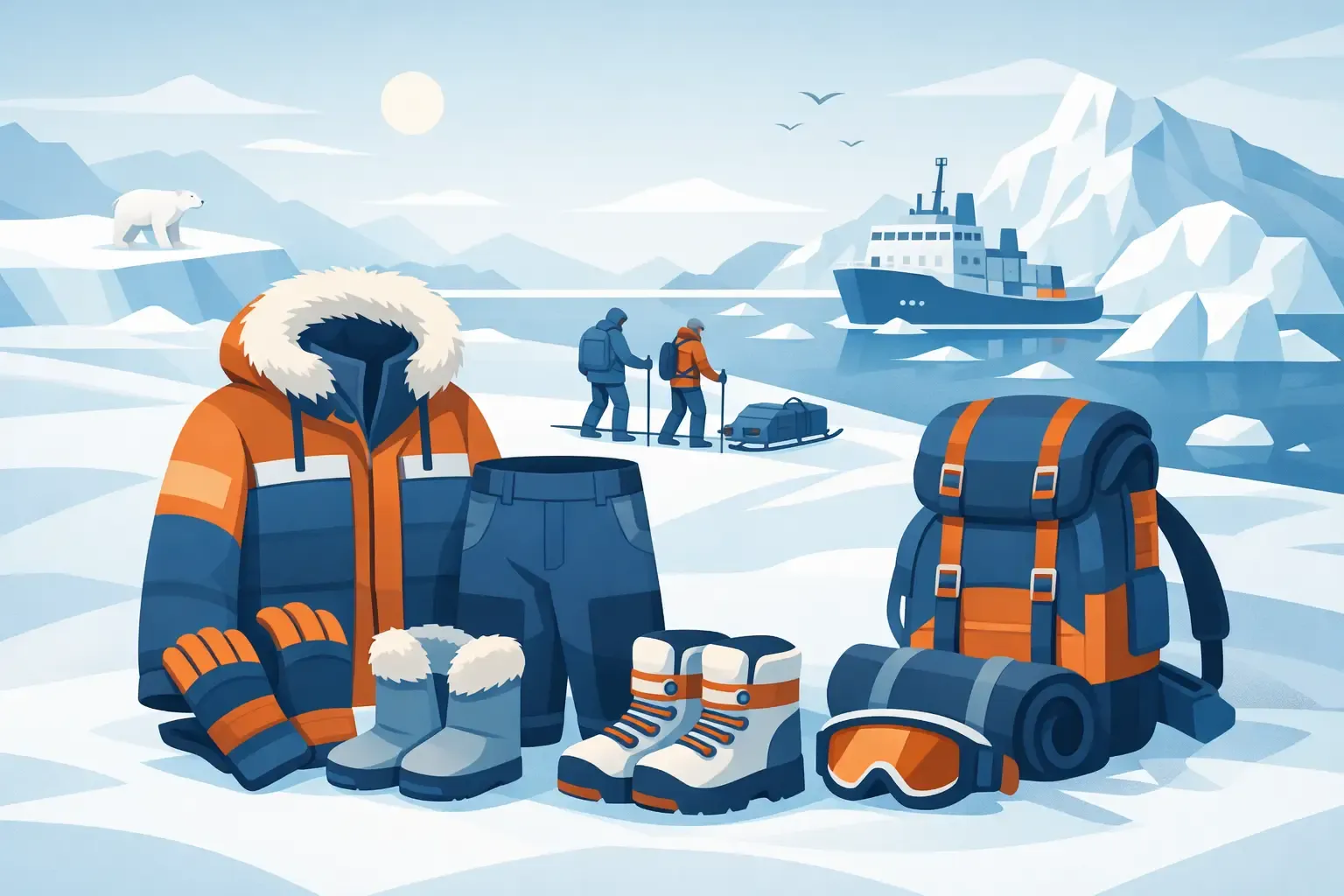
A Guide to Arctic Expedition Clothing
The first shock of the Arctic is rarely the temperature on a forecast. It is how quickly small clothing mistakes become big problems once you are out in wind, snow and hard, dry cold. A solid guide to Arctic expedition clothing is not about looking the part. It is about staying warm enough to think clearly, move well and enjoy the experience rather than simply endure it.
Arctic travel rewards good preparation. Get your clothing system right and the cold becomes something you can work with. Get it wrong and simple tasks like clipping a harness, pitching camp or stopping for lunch can turn miserable very quickly. The aim is not to wear as much as possible. The aim is to wear the right layers, in the right order, with enough flexibility to adjust as conditions change.
What a guide to Arctic expedition clothing should help you do
The best Arctic clothing systems do three jobs at once. They trap heat, manage moisture and protect you from wind and snow. Miss one of those, and the other two start to struggle.
That matters because Arctic cold is not always a single type of cold. You might be standing still on a frozen lake at minus 25, working hard while hauling a pulk, or riding in a snowmobile convoy with windchill biting through any weakness in your kit. Clothing for one scenario can be too much or too little for another. That is why experienced guides think in systems, not single items.
Start with layers, not with a big coat
Most people preparing for their first polar trip focus on the outer jacket first. It is understandable, but it is the wrong place to begin. Your base and mid-layers do most of the daily work.
Base layers should move moisture, not just add warmth
A good base layer sits close to the skin and helps move sweat away before it cools. Merino wool is a strong option because it performs well over several days, feels comfortable and deals with odour better than many synthetics. Synthetic base layers can also work very well, particularly if you run hot or expect high-output days.
Cotton has no place here. Once wet, it stays wet, and in Arctic conditions that can drag heat from your body fast. That applies to T-shirts, leggings and everyday pants as much as anything else.
For most expeditions, one lighter base layer and one warmer option gives you useful range. If you wear your heaviest layer all day while moving, there is a good chance you will sweat too much and be colder later.
Mid-layers are your engine room
Think of the mid-layer as your adjustable insulation. Fleece, synthetic insulated jackets and lightweight insulated trousers all earn their place here. What works best depends on your trip style.
If you are active for long periods, breathable fleece often makes more sense than heavy down. If you are facing long static periods, extra insulated layers become more valuable. This is where people often overpack bulky jumpers instead of choosing technical layers that trap heat efficiently without restricting movement.
A common setup is a lighter fleece or active insulation piece for movement and a heavier insulated jacket for rest stops and camp. That lets you add warmth quickly without needing to strip and rebuild your whole system.
Your shell matters because wind changes everything
Dry cold can be deceptive. On a still day, you may feel fine. Add wind, and exposed skin and poor outer layers get tested immediately.
A shell jacket and trousers should block wind, shed snow and fit comfortably over your insulation without compressing it. You do not always need the burliest alpine hardshell on the market, but you do need dependable weather protection and enough room to layer properly. If your outer layer is too tight, it reduces loft and limits movement, which is a poor trade in the cold.
For some Arctic trips, especially drier inland journeys, a breathable windproof outer can be more useful than a fully waterproof shell all day. On other trips, particularly mixed conditions or coastal weather, waterproof protection matters more. It depends on destination, activity and expected conditions.
Insulation for stops, camp and bitter temperatures
This is where the big jacket comes in. A proper belay-style insulated parka is one of the smartest pieces of Arctic kit you can carry. It goes on over everything else the moment you stop moving.
Down offers exceptional warmth for its weight, but it needs care around moisture. High-quality synthetic insulation is heavier, yet performs better if damp and can be a better choice for wetter cold or for travellers who want a more forgiving setup. Neither is automatically right. The right choice depends on your route, your budget and how experienced you are at managing kit in winter conditions.
Expedition trousers or insulated overtrousers can be just as important during long static periods. Warm legs conserve energy and make camp life far more comfortable.
Boots can make or break the trip
Cold feet are not just unpleasant. They can change how you move, how long you can stay out and how confident you feel in the environment.
Arctic expedition boots need real insulation, enough space for warm socks without crushing circulation, and soles suited to snow and ice. Tight boots are a classic mistake. People size down for control, then wonder why their toes freeze. In deep cold, a little extra room is usually your friend.
Removable liners are especially useful on longer journeys because they can be dried more effectively. For some trips, double boots or specialist winter boots are the right answer. For others, insulated snow boots are entirely adequate. Again, it depends on whether you are travelling from a fixed base, sleeping in heated accommodation, camping out or covering big distances day after day.
Sock choice matters too. A thin liner sock with a thicker wool sock can work well, but only if the combination does not create pressure points or restrict circulation. More sock does not automatically mean more warmth.
Hands need a system, not one perfect glove
Your hands have to do jobs. That means they need warmth and dexterity, and those two things rarely come from the same glove.
A simple Arctic hand system usually includes a liner glove, an insulated glove for active use and a much warmer mitten for very cold periods or inactivity. Mittens are generally warmer than gloves because fingers share heat, but gloves are better for fiddly tasks. Most people need both.
Spare gloves are not optional. Snow, sweat and repeated use can leave handwear damp, and damp gloves become cold gloves very quickly. Keep one pair protected and dry for emergency use or camp.
Head, face and eyes are often underestimated
A warm hat is obvious. Face protection is where preparation becomes more serious. In strong wind and low temperatures, exposed cheeks, nose and chin can become a problem in minutes.
A good setup often includes a close-fitting hat, a buff or neck gaiter, and a balaclava for harsher conditions. Ski goggles are not just for style or speed. In driven snow and sharp wind, they can make the difference between moving comfortably and barely seeing where you are going.
Sunglasses also matter. Snow glare is intense even when the air feels brutally cold, and bright Arctic conditions can be hard on the eyes.
Small details that make a big difference
Arctic clothing is full of minor decisions that matter more than they seem. Waistbands should be comfortable under harnesses or pulk belts. Jacket zips should be easy to use with gloves. Cuffs need to seal properly. Hoods should fit over hats without blocking vision.
Gaiters may help in some snow conditions, though many winter trousers and boots already provide enough protection. Hand and foot warmers can be useful backups, but they should not be relied on to fix poor clothing choices.
One of the biggest wins is simply having a dry bag or organised packing system so spare layers stay dry and easy to reach. On a cold day, faffing around for missing gloves is more than annoying.
Common mistakes first-time Arctic travellers make
The biggest error is overdressing while moving. If you start slightly cool, that is often about right. If you start warm, you may sweat heavily within minutes, and trapped moisture will catch up with you later.
The second mistake is choosing gear that works for a UK winter walk and assuming it will be enough in the Arctic. It might be enough on a mild day near the minibus. It is rarely enough for prolonged exposure in deep cold.
The third is buying isolated items rather than building a complete system. Brilliant boots cannot compensate for poor gloves. An expensive parka does not solve wet base layers. The clothing has to work together.
Buy, borrow or hire?
Not everyone needs to purchase a full Arctic wardrobe from scratch. If you are testing the waters on your first serious winter journey, it can make sense to buy the pieces that affect fit and comfort most directly, such as base layers, socks and gloves, then borrow or hire specialist outer kit if that option is available.
That approach often gives better value and helps you learn what suits you before spending heavily. Experienced expedition providers such as Snow and Paddles can also help you understand what is genuinely essential for a specific trip rather than what looks impressive in a gear shop.
Dress for the trip you are actually doing
There is no single Arctic uniform. Clothing for husky sledding from a comfortable base is different from clothing for a multi-day ski expedition or a snowmobile journey with long exposed sections. Your layering plan should reflect how hard you will work, how long you will be exposed, whether you are camping, and how easily you can dry kit overnight.
That is the real value of a good clothing plan. It gives you confidence before you leave and freedom once you are out there. When your kit works, you stop thinking about being cold and start paying attention to the silence, the light and the scale of the place around you. That is where the Arctic really gets hold of you.