

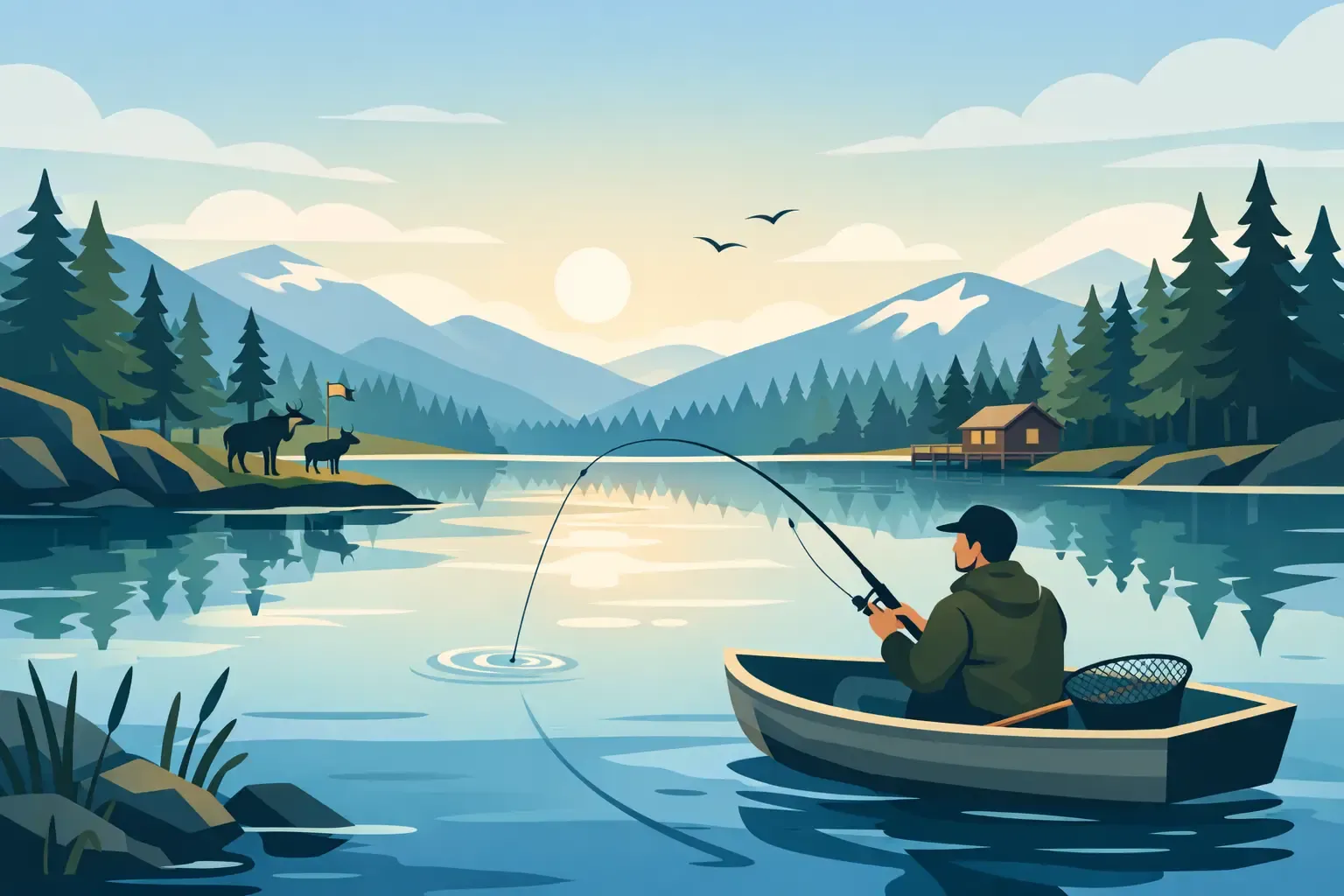
Swedish Wilderness Fishing for a Proper Escape
The first cast can feel almost too quiet. A canoe settles against a pine-fringed shore, the water is dark and glassy, and there is no queue for a peg, road noise or mobile phone signal competing for your attention. Swedish wilderness fishing is not simply about catching more fish. It is about earning access to wild water, slowing down to read it properly and coming home with a story that cannot be recreated on a manicured lake.
For UK anglers and outdoor travellers, Sweden offers a rare balance: genuine remoteness without requiring a full-scale expedition. You can fish from the bank, work a lure through a rocky bay, paddle to a camp beyond the last road or combine several days on the water with wilderness living. The reward is bigger when the planning is right.
Why Swedish wilderness fishing feels different
Sweden has lakes in abundance, but numbers alone do not make a wilderness trip special. The character comes from space. Forest tracks peter out, islands break up wide stretches of water, and a change in wind can turn an easy paddle into a decision that needs respect. You are not arriving at a fishery for a few hours. You are entering a landscape where fishing, weather, route choice and campcraft all matter.
Pike are often the headline act. In clear, weedy bays and around reed edges, they can provide explosive sport for lure anglers, particularly when you learn to work the margins patiently. Perch offer fast, engaging fishing around rock, drop-offs and submerged structure. Depending on the region and water, you may also find zander, brown trout, Arctic char or grayling. That variety is one reason Sweden works for mixed groups: the keen angler can focus on a target species while everyone else still has a reason to be on the water.
There is a trade-off. Wild fishing does not promise the predictability of a stocked venue. A cold front, bright skies or a sudden wind can make fish difficult. That is not a failure of the trip. It is the point at which observation becomes more valuable than simply casting farther. The best wilderness anglers adapt, move and make the most of what the day offers.
Choosing the right Swedish wilderness fishing trip
The right destination depends less on a single famous lake and more on the experience you want. If paddling between islands, camping on quiet shores and fishing as you travel appeals, a canoe-based journey is hard to beat. It covers water efficiently, carries camp equipment and lets you reach banks that are inaccessible by road. It also asks more of you physically, especially if wind picks up or portages are involved.
A lodge-based trip is a better fit for anglers who want full days on the water with a warm base, a proper bed and less kit management. It can also suit first-time wilderness travellers who want the atmosphere of remote Sweden without having to build camp each evening. Day access by vehicle may reduce the sense of self-sufficiency, but it creates more time to concentrate on fishing technique.
For a more complete adventure, combine fishing with canoeing, simple survival skills and wildlife watching. Early starts can bring beavers, moose tracks and birdlife before the water warms. The fishing becomes one part of the journey rather than a separate activity. This is particularly strong for couples or friendship groups where not everyone measures a good day solely by the number of takes.
Match the season to your objective
Late spring brings longer days, fresh growth and hungry fish, but water can still be cold and weather unsettled. Summer is ideal for canoe travel and camp life, with long evenings that make a late session entirely possible. Mosquitoes can be part of the deal in forested areas, particularly around still water, so preparation matters.
Early autumn is often a favourite for anglers who enjoy cooler air, fewer insects and changing woodland colour. Pike may feed confidently as conditions shift, while the pace of camp life becomes sharper and more purposeful. Later in the year, daylight shortens quickly. That can be magnificent, but it leaves less margin for slow navigation or delayed decisions.
Permissions, access and respect for the water
Sweden’s right of public access gives people considerable freedom to move responsibly through the countryside, but it is not a free pass to fish everywhere. Fishing rights are separate. Many lakes and rivers require a local fishing permit, and rules can vary by water, species, season, tackle and catch limits.
This is where a guided trip removes needless uncertainty. A knowledgeable leader can select suitable waters, arrange the correct permissions and explain the local restrictions before the first lure hits the water. They can also help you understand which areas should be left alone, whether that is a protected inlet, a private landing place or a sensitive nesting site.
Respect is practical, not performative. Keep camps discreet, use established fire places where required, leave no discarded line or packaging, and avoid cutting live wood for fuel. If you retain a fish, do it only within the rules and only when it will be eaten. Catch and release is often the right approach for large breeding fish, but it must be done well: use appropriate tackle, land fish efficiently, handle them with wet hands and return them without a prolonged photo session.
Tactics that work on wild Swedish water
Start by looking rather than casting. Wind pushes food and small fish towards one shore, making that bank worth attention. A bay with reeds, a point that catches the breeze, a fallen tree or the edge of a weed bed can all concentrate predator fish. Clear water often means fish see you before you see them, so keep movement controlled and avoid standing high on an exposed bank.
For pike, bring lures that let you cover different depths. A spinnerbait or weedless soft lure is useful around vegetation, while a shallow-diving hard bait can search a wind-blown shoreline. If fish are following but not committing, pause before lifting out. That short hesitation can turn curiosity into a take.
Perch respond well to a slower, more precise approach. Work small soft plastics, jigs or spinners around rocky structure and depth changes. If one fish comes aboard, do not rush away. Perch can gather in groups, and a quiet, measured few casts may reveal more.
Do not assume the centre of a big lake is the answer. In many wilderness settings, some of the most productive water is close to camp: a small channel, the mouth of a stream or a sheltered corner where bait fish are holding. Fish the conditions in front of you rather than the image you had before travelling.
Pack for comfort, safety and better fishing
A wilderness fishing kit needs to earn its place in the canoe or dry bag. Too much tackle becomes dead weight when you are carrying boats or making camp. Take versatile gear and protect it from rain, spray and accidental immersion.
Four items make a noticeable difference beyond your normal rod, reel and lure selection:
- A properly fitted buoyancy aid, worn on the water rather than stored in the canoe.
- A waterproof layer and warm mid-layer, even in summer, because rain and wind cool you quickly.
- Long-nose pliers, wire cutters and a landing net suitable for pike, so unhooking is quick and safe.
- Insect repellent and a head net for still evenings in the forest.
Polarised sunglasses are equally valuable when conditions allow. They reduce glare, help you spot weed lines and protect your eyes from hooks. A compact first-aid kit, head torch, map and reliable water treatment are not glamorous, but they are part of making independent-feeling travel safe.
Why guided wilderness time is worth it
There is pride in organising your own trip, and experienced travellers may want precisely that. Yet Sweden’s scale can make logistics deceptively complex. Transport, permits, canoe loading, route planning, changing weather and safe camp choices take time before you even begin fishing.
A guided experience gives you more than someone who points at a promising bay. It provides local judgement: when to cross open water, when to wait out wind, how to set up camp with minimal impact and which tactics fit the water that day. For beginners, that creates a confident first step into wilderness travel. For seasoned anglers, it can open ground they would struggle to access alone.
Snow and Paddles approaches these trips as proper adventures, not fishing holidays with a scenic backdrop. You still make the casts, paddle the miles and feel the weather change. You simply do it with experienced support and the freedom to focus on the moments that matter.
Bring curiosity, patience and a willingness to adapt. The fish may be the reason you travel to Sweden, but the quiet paddle back to camp under a northern sky is often the part that stays with you.