

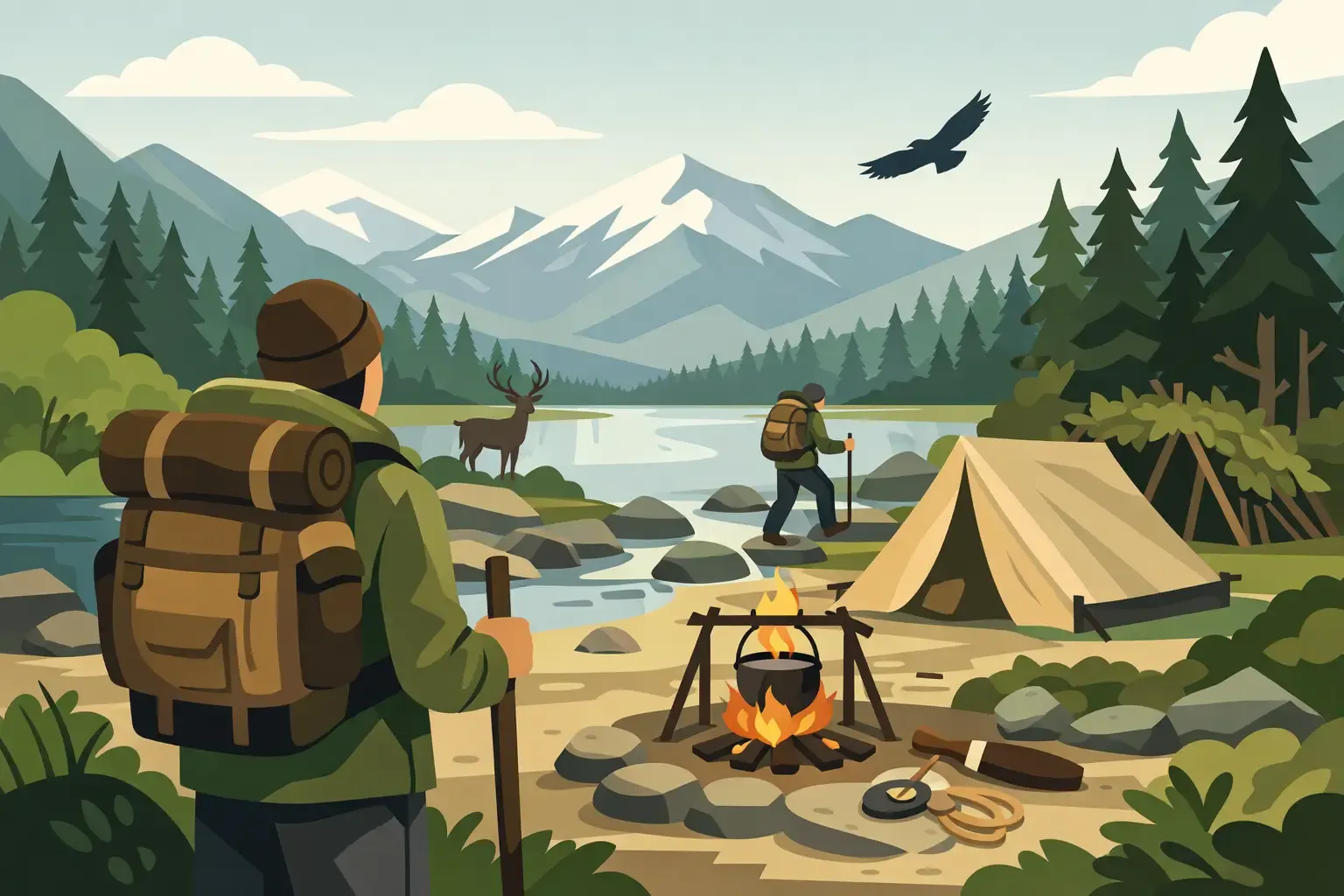
Wilderness Survival Course Scotland Guide
Cold rain on the tarp. Wet pine underfoot. A fire that either catches or leaves you eating a cold supper. A wilderness survival course Scotland delivers the sort of learning that sticks because it happens in real weather, on real ground, with real consequences – just enough challenge to sharpen you up, never enough to tip into chaos.
That is exactly why Scotland works so well for survival training. It is accessible, wild in the right places, and varied enough to teach practical judgement rather than textbook tricks. For anyone who wants more than a pleasant day outdoors, it offers a proper test bed for skill, resilience and confidence.
Why Scotland suits survival training so well
Scotland gives you a rare mix of terrain and conditions within a manageable distance from the rest of the UK. Woodland, moor, glen, river systems and exposed upland ground can all shape the experience. You are not learning in a sanitised outdoor classroom. You are learning in a landscape that asks sensible questions: can you stay warm, stay dry, think clearly and work with what you have?
The weather is a major part of the lesson. Four seasons in a day is a cliché for a reason. Wind changes fast, temperatures drop quickly once you stop moving, and damp finds weak kit and weaker habits. That makes Scotland ideal for survival training because comfort is never guaranteed. You learn very quickly that shelter choice, layering, fire prep and site selection matter far more than bravado.
There is another advantage too. A good Scottish course can feel remote and immersive without requiring an expedition budget or long-haul travel. For busy professionals, couples planning a different kind of break, or solo travellers wanting a challenge with expert support, that matters. You can step out of routine and into something memorable without needing months of planning.
What a wilderness survival course in Scotland should actually teach
The best courses are not built around gimmicks. They are built around priorities. First shelter, then warmth, then water, then the calm decision-making that keeps small problems from becoming serious ones.
You should expect hands-on coaching in shelter building, fire lighting in poor conditions, safe knife and tool use, water purification, campcraft and movement through the landscape. Depending on the format, there may also be navigation, foraging awareness, group problem-solving, and food preparation over fire. Some courses include bushcraft-style skills with a strong emphasis on comfort and camp living. Others lean harder into emergency thinking and self-reliance. Neither is automatically better. It depends what you want from the experience.
A proper course should also teach judgement. That means understanding when to conserve energy, how to choose a camp spot, what wet ground will do to your body temperature, and why speed often creates mistakes. The useful lesson is not just how to light a fire with a spark. It is how to prepare fuel properly before your hands get cold and your patience disappears.
Who a wilderness survival course Scotland experience is for
You do not need to be a hardened mountaineer to enjoy this kind of trip. In fact, many people get more from it when they arrive curious rather than overconfident. Beginners often learn quickly because they listen, ask questions and stay open to new ways of doing things.
For first-timers, a guided course can be a brilliant reset. You spend a day or two away from screens and schedules, and your attention returns to basic things done well: making shelter, managing heat, cooking simply, reading the weather. That can feel surprisingly satisfying if your working life is usually abstract and desk-bound.
For experienced outdoor people, the value is often refinement. You might already camp, hike or paddle, but survival training sharpens your systems. It exposes lazy habits, upgrades your decision-making and gives you a more reliable foundation when conditions turn rough.
It also suits groups well, provided the course is paced properly. Friends, couples and corporate teams can all benefit, but not everyone wants the same level of discomfort. The right provider will be clear about the challenge level so expectations stay realistic.
How to choose the right course
Not every survival course in Scotland is aiming at the same outcome. Some are immersive introductions with a strong bushcraft feel. Others are physically demanding and stripped back. Before you book, get clear on what you want to come away with.
If your goal is confidence outdoors, look for a course that balances challenge with coaching. If you want a genuine test, ask how much is participant-led, what the sleeping arrangements are, and how much time is spent working in poor weather rather than talking about it under cover.
Instructor quality matters more than flashy claims. Strong leaders make people feel safe without removing the sense of adventure. They know when to teach, when to step back, and how to adapt the day to the group and the conditions. That balance is what turns a hard weekend into a useful and enjoyable one.
Logistics matter as well. Check what kit is provided, what fitness level is expected, how remote the venue is, and whether the course is suitable for complete beginners. A company that communicates clearly before the trip usually delivers clearly on the ground too.
What to expect on the day
Most people arrive with one quiet worry: will I be out of my depth? That usually fades quickly once the course starts. Good survival training is progressive. You build skills in sequence, learn the reasons behind each choice, and put them into practice while your instructor keeps an eye on standards and safety.
Expect to be outdoors for most of the day whatever the weather is doing. Expect wet ground, cold fingers at some point, smoky clothing, and a satisfying tiredness by the end. Also expect a lot of small wins. The first flame from damp conditions. The moment your shelter actually feels warm. The shift from uncertainty to competence as simple tasks become second nature.
Food and comfort vary by course. Some experiences keep a stronger expedition style, while others are more stripped back to focus on self-reliance. Neither approach is right for everyone. If you like challenge but still want expert structure and thoughtful delivery, choose a provider that is honest about the level of hardship involved.
The difference between survival and bushcraft
This point is worth clearing up because the terms often blur. Bushcraft usually centres on living comfortably outdoors through skill – fire, shelter, woodcraft, cooking and camp systems. Survival is more immediate. It is about priorities, problem-solving and getting through difficult conditions safely.
On a good course, the two overlap. You may use bushcraft skills to solve survival problems. But the mindset is different. Survival training asks what matters first, what can wait, and how to keep a clear head when conditions become awkward. That mindset is useful well beyond the course itself. It transfers into hillwalking, paddling, wild camping and expedition travel.
Why guided experience matters
There is a reason many people choose structured adventure over figuring it all out alone. Wild places are more enjoyable when the basics are handled well. Expert-led trips remove the noise around planning, permissions, kit gaps and what-if scenarios, while keeping the heart of the experience intact.
That is where a company like Snow and Paddles fits naturally. The aim is not to turn adventure into something soft. It is to make it accessible, well-led and genuinely worthwhile, whether you are stepping into survival training for the first time or building towards bigger expeditions.
A guided wilderness survival course in Scotland gives you more than a collection of tricks. It gives you feedback, context and the confidence that comes from doing things properly in the field. That confidence tends to travel home with you.
Is it worth it?
If you want a passive weekend, probably not. If you want a memorable challenge that leaves you more capable than when you arrived, absolutely. Survival training strips things back in a useful way. You notice how much comfort depends on judgement. You learn that preparation beats panic. And you come away with practical skills that make future adventures feel more open to you, not less.
The best part is that the reward is not only technical. It is personal. You spend time in a demanding landscape, you solve problems with your hands and your head, and you prove to yourself that you can do more than you thought. That is a strong reason to go – and an even better reason to choose a course that treats the experience with the respect it deserves.