

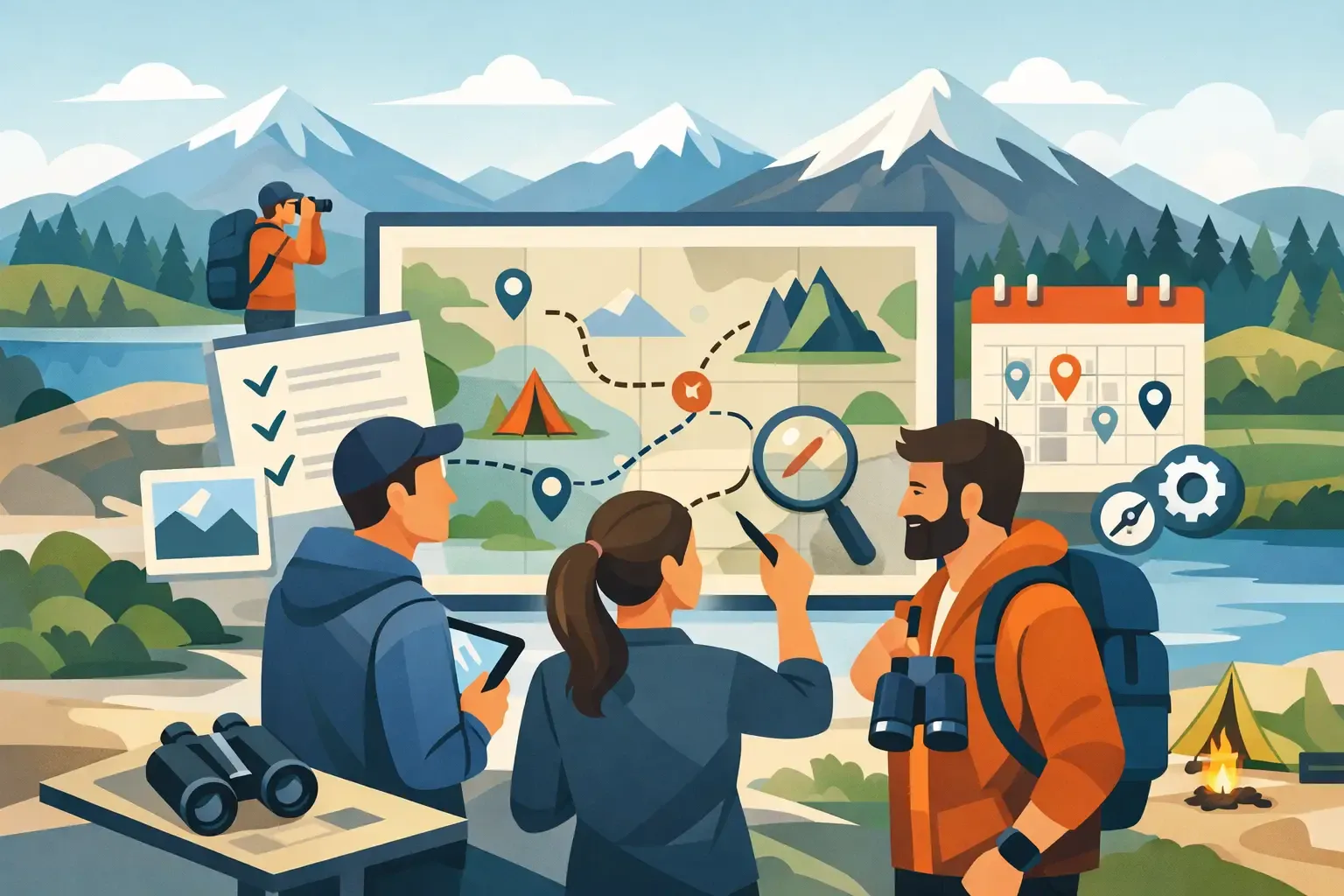
Bespoke Expedition Planning That Works
A great expedition often starts with a stubborn idea. Paddle a remote river. Cross winter terrain under your own steam. Stand on a summit you have talked about for years. The hard part is not usually dreaming it up. It is turning that idea into a trip that is safe, realistic and still feels like a proper adventure. That is where bespoke expedition planning earns its keep.
Done well, it is not about wrapping wilderness in cotton wool. It is about building the right framework so you can focus on the experience itself – the cold morning starts, the miles under your boots or hull, the decisions that matter, and the satisfaction of earning your way through a landscape. A bespoke trip should still feel wild. It should just feel well judged.
What bespoke expedition planning really means
At its best, bespoke expedition planning is the difference between a trip that looks good on paper and one that actually works in the field. It starts with your aim. That might be a personal challenge, a skills progression goal, a private group trip, or a milestone journey you want to get right first time.
From there, every decision should serve that aim. Route choice, season, pace, kit, accommodation, transfers, food, safety cover and guiding all need to line up. The point is not to add complexity for the sake of it. The point is to remove the wrong kind of complexity.
That matters because expeditions fail in ordinary ways. The route is too ambitious for the group. The weather window is wrong. The transport plan is flimsy. The kit list is copied from someone else’s trip and does not match the terrain. A bespoke approach catches those faults early.
Why standard trips are not always enough
Scheduled adventures are brilliant for many people. They are efficient, social and proven. If you want to try winter travel in Sweden, learn canoe expedition skills, or take on a supported bucket-list challenge, a fixed itinerary can be exactly right.
But sometimes a standard departure is not the right fit. You may want a private trip for friends or family, a more demanding route, a slower pace, a particular style of travel, or extra coaching before a bigger objective. You may simply want the confidence that the whole journey has been shaped around your group rather than adapted at the edges.
That is especially true when experience levels are mixed. One person may be fit but new to cold conditions. Another may have strong hill fitness but little paddling experience. Someone else may want challenge without turning the whole thing into a sufferfest. Bespoke planning gives you room to balance ambition with enjoyment.
The first question is not where. It is why.
People often begin with a destination, but the stronger starting point is purpose. What do you want this expedition to do for you?
If your goal is genuine personal challenge, the route and style should reflect that. If it is confidence building, the trip may need more instruction and a steadier progression. If it is a celebration with close friends, comfort, timing and group dynamics matter more than ticking off the hardest possible objective.
This is where honest planning matters. There is no prize for pretending a trip is about one thing when it is really about another. The best expeditions have a clear spine. Once that is in place, the practical choices become much easier.
Bespoke expedition planning and the challenge-safety balance
Adventure should feel real. If every risk is stripped out, the experience loses its edge. But there is a clear difference between meaningful challenge and poor judgement.
Good bespoke expedition planning sits in that gap. It respects weather, terrain and fatigue. It takes group ability seriously. It builds in decision points, escape options and sensible margins without making the trip feel overmanaged.
That balance changes depending on the environment. A canoe journey in moving water asks different questions from an Arctic winter trip or a high-altitude trek. In one setting, river levels and river-reading skill may drive the plan. In another, cold injury prevention, transport reliability and shelter systems matter far more. There is no single formula, which is exactly why custom planning is valuable.
What a well-built expedition plan includes
The visible part is the exciting bit: destination, route, activity and headline challenge. The hidden part is what makes it possible.
That means understanding who is coming and what they can realistically handle. It means choosing the right season rather than the most obvious date. It means building travel, accommodation and kit decisions around the actual environment instead of guesswork. It also means being clear about support. Some trips suit full guiding throughout. Others work better with a lighter-touch leadership style that gives experienced participants more ownership.
Food, pacing and recovery deserve more attention than they usually get. A trip can be technically straightforward and still unravel if people are under-fuelled, cold, wet or constantly rushed. Equally, an itinerary that looks modest can feel powerful if the rhythm is right and the group has the bandwidth to enjoy where they are.
The strongest plans also prepare for changes without becoming timid. Weather shifts. Transport runs late. Snow conditions alter. River levels rise or fall. A proper plan has alternatives that still protect the spirit of the journey.
Beginner, experienced, or mixed group? It changes everything
One of the biggest myths in adventure travel is that custom expeditions are only for hardened expedition types. They are not. In many cases, beginners benefit most from a bespoke structure because the trip can be paced properly and the support can match the learning curve.
For experienced travellers, the value is different. You may want a more committing objective, a remote route, or a trip with less hand-holding and more technical depth. You may also know exactly what you do not want: overcrowded itineraries, weak logistics or generic guiding.
Mixed groups are where bespoke planning really proves itself. A couple, friendship group or private team rarely arrives with identical skills, fitness and expectations. A good plan does not ignore those differences. It uses them. You can shape distances, daily structure and leadership style so everyone feels tested, included and looked after.
Choosing the right expedition partner
If you are trusting someone with a serious adventure, ask practical questions. How do they assess suitability? How do they adapt for different abilities? What does guided support actually look like day to day? What happens if conditions change? How are travel and financial protections handled?
You are not looking for sales patter. You are looking for clarity. Confidence matters, but so does honesty. A credible expedition company should be able to tell you when an idea is sound, when it needs refining, and when a different route or season would produce a better experience.
That is one reason many travellers choose expert-led operators rather than trying to stitch everything together themselves. The time saving is useful, but the bigger benefit is judgement. On a proper adventure, judgement is worth a lot.
For those looking at private or custom adventures, Snow and Paddles builds trips around the experience people actually want to have, not just the destination they mention first. That distinction matters once you are out in the elements.
The best plans leave room for the unexpected
This is the part people sometimes miss. A bespoke expedition should not feel overdesigned. It should feel ready.
Ready for the moment the weather turns and the team adjusts without drama. Ready for the first-time participant who discovers they are stronger than expected. Ready for the experienced traveller who wants more responsibility. Ready for the kind of day that no itinerary can fully script – the frozen dawn, the quiet camp, the long pull upriver, the shared effort that makes a journey stay with you.
That is the real value of bespoke expedition planning. It does not remove uncertainty. It gives uncertainty a shape you can work with.
If you have an expedition idea that keeps returning, take that seriously. Start with the goal, be honest about the group, and build the trip around what will make it meaningful. The wild places will do the rest.