

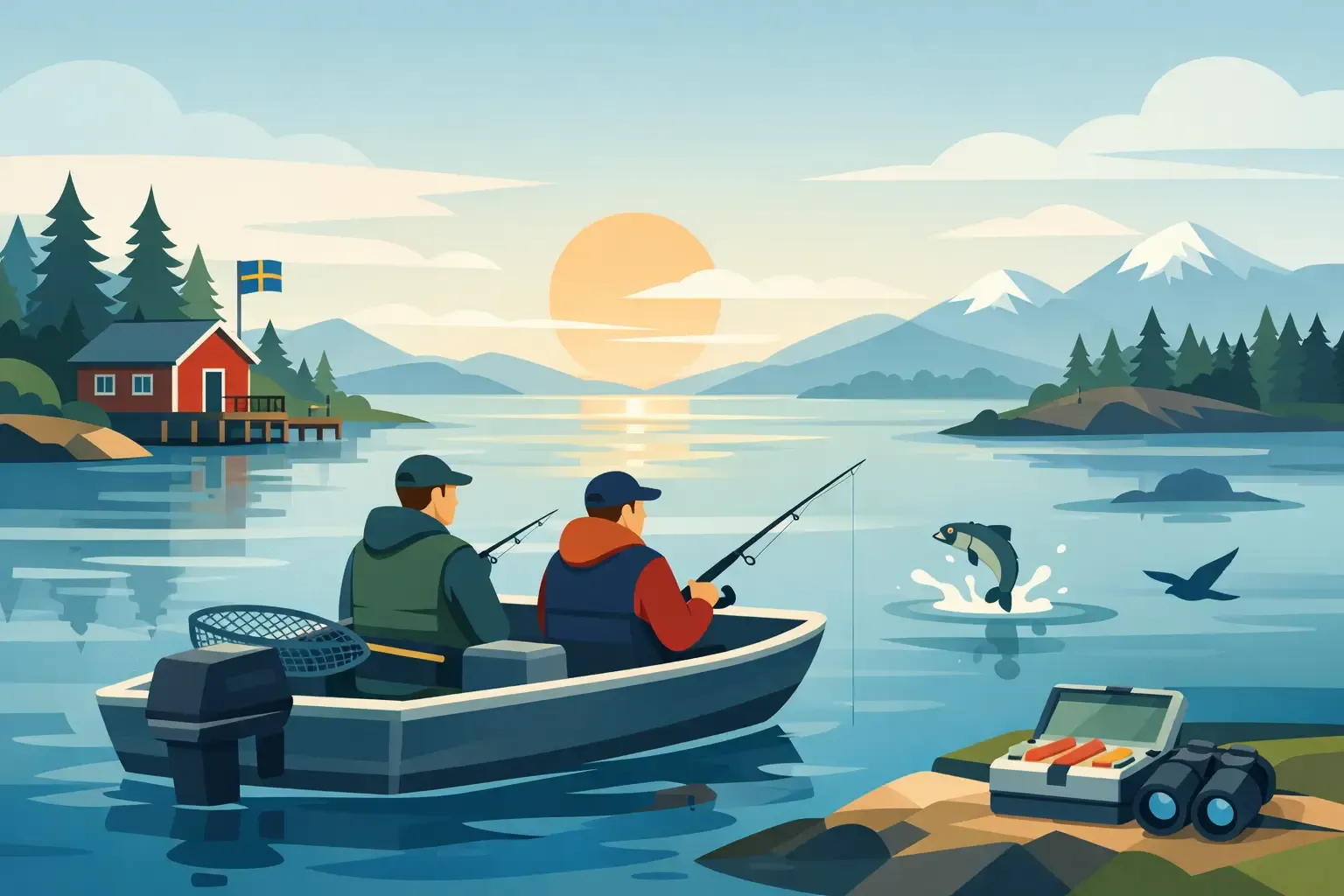
Guided Fishing Trip Sweden: What to Expect
Some trips give you a few nice photos. A guided fishing trip Sweden gives you something better – real time outdoors, proper water under the boat, and the kind of focus you only get when the day is built around wild places and expert guidance.
For many UK travellers, Sweden hits a rare sweet spot. It feels remote without being out of reach. It offers genuine wilderness, clear lakes, quiet forests and serious fishing, but it does not demand that you become a logistics expert before you arrive. That matters. The difference between a good fishing holiday and a memorable one often comes down to access, local knowledge and the confidence to fish the right water at the right time.
Why choose a guided fishing trip in Sweden?
Sweden is not short on water. Lakes, rivers and archipelagos stretch across the country, and that variety is exactly why guidance matters. On paper, that sounds like endless opportunity. In practice, it means local decision-making counts.
A guide helps you read more than a map. They understand how weather shifts fish behaviour, which areas are worth the effort, when to move, and how to adapt the day if conditions change. That is useful for experienced anglers who want to fish smarter, but it is just as valuable for beginners who want a proper introduction without wasting half the trip second-guessing every decision.
There is also a bigger reason many people choose guided travel. It strips out the friction. Permits, transport, tackle planning, access points, boats, local regulations, safety on the water – these details can either sit quietly in the background or dominate your trip. A guided experience keeps the focus where it should be, on the fishing and the wider adventure.
What kind of fishing experience can you expect?
A guided fishing trip Sweden can take different forms depending on season, location and target species. Some trips are centred on lake fishing for pike and perch, where structure, weed beds and changing light levels shape the day. Others lean into river systems and moving water, where presentation and timing become more technical.
That is why it helps to be honest about what you want from the trip. If you are chasing numbers, your guide may build a very different plan from a trip designed around one memorable fish, learning new methods, or simply spending long hours in a wild setting with expert support.
The pace can vary too. Some anglers want to cover water and stay mobile. Others prefer a steadier rhythm, with time to learn, watch conditions and settle into the landscape. Neither approach is more valid. The right choice depends on your experience, fitness, and what kind of adventure you actually enjoy.
Guided fishing trip Sweden for beginners
Beginners often assume Sweden is best left to seasoned anglers. It is not. In fact, with the right guide, it can be one of the most welcoming places to start.
Clear structures, productive waters and strong local knowledge make it easier to learn quickly. You are not trying to piece everything together from scratch. You can ask basic questions without feeling in the way, build confidence in casting and lure choice, and start understanding why fish are holding in certain areas.
That support changes the whole tone of the trip. Instead of worrying about getting it wrong, you can concentrate on the experience. For solo travellers, couples or groups trying fishing for the first time, that reassurance matters. It turns what could feel intimidating into something purposeful and enjoyable.
At the same time, a beginner-friendly trip should not feel watered down. Good guiding meets you where you are, then lifts the level. You leave with better skills, better judgement and a stronger sense of what outdoor adventure can be.
Why experienced anglers still book guides
Plenty of skilled anglers book guided days in Sweden, and not because they need hand-holding. They do it because local expertise shortens the learning curve and opens up better water.
Even if you are comfortable planning your own fishing in the UK, Sweden brings new variables. Different habitats, unfamiliar regulations, changing seasonal patterns and local techniques all affect results. You can spend several days figuring that out for yourself, or you can start with a guide and fish with intent from day one.
There is also the advantage of access. The best fishing is not always the easiest to reach or read. A guide can put you in the right place faster, which is valuable on a short trip where every session counts.
When to go
Timing shapes everything. Sweden fishes differently across the season, and the best month depends on what you are targeting and how you like to fish.
The warmer months often appeal to UK visitors because travel feels simpler and the days are long. Long daylight gives you more flexibility, and the whole trip can feel expansive – early starts, late sessions, and long evenings that still carry enough light to keep going.
But there is a trade-off. Popular periods can bring more pressure in accessible areas, and weather can shift quickly. Shoulder-season trips can offer a more stripped-back feel, with fewer people around and a stronger sense of wilderness, though conditions may be more demanding.
This is where expert planning matters again. A good operator does not just sell a destination. They match the season to the experience, your expectations and your level of comfort.
More than fishing
The strongest trips are rarely just about catching fish. They are about being properly outside, far from the usual noise, doing something that sharpens your attention.
That is one reason Sweden works so well. The fishing sits within a bigger wilderness setting. Forest edges, still water, birdlife, changing weather, the silence between casts – all of it adds weight to the experience. You are not passing time. You are in it.
For many travellers, especially those coming from fast, crowded working lives, that shift is part of the appeal. A guided trip gives structure without overcomplicating the day. You know you are in safe hands, but there is still space for the raw, unscripted parts of the outdoors that people remember long after the journey home.
What to look for in a guided trip
Not every guided fishing trip is built the same. Some are highly technical and focused on results. Others are broader outdoor experiences where fishing is part of a bigger wilderness journey. Neither is wrong, but you want the fit to be right.
Look for clear information on who the trip suits, what level of experience is expected, and what support is included. If travel, safety, accommodation and guiding are all handled well, the whole experience becomes lighter. You can commit to the adventure instead of managing problems in the background.
For UK travellers in particular, financial protection and proper trip organisation are worth paying attention to. Remote experiences should feel exciting, not uncertain for the wrong reasons.
It is also worth asking how flexible the guiding is. Conditions change. Good guides adapt. If the weather turns, the water slows, or the group needs a different pace, the day should move with that reality rather than stubbornly sticking to a plan.
The value of going with the right people
Adventure is better when it is led well. That sounds obvious, but it is the difference between a trip that feels transactional and one that genuinely stays with you.
The right team brings calm judgement, local credibility and the ability to welcome both first-timers and seasoned travellers into the same wider world of experience. That is where companies such as Snow and Paddles stand out – not by making adventure feel exclusive, but by making it feel possible, purposeful and properly led.
A guided fishing trip in Sweden should leave you with more than a tally of fish. It should give you better skills, stronger memories and a clearer sense that wild places are not just for experts or other people. Sometimes the best reason to go is simply this: you are ready for a trip that asks more of you and gives more back.