

A Guide to Swedish Lapland Adventures
The first thing that catches most people out in Swedish Lapland is not the cold. It is the quiet. Step away from the airport road, the lodge lights and the familiar rhythm of daily life, and the landscape starts to feel bigger than expected. That is exactly why a guide to Swedish Lapland adventures matters. This is not a tick-box winter break. Done properly, it is a chance to travel well beyond the ordinary and come back sharper, steadier and more awake.
For UK travellers, Swedish Lapland has a rare advantage. It feels remote and genuinely wild, but it is still achievable with the right planning and support. You do not need to be an Arctic veteran to enjoy it. You do need to know what kind of adventure you want, how much challenge suits you, and where expert guidance makes the difference between a good trip and a great one.
Why Swedish Lapland delivers more than a winter holiday
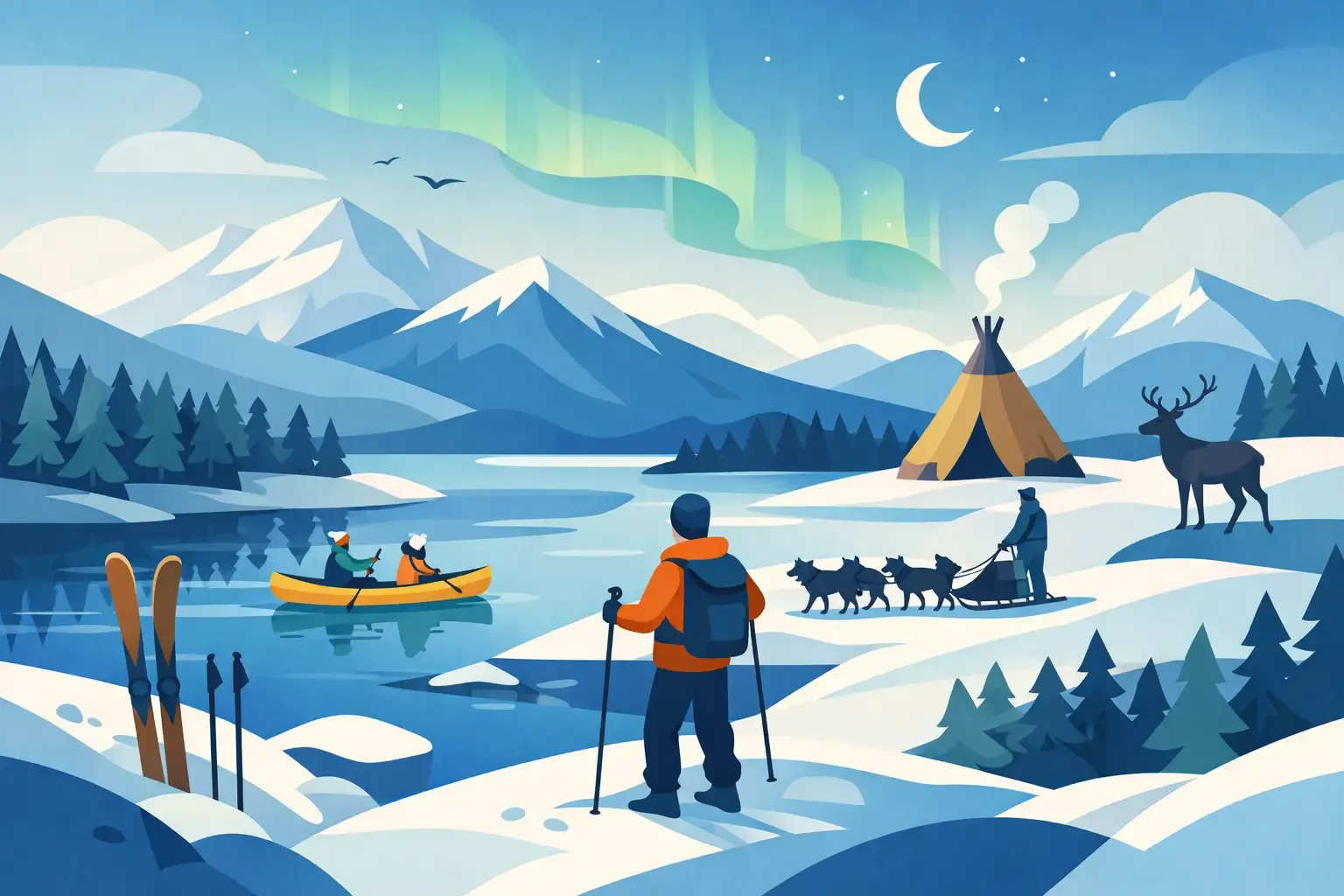
Swedish Lapland is not one single experience. It can be fast and exhilarating, with snowmobiles crossing frozen ground under a pale pink sky. It can be quiet and slow, with snowshoes crunching through birch woodland while your breath hangs in the air. It can also be deeply social, whether you are learning to handle a dog sled team, sharing stories around a fire, or heading out after dark in search of the aurora.
That variety is what makes the region so strong for structured adventure travel. Couples can find something memorable without needing technical skills. Solo travellers can join a guided group and step into the experience without organising every moving part. More experienced outdoor people can still get what they came for, because the environment itself is the challenge. Cold changes everything. Distances feel different. Small decisions matter more.
The best trips understand that balance. They make the experience accessible without sanding off the edge that makes Arctic travel worthwhile.
A practical guide to Swedish Lapland adventures
If you are deciding what to book, start with the style of trip rather than the destination name. Most people imagine Swedish Lapland as one broad snowy wilderness, and in many ways it is. But the shape of your days matters more than the pin on the map.
For speed and variety
If you want a week that feels full from start to finish, look at multi-activity itineraries. These often combine snowmobiling, husky sledding, winter trekking, wildlife watching and northern lights evenings. They suit travellers who want the Arctic in different forms rather than one specialist focus.
The trade-off is pace. You will sample more, but spend less time getting deep into a single skill or landscape rhythm. For many first-time visitors, that is the right choice.
For a stronger expedition feel
If you want to feel more self-reliant and immersed, choose a trip built around winter travel skills, backcountry movement or survival elements. These experiences tend to be less polished and more rewarding for it. You may spend longer outdoors, cover ground in tougher conditions and learn practical systems for warmth, movement and camp life.
This is where guided leadership really counts. In Arctic conditions, confidence is built through good decisions, not bravado.
For pure iconic Lapland moments
If your priority is simple and clear, build around the classic experiences. Husky dog sledding gives you one of the most memorable ways to travel through the snow. Snowmobiling covers distance and delivers that wide-open sense of scale very quickly. Aurora hunting is less controllable, but when the sky performs, it is hard to match.
These are often the images that bring people to Lapland in the first place, and there is nothing wrong with that. The key is to book them in a way that feels substantial rather than rushed.
When to go and what changes through the season
Timing affects everything in Swedish Lapland. December brings deep winter atmosphere and long dark hours, which can make festive trips and aurora hunting especially appealing. It is atmospheric, but daylight is limited.
January and February tend to deliver proper winter conditions, often with reliable snow and colder temperatures. If you want that clean, crisp Arctic feel, this is a strong window. The cold can be serious, though, so it suits travellers who are ready to lean into the environment.
March often gives a very good balance. Snow cover is still strong, daylight is longer, and the whole trip can feel more expansive because you actually see more of the landscape. For many people, this is the sweet spot.
It depends what you value most. If your dream is candlelit cabins and long polar nights, go earlier. If you want more activity time and clearer views of where you are travelling, later winter may serve you better.
What you actually need to pack
People often overcomplicate Arctic kit. The principle is simple: stay dry, stay insulated, and avoid sweating too much when moving. Good layering beats bulky guessing every time.
Start with decent base layers, then add insulating mid-layers and a protective outer shell. Warm gloves, spare gloves, thick socks, a proper hat and insulated boots matter more than most people think. Cold hands and feet can drain the enjoyment from a day remarkably quickly.
That said, you do not always need to own an expedition wardrobe. Many guided trips provide specialist outer layers, boots or key equipment. That can make a huge difference for first-timers, because it removes the pressure to buy kit for one journey. It is one of the practical reasons organised trips work so well in this environment.
The less obvious item to bring is discipline. Do not wait until you are freezing to add a layer. Do not ignore hydration because it is cold. And do not assume comfort is automatic just because the landscape looks calm.
What first-time travellers tend to get wrong
The biggest mistake is treating Lapland like a city break with snow. It is still a wilderness destination. Weather shifts plans. Activity timing depends on light, temperature and conditions. Transfer days can be longer than expected. The strongest trips are the ones where travellers arrive ready for a real environment, not just a backdrop.
Another common mistake is underestimating fatigue. Cold air, active days and travel all add up. You may not feel exhausted in the moment, but the body works harder in winter conditions. Building in some mental space helps. Not every memorable moment comes from the high-adrenaline sections.
The final mistake is trying to self-produce an Arctic adventure without understanding the logistics. Swedish Lapland is very manageable with experienced support. Without it, the trip can become a series of transport problems, kit questions and missed opportunities. If your aim is to experience more and worry less, guided travel earns its keep here.
Choosing the right level of challenge
A good adventure should stretch you, not flatten you. That is particularly true in the Arctic. If you are active but new to winter travel, choose a trip that introduces several experiences with proper support and comfortable accommodation. You will still get the thrill, but with a margin for recovery.
If you already spend time outdoors and want something with more substance, seek out journeys with longer days outside, technical winter movement, or a stronger expedition framework. You will likely get more from that than from a polished sightseeing-heavy itinerary.
This is where the best operators stand apart. They do not just sell activities. They match people to experiences that suit their goals, confidence and appetite for challenge. Snow and Paddles does this well because the focus is not on extreme posturing. It is on properly led adventure that remains accessible while still feeling real.
The experiences that stay with you
People often expect to remember the headline moments most clearly – the aurora, the dog sled, the throttle of a snowmobile. They do remember those. But just as often, what stays is smaller.
It might be the crunch of snow under your boots before sunrise. The first time you realise you are warm and comfortable in minus temperatures because your layering is working. The strange calm of a frozen landscape at dusk. The satisfaction of doing something that looked daunting from home and finding out you were more capable than you thought.
That is the real strength of Swedish Lapland. It gives you drama, certainly, but it also gives you perspective. You leave with great stories, yes, but also with a steadier kind of confidence that tends to follow you home.
If you are choosing this trip, choose it properly. Give yourself enough time, enough guidance and enough openness to let the place work on you. Swedish Lapland is at its best when it feels less like a break from life and more like a reminder of how fully life can be lived.