

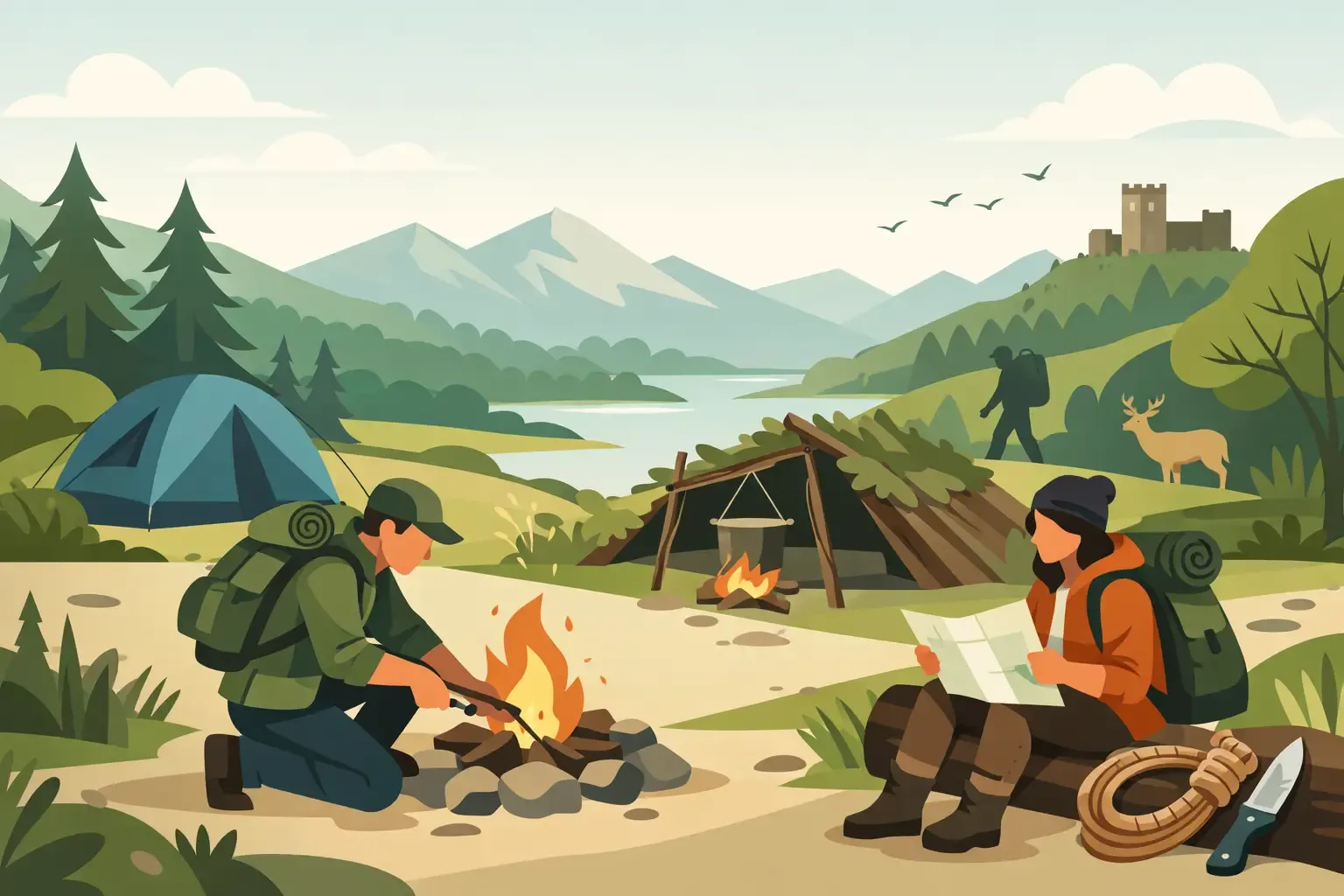
Survival Weekend UK: What to Expect
Swap the hotel break for a tarp, a fire and a cold morning in the woods, and something changes quickly. A survival weekend UK experience strips life back to the essentials in the best possible way. You stop scrolling, start noticing, and remember how capable you really are when the weather turns, the light drops and you have to work with the landscape rather than around it.
For some people, that sounds like a challenge. For others, it sounds like relief. Usually, it becomes both.
Why a survival weekend UK appeals to more people than you think
A lot of people hear the word survival and imagine misery for misery’s sake. Endless discomfort. Military-style shouting. A test designed to catch you out. The reality, when it is done properly, is far more useful and far more enjoyable.
A good survival weekend is not about pretending you are lost in the wilderness with no support. It is about learning practical skills in a real outdoor setting, under expert guidance, so you leave more confident than when you arrived. You are not there to prove you are the toughest person in camp. You are there to understand shelter, fire, water, movement, weather and mindset in a way that makes sense.
That matters whether you are completely new to the outdoors or already spend your spare time under canvas. Beginners gain a solid foundation without having to piece together advice from videos and forums. More experienced outdoor travellers sharpen judgement, revisit fundamentals and learn how small decisions make a big difference when conditions are less forgiving.
What you actually learn on a survival weekend
The best courses balance hands-on skills with the decision-making behind them. Anyone can copy a shelter setup in perfect weather. The real value comes from understanding why one location works and another does not, why one fire lay catches well and another burns through fuel too fast, and when energy conservation matters more than speed.
Shelter, fire and staying warm
Shelter usually sits at the heart of the weekend, because exposure changes everything. You learn how to read the ground, use natural cover, pitch or build efficiently, and avoid common mistakes like choosing a spot that looks flat but channels cold air or collects water overnight.
Firecraft often follows naturally from there. Not in a theatrical, sparks-flying way, but as a core skill linked to warmth, morale, cooking and water treatment. In the UK, where damp conditions are often the real challenge, learning to source dry tinder, protect a flame and manage fuel well is far more relevant than flashy techniques.
Water, food and campcraft
Water is another area where the romance drops away and good judgement takes over. Finding water is one thing. Making it safe and using it wisely is another. A strong instructor helps you understand realistic options in British conditions, rather than feeding the fantasy that every stream is safe if it looks clear.
Food tends to be approached with the same honesty. A weekend will not turn you into a full-time forager, and it should not pretend otherwise. What it can do is show you how to think about calories, effort and planning, and how to manage camp routines so you stay functional and focused.
Mindset and problem-solving
This is often the part people remember most. Survival skills are practical, but they are also mental. When you are tired, cold or outside your comfort zone, simple tasks become less simple. A guided weekend gives you space to notice that, adapt and improve.
That shift carries well beyond the woods. People leave with more patience, more self-trust and a clearer sense that difficult situations can be broken down into manageable steps.
Who a survival weekend in the UK suits best
You do not need to be an ultra-runner, bushcraft obsessive or mountain professional to enjoy this kind of trip. In fact, many people get the most from it precisely because it is new.
For busy professionals, it offers a clean break from the usual pace of life. There is no soft-focus wellness language needed here. Spending a weekend solving real, immediate problems outdoors clears your head because it demands your full attention.
For couples and friends, it gives you a shared challenge with some substance to it. You are not just passing time. You are learning together, working together and usually laughing at yourselves at some point as well.
For solo travellers, it is one of the easiest ways into adventure. A guided format removes the pressure of planning every detail while still giving you a genuine outdoor experience. You arrive as one person in a group and often leave with new confidence, new skills and a different view of what you are capable of.
It also suits experienced outdoor people who want to refresh the basics. There is no shame in revisiting core skills. In poor weather or unfamiliar terrain, fundamentals are what hold up.
Choosing the right survival weekend UK experience
Not every course offers the same thing, and that is worth paying attention to before you book. The phrase survival weekend can cover anything from a beginner-friendly woodland experience to a harder-edged expedition skills course.
Look for guided leadership, not just a location
The setting matters, but the leadership matters more. A capable guide does more than demonstrate techniques. They keep the group safe, adapt to conditions, explain the reasoning behind decisions and create the kind of atmosphere where people can stretch themselves without feeling out of their depth.
That is especially important if you are new. You want challenge, not chaos. The right leader knows the difference.
Be honest about your starting point
There is no prize for booking something beyond your current experience if it means you spend the whole weekend overwhelmed. Equally, if you are already comfortable outdoors, you may want a course that goes deeper into navigation, remote campcraft or more advanced decision-making.
A good provider will be clear about who the trip is for. That clarity is a strength, not a sales obstacle.
Consider the season and terrain
A survival weekend in high summer is a different prospect from one in late autumn or winter. British weather adds character quickly. Cold, wet conditions make learning more realistic, but they also increase the physical demand.
That is not a reason to avoid shoulder-season trips. It is simply a reminder to choose with open eyes. The most rewarding experience is often the one that matches your appetite for challenge with sensible support.
What to bring and what to leave behind
People often overpack for survival weekends, then realise half of it never comes out of the bag. You need suitable outdoor clothing, waterproof layers, good footwear, insulation for cooler evenings and whatever kit your provider recommends. Beyond that, restraint is useful.
This kind of weekend works because it simplifies things. The more you carry unnecessarily, the less clearly you feel that lesson. Practical kit matters. Excess does not.
It is also worth arriving ready to listen rather than trying to demonstrate what you already know. Even seasoned outdoor travellers benefit from watching how another guide approaches terrain, weather and camp systems. Small details are often where the best learning sits.
Why guided survival experiences matter
Could you try to teach yourself some of these skills? Of course. Plenty of people do. But there is a big difference between collecting fragments of knowledge and learning in a structured, real-world environment.
A guided experience compresses that learning. It helps you avoid bad habits, understand risk properly and build confidence on solid ground. It also means someone has already thought through the logistics, permissions, safety systems and progression of the weekend so you can focus on the experience itself.
That is a major part of the appeal for people who want adventure without wasting weeks trying to organise one. With the right provider, you get both challenge and reassurance. That combination is hard to beat.
For those looking to step into that world with expert support, Snow and Paddles offers guided outdoor experiences built around exactly that balance – meaningful challenge, strong leadership and proper care for the people on the trip.
The part people rarely expect
Most people book a survival weekend for the practical side. They want to learn how to light a fire in wet weather, build shelter properly or spend a night outdoors with more confidence. They leave with those skills, but they usually leave with something else as well.
You notice how little you actually need to feel good. A warm drink tastes better when you have earned it. A dry layer feels like luxury. Good conversation around a fire beats an evening spent half-watching television. None of that is revolutionary, but it does feel sharply real when you are out there.
That is why these weekends stay with people. Not because they are extreme, but because they are honest. They remind you that capability can be learned, discomfort passes, and the outdoors still has a way of putting things back in proportion.
If you are thinking about booking a survival weekend UK experience, go for one that gives you proper instruction, a real sense of place and enough challenge to feel the shift. You do not need to arrive as an expert. You just need to arrive ready to take part.