

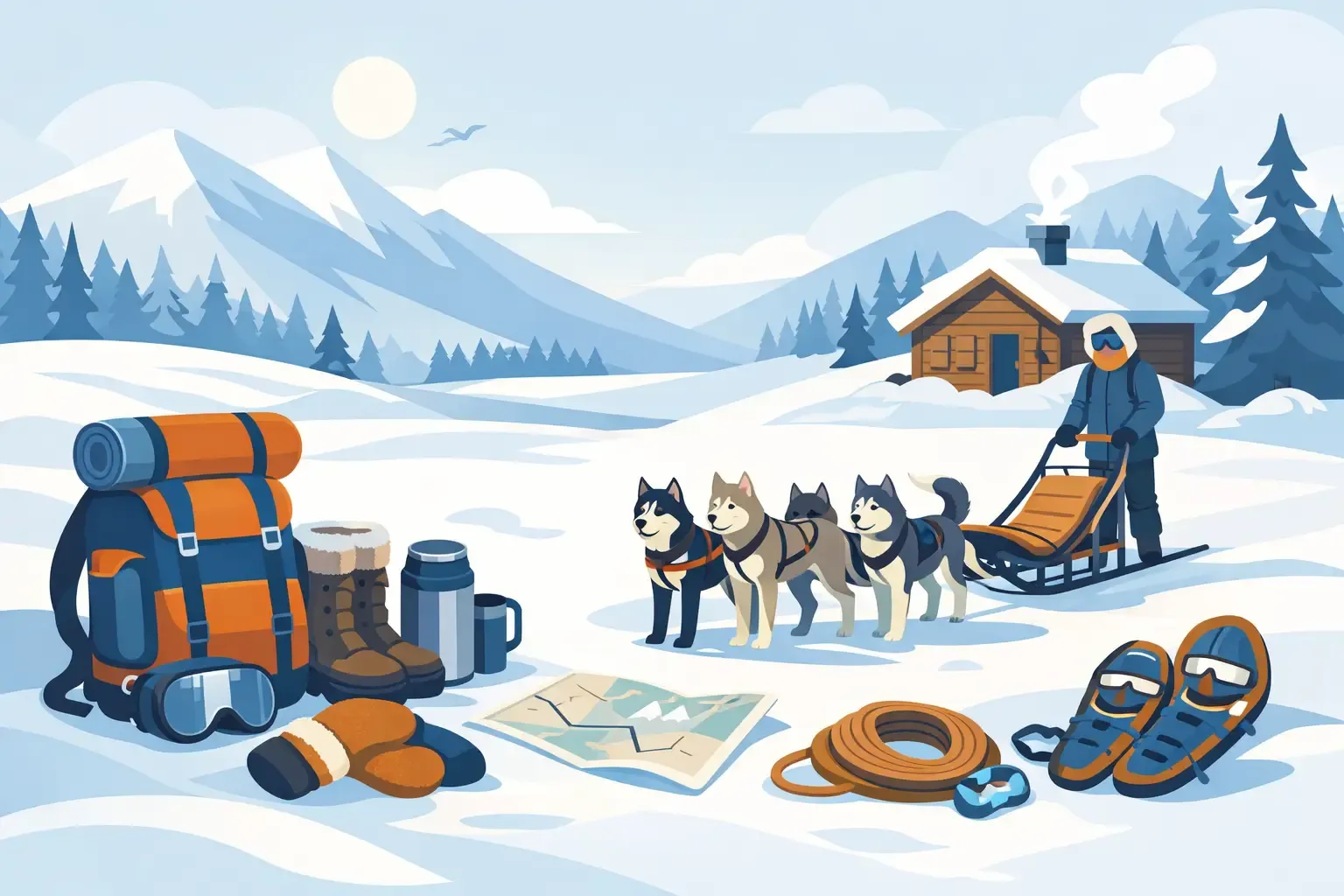
How to Prepare for Dog Sledding
The first surprise for most people is that dog sledding is not a passive ride. Even on a guided trip, you are not simply standing still while the dogs do the work. You will move with the sled, help on climbs, balance on descents and spend long hours in deep cold. That is exactly why knowing how to prepare for dog sledding matters. Get it right, and the experience feels exhilarating, focused and wildly memorable. Get it wrong, and small mistakes such as damp gloves or poor layering can become the biggest part of your day.
Dog sledding has a way of stripping things back. There is no engine noise, no clutter and no room for overcomplicating what you need. Good preparation is straightforward. You need the right clothing, realistic expectations, enough physical readiness to enjoy the work, and the confidence to listen and learn from your guide.
How to prepare for dog sledding before you travel
The best preparation starts well before you fly north. If you are joining a short taster experience, your planning will be lighter than it would for a multi-day Arctic journey. That trade-off matters. A half-day trip can be enjoyed with modest preparation and careful clothing choices, while a longer expedition demands more attention to fitness, recovery and cold-weather habits.
Start by checking exactly what your trip includes. Some operators provide outer layers, winter boots or specialist kit, while others expect you to arrive fully equipped. Do not assume. The difference between a comfortable day and a grim one is often found in the details you sorted a week earlier.
It also helps to understand what kind of dog sledding you are doing. Driving your own sled requires more engagement than riding as a passenger. If you are sharing a sled with a partner or friend, you may swap roles through the day. That means both of you need to be ready to steer, brake and move on and off the runners without hesitation.
If you can, spend a bit of time outside in the cold before you go. You do not need to recreate Arctic conditions in the UK, but you can get used to layering properly, managing your gloves and keeping still without cooling down too fast. Cold-weather comfort is partly about kit and partly about habits.
Dress for the cold, not the photos
This is where many first-timers get caught out. Dog sledding looks clean and cinematic in pictures, but real winter travel is about function first. Wear moisture-wicking base layers, a warm mid-layer and a windproof, insulated outer layer. Cotton has no place here. Once it gets damp, it stays cold.
Your extremities need special attention. Warm socks matter, but thicker is not always better if your boots become too tight. Restricted circulation leads to colder feet, not warmer ones. The same applies to gloves. A thin liner under a heavily insulated glove or mitten often works better than one bulky pair, especially if you need to adjust kit or handle buckles.
A hat that covers your ears, a neck gaiter and proper winter boots are all part of the basics. Sunglasses or goggles can also make a real difference, particularly on bright snow where glare can become tiring fast. Sun cream surprises people too. Cold does not cancel UV, and reflected light off snow can catch your face badly.
If your guide sends a kit list, follow it closely. There is usually hard-won experience behind every item on it.
Fitness helps, but you do not need to be an athlete
People often ask whether dog sledding is hard. The honest answer is that it depends on the trip, the terrain and whether you are driving or riding. You do not need elite fitness for most guided experiences, but a reasonable base level will improve everything. Strong legs, decent balance and the ability to stay active in cold air all help.
If you want to prepare well, focus on simple things. Walking hills, light jogging, cycling and bodyweight leg work are all useful. Squats, lunges and step-ups build the sort of strength that supports you on and off the sled. Core stability matters too, because staying balanced over uneven snow takes more from your midsection than many people expect.
That said, there is no prize for overtraining. You are better off arriving fresh, mobile and well-rested than trying to cram in punishing workouts the week before departure. Dog sledding rewards steady energy rather than brute force.
Learn the basics before you arrive
A good guide will teach you what you need on the ground, but a little understanding beforehand builds confidence quickly. The key thing to know is that dog sledding is a team effort between musher, dogs and guide support. Your job is not to overpower the sled. It is to stay alert, use the brake when instructed, help on uphills and keep control through changes in terrain.
It is also worth preparing for the speed of the start. Dogs are enthusiastic, and the moment they are released can feel lively. That excitement is part of the experience, but it is easier to enjoy when you expect it. Listen carefully during the briefing, ask questions early and do not bluff if you are unsure about anything.
One of the smartest ways to prepare is simply to be coachable. People who have the best time are rarely the ones trying to prove themselves. They are the ones paying attention, adapting quickly and trusting the guidance they are given.
What to pack beyond your clothing
Once your main clothing system is sorted, small extras can make a big difference. Hand warmers can be worthwhile on colder trips, particularly if you tend to run cold. A water bottle is important, even when you do not feel thirsty. Cold air can be dehydrating, and people often drink less than they should in winter.
Bring snacks that are easy to eat with gloves off for only a short time. Think simple and practical rather than fussy. If you are on a longer day or expedition, dry bags and spare layers become more useful. A fresh pair of gloves can rescue the second half of a day if the first pair gets wet.
Keep electronics simple. Batteries drain faster in the cold, so protect your mobile phone or camera close to your body when not in use. If photographs matter to you, make sure capturing them does not stop you from staying present or following instructions.
Prepare your mindset as much as your kit
This is the part people tend to overlook, yet it often shapes the whole trip. Dog sledding is exciting, but it can also be physically tiring and mentally new. Cold weather asks more of your focus. Travel to remote places can be unpredictable. Conditions may shift. Schedules may flex. Trails may feel harder or easier than expected.
Go in ready for a real outdoor experience, not a polished theme-park version of one. That mindset changes everything. You stop measuring the day against comfort and start engaging with it as an adventure. For many people, that is where the value really lies.
If you are nervous, that is normal. First-time participants often worry about handling the sled, coping with the cold or doing something wrong around the dogs. Guided trips are built for that. You do not need to arrive as an expert. You just need to arrive prepared, open-minded and willing to learn.
How to prepare for dog sledding on the day itself
Eat a proper breakfast. Cold weather and physical effort burn through energy faster than you think. Dress early so you are not rushing your layers, and avoid starting the day already sweaty from dragging bags around in too much insulation. It is better to step outside slightly cool and warm up through movement than to overheat before you begin.
Use the briefing well. Check your boot fit, glove setup and any shared kit before the sleds move. If something feels off, say so then. On the trail, little discomforts tend to become bigger ones.
Most importantly, pace your energy. Newcomers sometimes grip too tightly, tense up and burn themselves out in the first hour. Relax where you can. Move decisively when needed, then settle again. Dog sledding is active, but it also has rhythm. Once you find that rhythm, the whole experience opens up.
If you are travelling with an experienced operator such as Snow and Paddles, lean into the support around you. Expert guidance does not reduce the adventure. It gives you the freedom to enjoy it properly.
Dog sledding stays with people because it feels earned. The cold on your face, the sound of runners on snow, the focus of the dogs and the quiet between moments all have a way of cutting through everyday noise. Prepare well, and you give yourself the best chance to meet that experience fully rather than just get through it.