

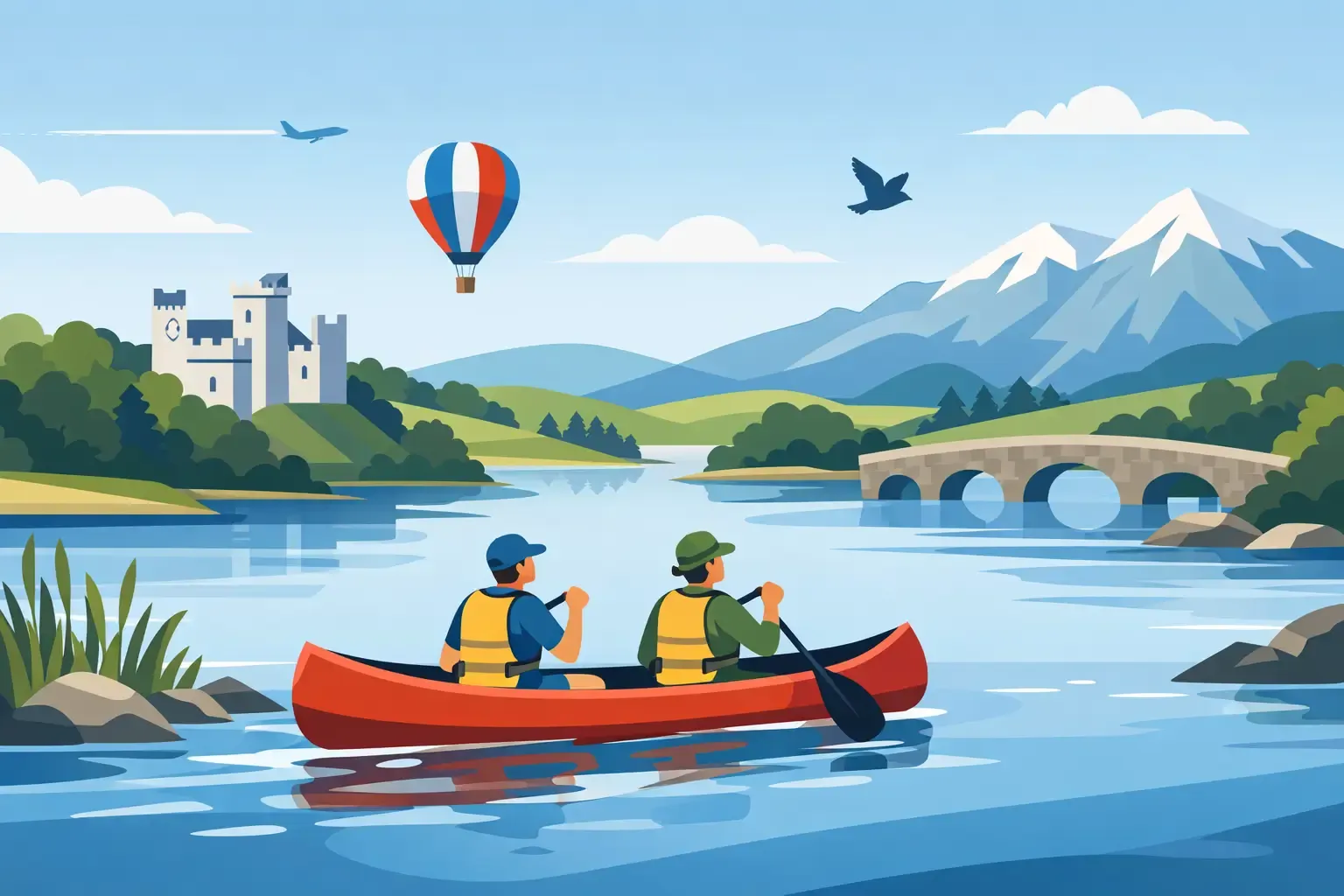
Your Practical Guide to UK Canoe Journeys
A canoe journey changes pace quickly. One moment you are loading dry bags at a slipway; a few bends later, the road noise has gone, your rhythm has settled, and the river is asking for your full attention. This guide to UK canoe journeys is for anyone ready to trade the usual weekend for moving water, wild camps and the quiet satisfaction of travelling under their own power.
Canoeing is accessible, but it is not casual. A good journey comes from matching the route to the group, preparing for the conditions and respecting the places that make these trips possible. Whether this is your first overnight paddle or you are planning a longer expedition, the aim is the same: go farther than a day out, safely and with purpose.
Choosing the right UK canoe journey
The best route is not necessarily the longest or most remote. It is the one that gives your group enough challenge to feel the achievement, without turning every mile into a survival exercise. For a first multi-day trip, a gentle river with reliable access points, straightforward portages and campsites or legal accommodation nearby is usually a stronger choice than an exposed loch or tidal estuary.
Rivers such as the Wye can suit relaxed point-to-point journeys, particularly when water levels are sensible and the route has been planned around launch and finish points. The Thames offers a different kind of adventure: a connected historic landscape, locks to work through and plenty of opportunities to stop. In Scotland, bigger journeys on lochs and rivers can feel genuinely wild, but wind, open crossings and rapidly changing weather demand sound judgement.
Distance is only one part of the calculation. A fit group on flat water may cover 15 to 25 kilometres in a day, but that figure falls with headwinds, portages, novice paddlers, loaded boats and time spent setting camp. Build an itinerary around daylight and energy, not an optimistic average pace. Finishing early with time to swim, cook and watch the weather roll through is far better than arriving tired, cold and rushed.
River, canal, loch or coast?
Each setting asks something different of a paddler. Slow rivers provide flow and changing scenery, though strainers, weirs and rising water can create serious hazards. Canals are predictable and ideal for developing skills, but locks and other users require patience. Lochs can be magnificent for expedition-style travel, yet their open fetch gives wind room to build waves. Coastal canoeing brings tides, currents and exposure, and should be approached with proper training and local knowledge.
If you are unsure, choose sheltered water and a guided trip. It is not a lesser adventure. It is the sensible way to learn boat handling, rescue skills and expedition habits before committing to bigger country.
Plan access with care
Access is one of the most important parts of any guide to UK canoe journeys. Do not assume that a blue line on a map is automatically available to paddle, launch from or camp beside. The legal position differs across the UK, and local arrangements, landowner concerns, seasonal restrictions and conservation measures all matter.
In Scotland, responsible access rights are broader, but they come with clear responsibilities towards land, wildlife and other users. In England and Wales, access to many waterways can be more complex. Some rivers have established agreements, permissions or navigation authorities; others may have restrictions. Check the current position for your chosen waterway before you go, including any rules around put-ins, parking, fishing seasons and overnight stops.
Never block a gate, trample crops, damage banks or treat a private riverside as a campsite. Keep noise down near homes and fishing beats. If you need to pass anglers, slow down, communicate calmly and give them plenty of space. Small decisions like these protect future access for everyone.
Build an itinerary that leaves room for reality
A strong plan has margins. Check water levels and the forecast before departure, then check them again on the morning you launch. Heavy rain upstream can alter a river long after the sky above you has cleared. A modest breeze at breakfast can become a difficult headwind by afternoon on a large loch.
Identify safe get-out points along the route, not just your intended finish. Know where you can take shelter if conditions change, and make sure somebody not on the trip has your route, vehicle details and expected return time. On remote journeys, carry a charged phone in a waterproof case, but do not rely on signal as your only safety plan.
Think through transport early. A linear canoe journey needs a vehicle shuttle, arranged collection or a guide who can handle logistics. This is often the detail that turns an ambitious plan into a frustrating one. Guided expeditions remove that complication, leaving the group free to focus on paddling, campcraft and the experience itself.
What to take in the canoe
Pack for immersion, not just rain. Everything essential should be inside properly sealed dry bags, with sleeping kit and spare clothes protected even if the canoe capsizes. Spread weight low and evenly through the boat, and keep a waterproof layer, warm layer, food, water and first-aid kit easy to reach.
For an overnight or multi-day journey, your core kit should include:
- A correctly fitted buoyancy aid for every paddler, worn on the water.
- A paddle, spare paddle where practical, bailer or pump, throwline and suitable repair kit.
- Shelter, sleeping system and a stove you know how to use safely.
- Navigation tools, a headtorch, whistle and means of communication protected from water.
- Enough food, drinking water and a method to treat or filter additional water where appropriate.
Clothing should match the water temperature, not only the air temperature. In cold conditions, a capsize can become serious quickly. Avoid cotton, which stays cold and wet, and bring a complete dry change for camp. In summer, sun protection matters just as much as waterproofs: water reflects light, and long days on the river can catch people out.
Paddle as a team, not as separate boats
A tandem canoe works best when the crew communicate. The paddler in the stern usually steers and calls adjustments; the bow paddler sets a steady rhythm and helps spot hazards. You do not need military commands, but you do need agreement on the basics: when to stop, where to cross current, how to approach an obstacle and what to do if someone goes in.
Before setting off, practise stopping, turning, paddling backwards and keeping the canoe straight. Learn to read moving water. A V-shaped tongue often indicates the clearest route through a gentle rapid, while branches hanging into the water, known as strainers, must be treated seriously. If you cannot clearly see a safe line, get out and inspect from the bank. Walking around a hazard is good judgement, not failure.
Weirs deserve particular caution. Some have powerful recirculating currents at their base, even when they look harmless from upstream. Portage unless you know the feature well, have the skills to run it and conditions are appropriate. Never let the pressure to keep moving make that decision for you.
Camp with a light footprint
The best camps are often the simplest: a level spot, a safe distance from the water, shelter from the wind and no sign that your group was ever there. Use established sites where possible. Where lawful wild camping is permitted, follow local guidance, avoid enclosed fields and keep well away from homes, livestock and sensitive habitats.
Arrive with enough fuel to avoid cutting wood. Keep fires to a minimum and only where they are permitted and safe; in dry conditions, skip them altogether. Pack out every scrap of rubbish, including food waste. Wash well away from the water and use biodegradable products sparingly. A wild riverbank is not a campsite service area. Treat it as somebody else’s home, because it is.
When a guided journey is the right call
There is real pride in organising your own expedition, but there is no prize for carrying every logistical burden alone. A guided canoe journey is particularly valuable if you are new to moving water, travelling with a mixed-ability group, short on planning time or aiming for a more remote route.
The right leader brings more than route knowledge. They make decisions around weather, group energy, navigation, rescue and camp systems before small problems become big ones. They can also help you develop the skills to lead your own adventures later. Snow and Paddles designs guided experiences with that balance in mind: proper challenge, expert support and space to feel the journey is genuinely yours.
Your first canoe journey does not need to prove anything. Choose water that lets you learn, take the time to stop when the light is good, and keep enough reserve to make sensible decisions. The confidence follows quietly – stroke by stroke, camp by camp – until the next stretch of river feels less like unknown territory and more like an invitation.