

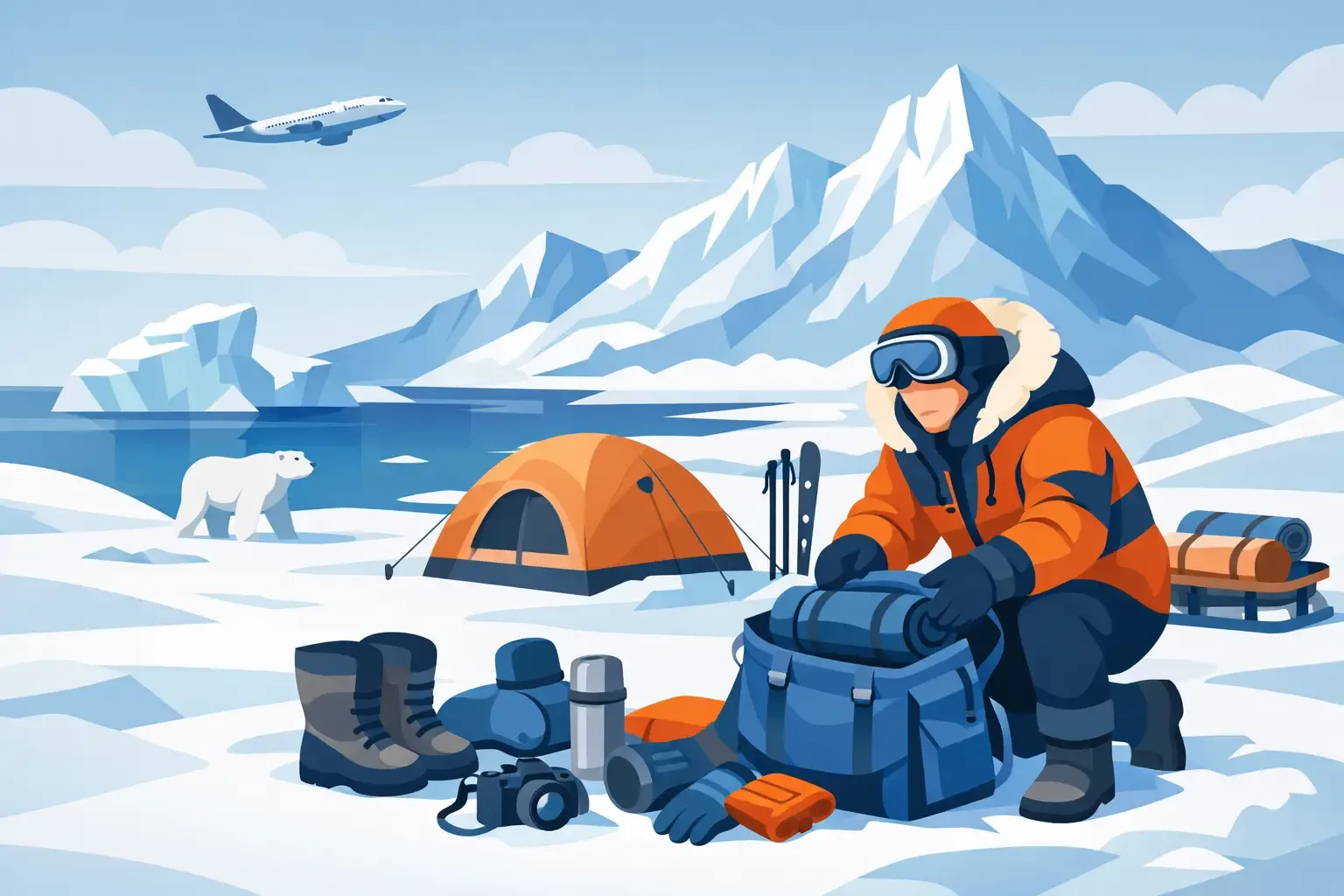
How to Pack for Arctic Travel Properly
The Arctic has a way of exposing lazy packing within the first hour. Gloves that seemed warm enough at home suddenly feel useless. A stylish jacket turns into dead weight. A bag packed for comfort rather than function becomes a cold, chaotic mess in the snow. If you are wondering how to pack for Arctic travel, the goal is not to bring more. It is to bring the right kit, in the right order, for the conditions you will actually face.
That matters whether you are heading out for dog sledding, snowshoeing, ice fishing or a multi-day winter expedition. Arctic travel is not just about low temperatures. It is about wind, moisture, changing activity levels and long periods outdoors. Pack badly and you spend the trip managing discomfort. Pack well and you can focus on the reason you went in the first place – the stillness, the challenge and the sheer scale of the place.
How to pack for Arctic travel without overpacking
Most people make the same mistake at the start. They imagine Arctic cold as one constant level of freezing misery, then throw in every thick item they own. In reality, your system matters more than any single heroic jacket.
You need layers that work together. A good base layer manages sweat. A mid-layer traps warmth. An outer shell blocks wind and weather. Then you add specialist items for hands, feet and face, where cold tends to bite first. This approach gives you options, which matters because standing still on a frozen lake feels very different from hauling a sled, walking uphill or sitting on a snowmobile.
Overpacking also creates practical problems. Heavier bags are harder to move, harder to organise and more likely to leave you digging around with numb fingers for one item you should have kept accessible. Good Arctic packing is disciplined. Every item should earn its place.
Start with your clothing system
Your base layers should sit close to the skin and move moisture away from the body. Merino wool is a strong choice because it performs well in the cold and stays comfortable over repeated wear. Synthetic options can also work well if they are designed for active winter use. Cotton is best left at home. Once wet, it dries slowly and loses warmth fast.
Your mid-layer does the insulating work. Fleece, synthetic insulated jackets and lightweight down all have a place here. What works best depends on your trip. For active days, breathable insulation often beats heavy bulk. For lower-output activities, extra warmth becomes more important. The trade-off is simple – if you run hot while moving, too much insulation will leave you sweaty, and sweat is a problem in the Arctic.
Your outer layer should protect you from wind, snow and damp conditions. That does not always mean the biggest jacket available. If your expedition already includes a substantial insulated outer jacket, your shell may only need to handle weather during active periods. If not, a properly insulated parka can become a key piece of your system.
Trousers deserve the same thought. Thermal leggings under soft shell or weather-resistant outer trousers often give better versatility than relying on one thick pair alone. If your trip includes kneeling in snow, sitting on frozen surfaces or long static periods, insulation in the legs starts to matter more.
Hands, feet and face are where comfort is won or lost
Cold hands can turn a brilliant day into a grim one very quickly. Pack in layers here too. A thin liner glove helps with dexterity when adjusting kit or using a camera, while an insulated outer glove or mitten provides real warmth. Mittens are often warmer than gloves, but they are less practical for fiddly tasks. For many travellers, bringing both is the smart move.
Footwear is even more trip-specific. A winter boot that works for walking around town is not the same as one that works for standing on snow for hours. You need insulation, grip and enough room to avoid crushing circulation. Thick socks only help if the boot still fits properly. If your toes are cramped, they will get colder, not warmer.
Bring more than one pair of suitable socks, but do not go overboard. Good wool socks are worth far more than a pile of cheap ones. A spare dry pair for changing into can feel like a small miracle after a wet or sweaty day.
For your face, pack a warm hat that covers the ears, plus a buff or neck tube that can be pulled up when the wind hits. In harsher conditions, goggles can make a huge difference, especially on exposed routes or snowmobile journeys. Sun cream and lip balm matter too. Arctic light can be fierce, particularly when it reflects off snow all day.
Pack for moisture, not just temperature
One of the best answers to how to pack for Arctic travel is this: pack as if staying dry is part of staying warm, because it is. People often fixate on the forecast temperature and forget about perspiration, snow melt and damp gear.
You will likely move between cold outdoor air and heated indoor spaces. That shift can create condensation in boots, gloves and outer layers. If you work hard during the day, your clothing can build moisture from the inside too. This is why spare gloves, dry bags and a system for separating damp items from dry ones matter more than many first-time Arctic travellers expect.
Use simple packing organisers or dry bags inside your main luggage. Keep your spare base layers dry at all costs. Separate day-use essentials from backup kit. If you need to change gloves or socks quickly in poor weather, you do not want to unpack your whole bag in the snow.
The small items that make a big difference
This is where experienced travellers quietly gain ground. Hand warmers, a good insulated flask, a head torch, sunglasses, lip balm, personal medication and a power bank all earn their place. Batteries drain faster in cold conditions, so keep electronics protected and close to your body where practical.
A water bottle is still essential in freezing environments. People often drink less in the cold without realising it, and dehydration makes it harder to stay warm and perform well. If your trip involves travel days, lodge stays and outdoor sessions, pack so that your daily essentials are easy to grab without opening your full expedition bag every time.
Toiletries should be stripped back to what you will genuinely use. Arctic travel is not the place for packing half your bathroom. Focus on skin protection, sun protection and comfort. A richer moisturiser than you use at home can be useful in very cold, dry air.
Match your bag to the trip, not the fantasy
Your luggage choice depends on how your journey works. A soft duffel is often more practical than a hard suitcase for adventure travel, especially where vehicles, sleds or limited storage are involved. It is easier to handle and easier to stow. Add a smaller daypack for the items you need close to hand.
Think about access as much as capacity. You should know where your gloves are, where your spare layers are and where your head torch lives without needing a full archaeological dig. Arctic mornings are not the time for rummaging.
If specialist kit is provided as part of your trip, build around that rather than duplicating it. This is one reason guided travel makes life easier. You do not need to guess your way through every technical detail on your own. At Snow and Paddles, we see the difference good preparation makes straight away – people settle in faster, stay more comfortable and get more from the experience.
What people pack but rarely need
Arctic packing is full of false friends. Fashion-first outerwear, multiple jumpers, too many casual clothes and oversized toiletries all take up room without adding much value. So do bulky “just in case” extras that are not suited to real winter use.
You usually need less evening wear than you think, especially on active trips where comfort wins every time. You also do not need endless changes of clothes if your layering system is good. Better to bring fewer, better pieces than a bag full of compromises.
The one caveat is personal comfort. Some people feel the cold more than others. Some trips include more static time, others involve high-output movement. It depends on the itinerary, the accommodation and your own tolerance. Good packing is never one-size-fits-all, but it should always be deliberate.
A final check before you zip the bag
Lay everything out and ask one question of each item: will this help me stay warm, dry, functional or comfortable in the Arctic? If the answer is vague, leave it behind. The best-packed bag is not the fullest one. It is the one that lets you step into serious winter conditions with confidence, knowing your kit is working with you rather than against you.
When the temperature drops and the horizon opens up, you want your attention on the experience, not on cold feet and bad decisions made in the spare room the night before.