

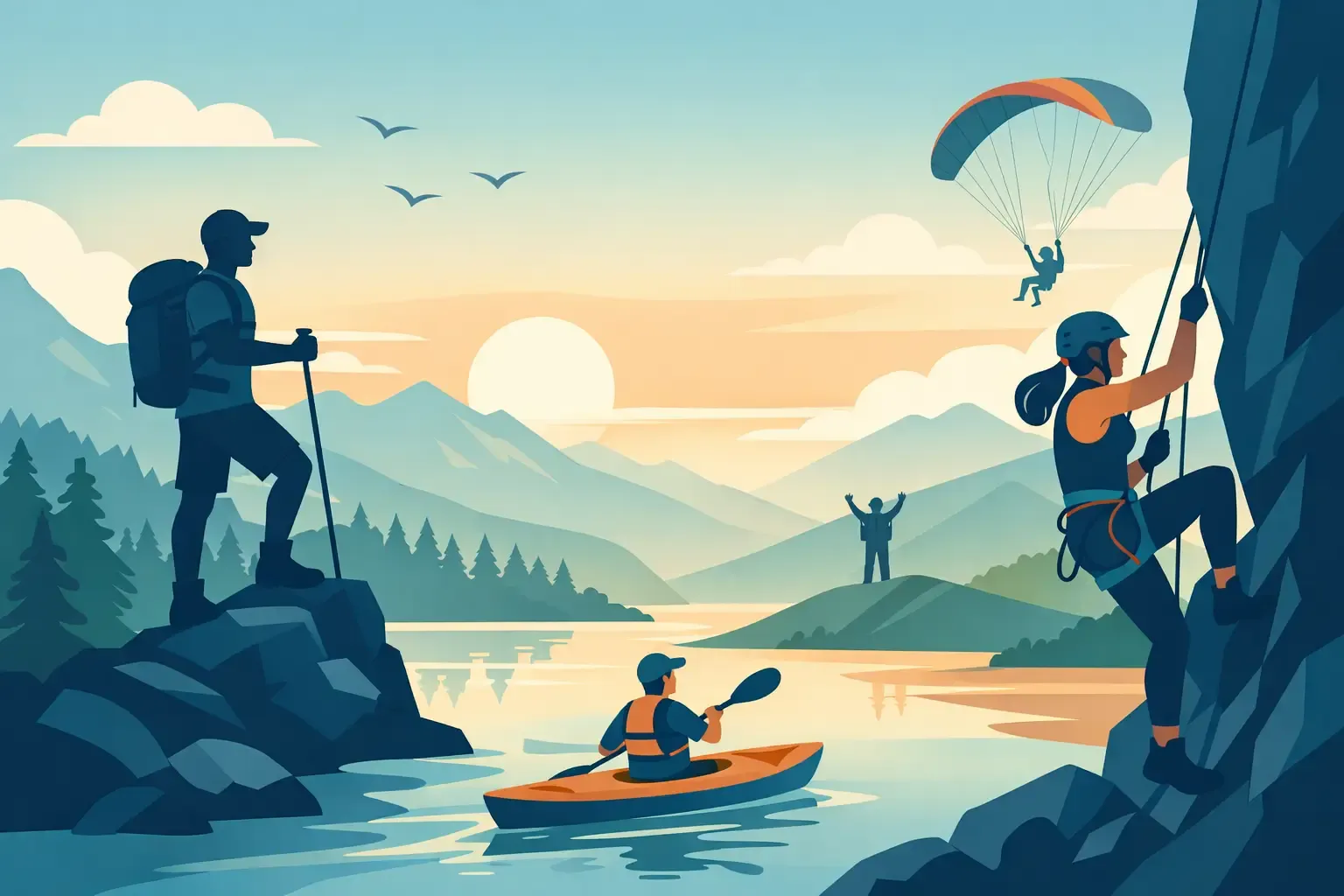
Adult Adventure Holidays That Change You
You remember the trips that asked something of you. The early start for the summit push. The cold air on your face as the dogs pull the sled forward. The quiet satisfaction of cooking outside after a full day on the water. That is why adult adventure holidays stay with people long after the kit is dried and the photos are filed away. They give you more than a break. They give you a story, a shift in perspective and, often, proof that you are capable of more than you thought.
For a lot of adults, that matters more than another easy week by the pool. Time off is limited. If you are going to use precious annual leave, you want it to count. You want challenge, but not chaos. You want something real, but you also want the reassurance that someone experienced has thought through the route, the safety, the pacing and the details. That is where a well-led adventure holiday earns its place.
Why adult adventure holidays feel different
The best adventure trips are not built around ticking boxes. They are built around experience. You are not just seeing a landscape through a window. You are moving through it under your own effort, learning how weather changes the day, how a team works together and how quickly the head clears when life gets simpler.
That is one reason these trips appeal to busy professionals, couples, solo travellers and groups of friends. Daily life can feel full but oddly flat. Adventure puts you back in direct contact with the world. Paddle the length of a loch, travel through a Swedish winter forest or spend a night under canvas after a day of proper effort and the usual noise drops away.
There is also the satisfaction of progression. A good trip meets you where you are, whether that means your first canoe journey or a more demanding expedition with long days, tougher conditions and bigger objectives. You do not need to be an elite athlete to start. You do need a willingness to turn up, listen, learn and get involved.
Choosing adult adventure holidays that suit you
Not every adventure holiday suits every person, and that is a good thing. The right trip depends on what you want from it.
If your main goal is to reset, a journey that balances activity with space to breathe often works best. Multi-day canoe adventures, wildlife trips and winter journeys can be physically engaging without feeling relentless. They create room for conversation, quiet and steady confidence-building.
If you want to test yourself, look for trips with a clear physical or mental edge. That might mean a mountain expedition, a winter survival experience or a demanding river journey. These trips can be hugely rewarding, but they are better when the level of challenge is honest. There is no prize for choosing a trip that is beyond your current capacity if it turns the whole experience into survival mode.
If you are travelling as a couple or with friends, think about the shared experience you actually want. Some groups love long, hard days and rough edges. Others want challenge by day and comfort at night. Neither is more authentic. The real win is choosing a trip that matches the group dynamic rather than forcing everyone into the same idea of adventure.
Solo travellers often have the clearest reason to book. They want to do something significant without having to organise every moving part alone. Guided group travel works well here because it removes the planning burden while keeping the experience social without being over-scripted.
Guided support is not a compromise
Some people still assume a guided trip is a softer option. In reality, expert leadership often makes a trip more adventurous, not less. It opens the door to places, conditions and activities that would be hard to access confidently on your own.
A good guide does more than lead from the front. They read the group, manage pace, teach skills, monitor conditions and make sound decisions when plans need to change. That matters on snow, on water and in remote country where small choices can have big consequences.
It also changes how much of the trip you can actually enjoy. If you are not carrying the full burden of navigation, logistics, camp systems, transport coordination and risk management, you have more headspace for the experience itself. You still earn the miles. You still feel the weather. You still work for the view. You just do it with proper support.
That support is especially valuable for beginners. The gap between wanting to try something and feeling ready to book it can be surprisingly wide. Clear guidance closes that gap. It turns husky sledding, Arctic travel, snowmobiling, canoe journeys and survival skills from distant ideas into realistic options.
Adventure means different things in different landscapes
One of the strongest things about adventure travel is that the setting changes the whole character of the trip.
Water-based journeys have a rhythm that is hard to beat. Canoe expeditions reward teamwork and patience. They are physical, but they also give you time to settle into the landscape. You notice more. Distances feel earned. Reaching camp after a long day on the water has a simple, grounded satisfaction that many people miss in ordinary travel.
Snow trips bring a sharper edge. Cold weather focuses the mind. Whether you are travelling by snowmobile, learning winter camp craft or running through forests behind a team of huskies, the environment makes everything feel immediate. It is not about discomfort for its own sake. It is about being fully present in a place that demands respect.
Mountain and expedition journeys usually bring the clearest sense of objective. There is a route, a summit, a crossing or a goal that gives each day shape. These trips often suit people who are motivated by progression and a stronger sense of achievement, though they also require a realistic view of fitness, conditions and personal resilience.
Wildlife and fishing trips offer a different kind of reward. They slow the pace without making the experience passive. You still need patience, awareness and commitment. For many adults, that quieter immersion is exactly the point.
What to look for before you book
The glossy images matter less than the trip design. Look closely at who the trip is for, how demanding it is and what support is included. Honest grading is a good sign. So is clear information on equipment, accommodation, group size and what a typical day really looks like.
Safety and financial protection should be easy to find, not buried in the small print. Adventure should feel bold, but the operation behind it should feel solid. That includes qualified leadership, sensible systems and proper package travel protection where relevant. Reassurance is not the opposite of adventure. It is what lets you commit to it properly.
It is also worth checking whether the operator caters for different levels of experience. The best adventure companies understand that first-timers and seasoned travellers often want the same thing: a real experience, delivered well. Snow and Paddles, for example, builds trips that range from accessible short breaks to more committing expeditions, which is exactly the sort of breadth that helps people keep building their outdoor life rather than treating adventure as a one-off.
The real return on an adventure holiday
People often book these trips for the headline experience. The Arctic journey. The canoe expedition. The mountain objective. What they talk about afterwards is usually broader than that.
They talk about feeling more capable. About switching off properly for the first time in months. About meeting good people. About doing something that was outside their usual pattern and realising they want more of that in their life.
That is the deeper value of adult adventure holidays. They are not an escape from real life so much as a reset within it. They remind you that challenge can be energising, that nature still has the power to straighten out a busy mind and that adventure is not reserved for specialists. With the right trip and the right guidance, it becomes something you can step into now, not someday.
Choose the holiday that gives you a little edge of nerves. That is often the one worth taking.