

8 Best Winter Activity Holidays to Try
Cold changes the pace of a trip. The air feels cleaner, the ground asks more of you, and even simple moments – pulling on boots in the dark, hearing snow compress underfoot, watching your breath hang in the morning – feel sharper. That is why the best winter activity holidays are not just about getting away. They are about stepping properly into a season that most people spend trying to avoid.
For some travellers, that means a first taste of snowshoeing or husky sledding with an experienced guide. For others, it means longer days in remote country, learning how to move well in winter, travel safely and enjoy the sort of cold-weather landscape that stays with you long after you are home. The right trip depends on what kind of challenge you want, how much comfort matters to you, and whether you want a high-energy week or something more immersive and expedition-like.
What makes the best winter activity holidays worth doing?
A good winter holiday gives you more than a checklist of activities. It gives you a strong sense of place. Anyone can book a hotel near the snow and add an excursion, but that is different from a well-led adventure where the activities, the landscape and the pace all fit together.
That matters because winter adds real variables. Daylight can be short. Temperatures can change quickly. Travel between locations can eat into the experience if the itinerary is too busy. The best trips are designed around the season rather than forced into it. They build in expert leadership, sensible logistics and enough flexibility to work with the weather rather than fight it.
For UK travellers especially, there is also a practical point. Many people want adventure but do not want the burden of sorting specialist kit, route planning, transfers and safety decisions on their own. Guided winter trips remove that friction. You still get the challenge, but with proper support behind it.
8 best winter activity holidays for different kinds of traveller
1. Husky sledding for pure winter immersion
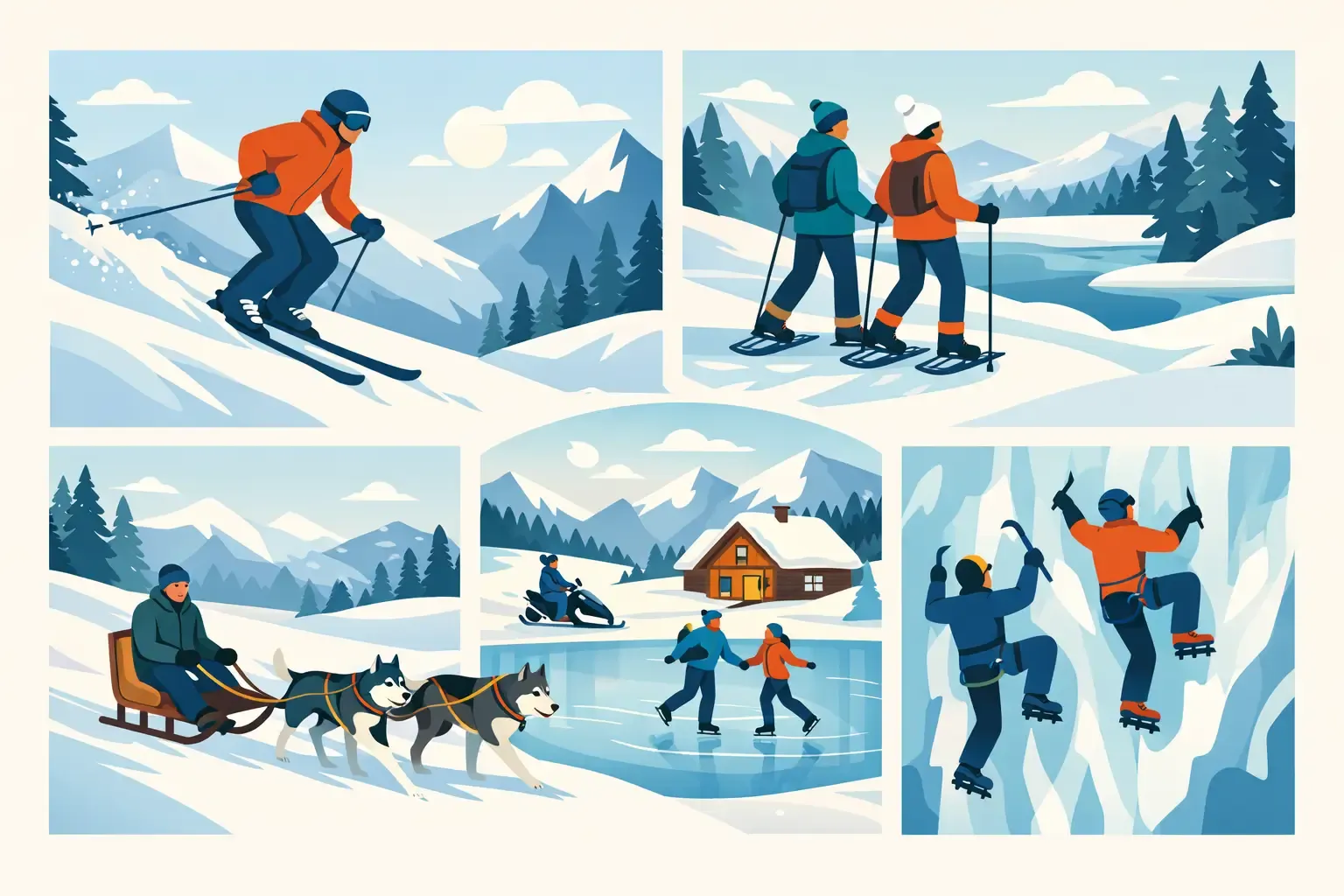
If you want a holiday that feels immediately different from everyday life, husky sledding is hard to beat. It is physical, but not in the same way as skiing or mountaineering. You work with the dogs, learn the basics of handling a sled, and move through winter landscapes at a pace that lets you absorb where you are.
This suits travellers who want a strong Arctic feel without needing previous technical experience. It is also ideal for couples or friends who want shared adventure rather than a resort-based trip. The trade-off is that it can be colder and more demanding than people expect, particularly when standing on the sled for long periods. Good gloves and realistic expectations make a difference.
2. Snowshoeing for accessible adventure
Snowshoeing is one of the most underrated winter activities. It does not have the profile of skiing, but for many people it offers more of what they are actually looking for – quiet travel, wild scenery and a genuine sense of journey.
It is especially good for beginners because the learning curve is manageable. You can focus on movement, landscape and winter skills without spending half the day trying to master technique. For solo travellers and first-timers, that often means more confidence and more enjoyment. If you want intensity and speed, snowshoeing may feel too steady. If you want depth, it delivers.
3. Snowmobiling for distance and drama
Some winter landscapes are too vast to understand from a short walk. Snowmobiling lets you cover ground, reach more remote areas and experience the scale of the north in a way that feels exciting from the first hour.
This is a strong choice for people who like momentum and want a trip with a bit more power behind it. It also works well in mixed-activity itineraries, where one day on a snowmobile complements slower days on foot or with dogs. The obvious trade-off is noise and pace. If your priority is silence and low-impact travel, there are better options. But if you want to push out into bigger country and feel the raw energy of winter, it earns its place among the best winter activity holidays.
4. Arctic wildlife trips for travellers who want meaning as well as movement
Not every winter holiday has to be about adrenaline. Wildlife-focused winter trips bring a different kind of intensity. Tracking signs in snow, watching for movement in low light and learning how animals survive the season can be every bit as memorable as a faster-paced adventure.
These trips suit travellers who want to feel close to the landscape rather than simply active within it. Patience matters more than speed. Conditions can be cold, and sightings are never guaranteed, but that uncertainty is part of the appeal. The experience feels real because it is real.
5. Winter survival experiences for confidence and capability
There is a reason survival-based trips stay with people. They strip things back. You learn how to stay warm, work with the environment, understand risk and make good decisions when comfort is not automatic.
For professionals who spend most of the year indoors, that shift can be surprisingly powerful. A winter survival experience is not about pretending to be on a film set. It is about building practical confidence under expert guidance. These trips can be mentally demanding as much as physically demanding, so they suit people who want growth rather than pure leisure.
6. Cross-country skiing for rhythm and progression
If downhill skiing has never appealed, cross-country skiing may be the better fit. It is more self-propelled, more connected to the terrain and often more varied in terms of routes and scenery.
This kind of trip works well for active travellers who enjoy learning a skill and improving across the week. It can also be a strong option for people who want a proper training effect from their holiday. The challenge is that the early stages can feel awkward. Once the movement clicks, though, it opens up a style of winter travel that feels both athletic and freeing.
7. Multi-activity winter holidays for variety
For many people, the best answer is not one activity at all. A well-designed multi-activity trip can combine snowshoeing, husky sledding, winter skills, perhaps some snowmobiling, and evenings spent properly resting rather than rushing to the next transfer.
This is often the smartest choice for first-time winter travellers. You get enough variety to discover what you enjoy most, without betting the whole holiday on one thing. It also keeps the week balanced. If one day is physically harder, the next can shift in tone. Snow and Paddles leans into this kind of guided adventure well – accessible, properly led and built around the experience rather than just the itinerary.
8. Expedition-style winter journeys for people who want more than a holiday
Then there are trips that sit beyond the usual holiday category. Longer winter journeys, Arctic expeditions and more remote programmes ask for commitment, but they give something bigger back. You are not just trying an activity. You are entering a different way of travelling.
These trips suit experienced adventurers, or determined beginners prepared to train and listen well. They require more from you physically and mentally, and they are not for everyone. But for the right person, they can be life-shaping in the best sense – the sort of experience that resets your idea of what you are capable of.
How to choose the best winter activity holidays for you
Start with the experience you want, not the activity that sounds most impressive. Plenty of people assume they need the fastest or most technical option, when what they actually want is wilderness, good guidance and a sense of doing something real.
Think honestly about comfort. There is no prize for booking a trip tougher than you will enjoy. Cold-weather travel can be energising and confidence-building, but it is still meant to be a holiday. If you are new to winter adventure, a guided multi-activity week or a beginner-friendly snowshoeing or husky trip may suit you far better than a more demanding expedition.
It also helps to think about group dynamic. Some trips are brilliant for couples. Others suit solo travellers because the shared challenge creates easy camaraderie. Friendship groups often do well on trips with a mix of activities, where different personalities can all find their moment.
Finally, look closely at who is leading the trip and how it is organised. Winter rewards experience. Strong guiding, sound safety systems and clear trip design are not background details. They are part of what makes the adventure possible.
Best winter activity holidays are about how you feel, not just what you do
The lasting part of a winter trip is rarely the brochure headline. It is the feeling of moving confidently through a cold landscape you once found intimidating. It is the satisfaction of learning fast, trusting your guide, sharing the day with good people and realising that winter is not a barrier at all.
Choose the trip that makes you want to step outside, breathe deep and get on with it. That is usually the right one.