

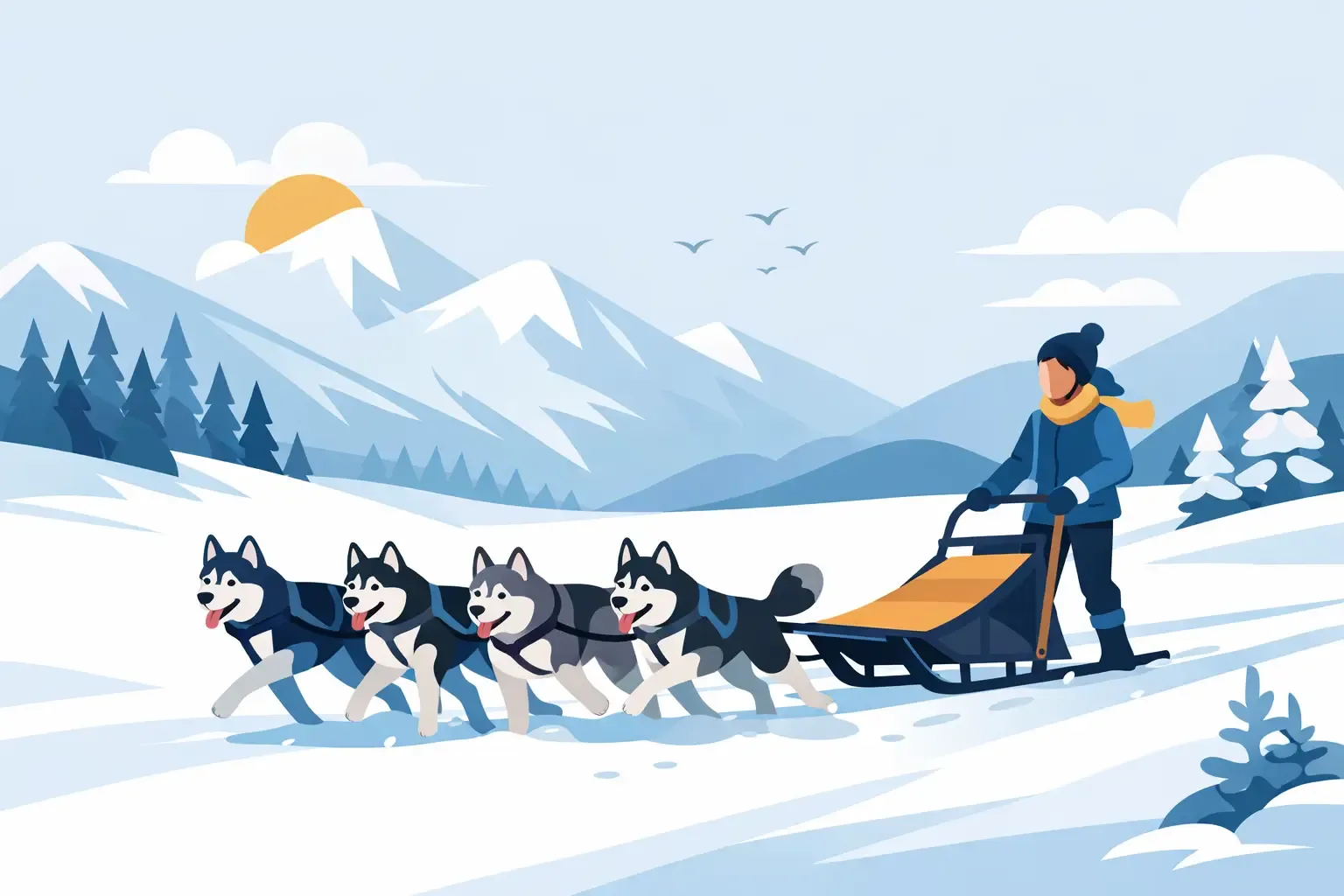
Can Beginners Do Husky Sledding?
The first surprise for most people is this: husky sledding is not about being fearless. It is about being willing to learn. If you are wondering can beginners do husky sledding, the honest answer is yes – and many of the people who step onto a sled for the first time arrive with no previous experience of mushing, snow travel or Arctic conditions.
That does not mean it is effortless. Husky sledding is active, cold, physical and real. You are not sitting back while someone else does everything. Even on beginner-friendly trips, you will usually learn how to handle the sled, help the dogs, steady yourself on corners, and work with the terrain. That is exactly why so many first-timers love it. It feels like an adventure from the first mile.
Can beginners do husky sledding safely?
Yes, provided the trip is designed for newcomers and led properly. Good guiding makes the difference between a daunting experience and an unforgettable one. Beginners need clear instruction, sensible pacing and routes that match the group rather than push it beyond reason.
A well-run husky trip starts before the sled moves. You learn the basics on the ground: how to stand on the runners, how to use the brake, what to do on descents, how to help the dogs on uphill sections and what happens if you come off. None of this needs specialist background knowledge. It needs good coaching and a willingness to listen.
Safety also comes from expectations. Husky sledding is not a theme-park ride. Snow conditions change, weather matters, and dogs are powerful working animals. When those realities are respected, beginners usually do very well. In fact, first-timers often benefit from turning up with an open mind and no bad habits.
What husky sledding feels like for a first-timer
It starts fast. The dogs know what they are doing long before you do, and when they set off, the energy is immediate. There is noise at the start line, then a surprising rhythm once the team settles. The sled glides, your focus narrows, and very quickly you stop thinking about whether you are a beginner.
Physically, it is more involved than many people expect. You will stand for long periods, bend your knees, shift your weight and stay alert. On flatter sections, the ride can feel smooth and almost meditative. On turns, climbs or uneven snow, you need to engage. That is part of the appeal. You are not watching the landscape through a window. You are in it.
The cold adds another layer. In the UK, many people are used to winter walks, but Arctic cold is different. Gloves, boots, layers and face protection matter. Being properly equipped can transform the day from a battle with the temperature into something deeply enjoyable.
Who is husky sledding suitable for?
Most healthy adults with a reasonable level of mobility and balance can take part in beginner husky sledding trips. You do not need to be an endurance athlete, but you do need to be comfortable standing, holding your position and reacting to the trail. If you enjoy walking, cycling, skiing or other active holidays, you will likely adapt quickly.
Where it gets more nuanced is confidence rather than fitness. Some beginners are physically capable but nervous around speed, cold or animals. Others are less sporty but calm, attentive and ready for the challenge. The second group often surprises themselves.
If you have an injury, a medical condition or concerns about balance, it is worth asking detailed questions before booking. Some experiences are passenger-focused, where you ride in the sled driven by a guide. Others are self-driven, where you take real responsibility for your own team. Neither is better. It depends on what kind of adventure you want and what level of involvement suits you.
What makes a trip beginner-friendly?
Not every husky sledding holiday is built for first-timers. Some are expedition-style journeys that expect previous winter experience or a high degree of self-sufficiency. Others are specifically designed to welcome people at the start of their adventure journey.
A beginner-friendly trip usually includes proper briefing, manageable distances, close guide support and time to build confidence. It will also be honest about the demands. That matters. Reassurance is useful, but realism is better. The right trip should feel stretching, not overwhelming.
Look closely at how the experience is described. If it mentions instruction, guided leadership and accessibility for newcomers, that is a good sign. If it assumes you already know winter systems, dog handling or remote travel routines, it may be aimed at a more experienced group.
This is where an experienced operator earns trust. The best trips balance challenge with support so that beginners get the thrill of the real thing, not a watered-down version, but without being thrown in at the deep end.
Can beginners do husky sledding without prior snow experience?
Absolutely. Many first-time mushers have never worn snow boots in anger, let alone handled a dog team. Prior snow experience can help with confidence on slippery ground, but it is not a requirement. The key skills are simpler than people think: listening carefully, staying relaxed, following instructions and keeping a steady attitude when things feel new.
Snow sense develops quickly. Within a day, most beginners start reading the trail better, anticipating turns and moving more naturally on the sled. That early learning curve is one of the most satisfying parts of the trip. You arrive as a novice and leave with a genuine sense of competence.
There is also a mental shift. At first, the landscape can feel unfamiliar and demanding. Then it starts to feel liberating. The cold sharpens everything, the routine becomes clear, and the idea of travelling by dog team begins to make instinctive sense.
The biggest beginner worries – and the reality
The most common worry is falling off. It can happen, especially when you are learning, but it is rarely the disaster people imagine. You are taught what to do, guides expect it, and beginners are not judged for having a wobble. Learning to recover is part of the process.
Another concern is handling the dogs. People often imagine they need to control six or eight excitable animals by force. In reality, huskies are highly motivated working dogs with established routines. Your guide team manages the bigger picture, and your role grows as your confidence grows.
Cold is another big one for UK travellers. This is a valid concern because being underprepared can spoil the experience. But with the right clothing systems, good kit advice and sensible pacing, most people cope far better than they expect.
Then there is the quiet fear underneath all the practical questions: what if I am not adventurous enough? That is usually the wrong question. Adventure is not a personality type. It is a decision to step into something new with proper support around you.
What to do before you book
Choose the experience, not just the image. Beautiful photographs of snow and huskies can make every trip look similar, but the reality varies. Look at duration, daily distances, accommodation style, level of physical demand and how much of the sledding you will do yourself.
Ask direct questions. Is this suitable for complete beginners? How much training is included? What level of fitness is expected? What clothing is provided, and what do you need to bring? Clear answers usually indicate a company that knows how to look after people properly.
It also helps to think about what you want from the trip. Some people want a short introduction with plenty of comfort around the edges. Others want a fuller Arctic experience that pushes them further. There is no prize for choosing the hardest option. The right choice is the one that leaves you challenged, capable and wanting more.
For many travellers, that first husky trip becomes a turning point. It proves that remote winter adventure is not reserved for experts or extreme athletes. With the right preparation and guidance, it becomes accessible in the best sense of the word – not easy, but possible.
That is often where bigger journeys begin. A first winter trip leads to another. One new skill builds confidence for the next. At Snow and Paddles, that is what adventure is for. Not just a few brilliant days away, but a reminder that you are capable of more than your usual routine suggests.
If husky sledding is calling you, do not wait until you feel like an expert. Start while you are curious, prepare properly, and let the trail do the rest.